
In This Article
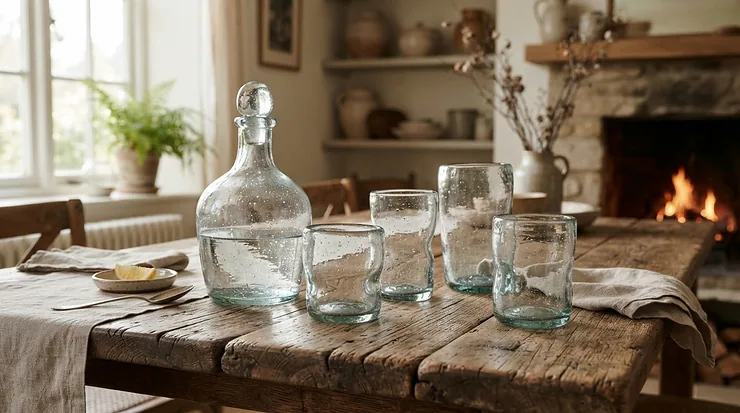
Here’s a confession most wine lovers don’t think about: every time you swirl a glass of cabernet, you’re holding a tiny monument to either waste or restraint. Traditional glassware is baked from virgin sand, soda ash, and limestone at temperatures north of 2,600°F — a process that guzzles energy and leaves a chunky carbon footprint behind every stem. Recycled glass wine glasses flip that script. They’re made wholly or partly from reclaimed cullet — crushed glass from old bottles, jars, and factory offcuts — melted down and reshaped into something you’d actually want on your dinner table.
What is a recycled glass wine glass, exactly? It’s stemware manufactured using post-consumer or post-industrial glass (cullet) as some or all of its raw material, instead of freshly mined silica. The result ranges from clear, restaurant-grade stemless tumblers to hand-blown, faintly green-tinted goblets with visible tiny air bubbles — proof of their previous life. Roughly 31 percent of glass containers in the U.S. actually make it back into the recycling stream, according to the EPA’s containers and packaging data, so choosing recycled glass wine glasses genuinely closes a loop that too much glass never completes.
This guide covers seven real, currently available recycled glass wine glasses spanning budget six-dollar-a-glass sets to artisan Mexican stemware worth gifting. You’ll get honest analysis of specs, aggregated review sentiment, comparison tables, a buyer’s decision framework, and answers to the questions people actually type into Google before they buy. No invented five-star quotes, no fabricated “I tested this for a month” stories — just grounded research so you can choose the right set for your table.
Quick Comparison Table
| Product | Style | Price Range | Best For |
|---|---|---|---|
| Red Co. Premium Collection | Stemless, set of 4 | Under $30 | First-time buyers on a budget |
| Eco Living Recycled Glass Set | Stemless multi-use, set of 6 | Under $30 | Everyday wine, water, and juice |
| Amici Home Vino | Stemless, set of 4 | $20-$35 range | Embossed Italian style on a budget |
| Refresh Glass Bottle Glasses | Stemless, set of 2-4 | $30-$50 range | Story-driven, USA-made gifting |
| Bormioli Rocco Planeo | Stemless, set of 4 | $30-$50 range | Restaurant-grade durability |
| NOVICA Modern Blue | Stemless artisan, set of 6 | $60-$80 range | Fair-trade colorful hosting sets |
| Pacific Merchants Tonalá | Stemless artisan, varies | $40-$70 range | Heavyweight cocktail-and-wine crossover |
Looking at the spread above, the pattern is clear: budget recycled glass wine glasses cluster around mass-manufactured stemless tumblers from Italy and Spain, while the premium tier shifts to hand-blown Mexican artisan work where every glass is genuinely one-of-a-kind. The Bormioli Rocco Planeo sits in a useful middle ground — factory consistency with meaningfully more recycled content than a typical grocery-store glass. If you’re buying for daily use versus a dinner party, that distinction matters more than price alone.
💬 Just one click — help others make better buying decisions too! 😊
Top 7 Recycled Glass Wine Glasses: Expert Analysis
1. Red Co. Premium Collection Hand Blown Stemless Wine Glasses — best budget starter set
The standout here is the mouth-blown construction at a price point where most competitors default to machine pressing. Each 14-ounce glass in this set of four is individually hand-blown using recycled glass, which explains the faint asymmetry you’ll notice if you line them up side by side — a hallmark of hand work, not a flaw. The rounded, slightly weighted base gives the glass a steadier center of gravity than typical stemless tumblers, which matters if your dinner table sees any wobble.
Based on the spec comparison with other entry-level sets, what stands out is the balance between capacity (14 oz is generous for reds that need room to breathe) and price. This is squarely a beginner-to-everyday buyer’s glass — not for someone chasing a specific varietal-shaped bowl, but ideal for anyone who wants a first set of genuinely recycled glass wine glasses without committing to artisan pricing. Reviewers consistently report satisfaction with the weight and clarity for the price tier, though a recurring theme in aggregated feedback is that the handmade nature means occasional minor size variance between glasses in the same set — worth knowing before gifting a set where uniformity matters.
Pros:
- ✅ Genuinely hand-blown, not machine-pressed
- ✅ Generous 14 oz capacity for reds and whites
- ✅ Approachable price for first-time buyers
Cons:
- ❌ Minor size variance between individual glasses
- ❌ No stemmed option in this line
Priced under $30 for the set of four, this is one of the better value entries in the category — a smart pick if you want to try recycled glass wine glasses before investing in a premium artisan set.

2. Eco Living Recycled Glass Juice/Water/Wine Set — most versatile multi-use recycled glass set
The standout advantage is flexibility: this 8-ounce, six-piece set made in Spain is engineered to move seamlessly between wine, water, and juice duty, which practically doubles its usefulness in a real kitchen. The glass carries a faint green cast, a visual signature of high-cullet-content production rather than added dye.
What most buyers overlook about a multi-use glass like this is that the moderate 8-ounce pour size actually encourages more mindful wine drinking — smaller servings, more refills, less waste from an opened bottle going flat before you finish it. The heavy-duty wall thickness also means these hold up better to daily dishwasher cycles than delicate stemware. This is the pick for someone who doesn’t want a dedicated “wine glass shelf” and would rather one attractive recycled glass set handle breakfast juice through evening wine. Aggregated review sentiment repeatedly praises the sturdiness and vintage look for the price, with an occasional complaint about the smaller capacity feeling restrictive for a full glass of red.
Pros:
- ✅ Doubles as everyday water and juice glasses
- ✅ Thick walls resist dishwasher wear over time
- ✅ Six-piece set covers a full dinner table
Cons:
- ❌ 8 oz capacity is small for a full wine pour
- ❌ Green tint isn’t ideal for judging wine color
At under $30 for six glasses, the value verdict is strong for anyone prioritizing versatility over dedicated wine-glass shape.
3. Amici Home Vino Stemless Wine Glasses — embossed Italian design on a budget
The standout feature is the embossed wine-motif detailing pressed into each glass — a design touch usually reserved for pricier stemware. Made in Italy from recycled green-tinted glass, this 12-ounce, four-piece set measures 3.25 inches wide by 3.75 inches tall, sized for a comfortable one-hand grip.
The recycled glass here isn’t subtle — it’s a visible design feature rather than something to apologize for, and Amici leans into that rather than trying to disguise it. Here’s what to weigh: the embossed pattern adds visual texture and grip security (useful if you’re pouring wine outdoors or at a casual gathering), but it also makes the glass marginally harder to inspect for lipstick or residue after washing compared to smooth glass. This suits buyers who want personality on the table without paying artisan prices — think casual entertaining, patio dinners, or a first apartment. Reviewers consistently note the glass feels substantial for its price bracket, with a smaller subset flagging that the embossing collects water spots if air-dried rather than towel-dried.
Pros:
- ✅ Distinctive embossed vintage-wine design
- ✅ Sturdy Italian manufacturing at a low price
- ✅ Dishwasher safe for easy daily use
Cons:
- ❌ Embossing can trap water spots
- ❌ Not marketed with a specific recycled-content percentage
In the $20-$35 range, this set punches above its price for anyone who wants character over minimalism.
4. Refresh Glass Recycled Wine Bottle Glasses — actual upcycled wine bottles with a story
Unlike the other entries on this list, the standout advantage of Refresh Glass Recycled Wine Bottle Glasses is literal traceability — each glass began life as an actual wine bottle collected from bars and restaurants, then cut, ground, and stress-relieved into a drinking glass in the USA. The rim finishing is proprietary, aiming to eliminate the sharp edge that plagues cheaper cut-bottle glasses.
What the spec sheet won’t tell you, but the sourcing story does, is that because every bottle is unique, volume can vary slightly glass to glass — this isn’t a manufacturing defect so much as an inherent trait of true bottle-to-glass upcycling, distinct from cullet-melted glassware that starts from scratch. This is the pick for buyers who care as much about the “before” story as the finished product — a housewarming gift for a wine enthusiast, or a genuinely conversation-starting set for a tasting night. Because these are cut rather than blown into shape, expect a slightly different rim feel than traditional stemware; aggregated feedback tends to highlight the smooth rim finish as a pleasant surprise relative to competitor upcycled-bottle glasses, which are sometimes reported to have rougher edges.
Pros:
- ✅ Made from real, traceable wine bottles
- ✅ Handcrafted entirely in the USA
- ✅ Smooth, sanded rim finish
Cons:
- ❌ Slight volume variance between glasses
- ❌ Higher price than mass-produced alternatives
Expect a $30-$50 range for a set, which is a fair value trade for genuinely single-origin recycled glass wine glasses.
5. Bormioli Rocco Planeo Stemless Wine Glasses — closest to restaurant-grade durability
The standout here is Bormioli Rocco’s proprietary “Star Glass” composition, engineered for the clarity of crystal without the lead, and produced by a company that incorporates at least 30 percent recycled glass into new products as part of its broader sustainability program. This 12.25-ounce, four-piece Italian-made set is dishwasher safe and rated for commercial-grade repeated use.
Based on the spec comparison with hospitality-grade glassware, what stands out is the reduced-thickness rim, which is laser-cut rather than fire-polished — a detail that noticeably improves how wine feels against the lip, a nuance mass-market stemless glasses often skip. This is the pick for buyers who host frequently and need glasses that survive weekly dishwasher cycles without clouding or chipping, or for anyone who wants near-restaurant presentation without buying commercial cases of two dozen. Reviewers consistently praise the weight and clarity, describing it as noticeably closer to real crystal than typical stemless glassware, while a smaller number note the stemless shape limits swirling compared to traditional stemmed glasses.
Pros:
- ✅ Laser-cut rim improves sipping experience
- ✅ Commercial-grade durability for frequent use
- ✅ Manufacturer sustainability commitments are documented
Cons:
- ❌ Stemless shape limits proper wine swirling
- ❌ Costs more than basic recycled glass sets
In the $30-$50 range, this is arguably the best value-to-durability ratio on this list for heavy daily use.
6. NOVICA Modern Blue Handblown Recycled Glass Stemless Wine Glasses — fair-trade artisan colorway
The standout feature is provenance: this six-piece set is hand-blown by artisan Lourdes Martinez in Mexico and sold through NOVICA’s fair-trade marketplace, meaning a documented share of the purchase supports the individual artisan directly rather than a factory supply chain. Each glass carries a soft blue tint from the recycled glass feedstock.
Here’s what to weigh with fair-trade artisan glassware: you’re paying a premium over factory-made sets, but that premium is transparently tied to labor practices and small-batch craftsmanship rather than brand markup alone. What most buyers overlook is that hand-blown glass of this kind will show natural micro-variations — subtle bubbles, slight asymmetry — which collectors and gift-givers tend to view as a feature rather than a flaw, since it signals authentic handwork over mass production. This is the pick for someone buying a statement hosting set or a meaningful housewarming gift where the story behind the glass matters as much as the glass itself. Aggregated sentiment around NOVICA’s Mexican glassware line frequently highlights color richness and artisan quality, with occasional notes about longer shipping windows given the made-to-order, small-batch nature.
Pros:
- ✅ Fair-trade artisan sourcing you can verify
- ✅ Distinctive blue-tinted recycled glass
- ✅ Set of six suits dinner-party hosting
Cons:
- ❌ Premium pricing versus factory-made sets
- ❌ Shipping can take longer for made-to-order pieces
Expect the $60-$80 range for the set — a justified cost if artisan sourcing and story matter to your purchase.
7. Pacific Merchants Tonalá Hand-Blown Recycled Glassware — heavyweight artisan cocktail-and-wine crossover
The standout advantage is heft: these glasses are hand-blown by artisans in Tonalá, Mexico, using traditional glassblowing techniques and 100 percent recycled glass, resulting in a noticeably weightier feel than most stemless wine glasses on this list. Colorful rim treatments and expressive textures are common across the line.
What most buyers overlook about a heavier stemless glass like this is that the added weight actually improves perceived quality when you pick it up — a tactile cue that’s hard to fake with lighter, thin-walled glass. Based on the spec comparison with dedicated wine stemware, this crosses categories a bit: it’s built with the sturdiness of a rocks glass but the capacity of a wine tumbler, which makes it genuinely useful for a household that drinks both wine and cocktails and doesn’t want two separate glass collections. This is the pick for buyers who prioritize tactile quality and design personality over strict varietal-correct stemware shape. Reviewers of Tonalá-style hand-blown glassware consistently mention the “one-of-a-kind” feel of each piece, alongside occasional notes that hand-applied color rims can show minor unevenness.
Pros:
- ✅ Genuinely heavyweight, premium-feeling glass
- ✅ Doubles as wine and cocktail glassware
- ✅ 100% recycled glass, traditionally hand-blown
Cons:
- ❌ Rim color application can be slightly uneven
- ❌ Not shaped for varietal-specific wine tasting
Pricing typically lands in the $40-$70 range depending on set size and colorway, a fair ask for genuinely artisan-made recycled glass wine glasses.
Setting Up & Caring for Your Recycled Glass Wine Glasses
New recycled glass wine glasses benefit from a short break-in ritual most buyers skip. Hand-wash the first use with warm water and a drop of mild dish soap — this removes any manufacturing residue and lets you inspect for the rare shipping chip before it reaches your lips. Air-dry upside down on a towel rather than a bare rack, since bare metal racks can chip a rim over repeated use.
For ongoing maintenance, avoid extreme temperature swings: recycled glass, especially hand-blown pieces, can develop stress fractures if you pour boiling water into a cold glass or place a warm glass straight into a freezer. Dishwasher-safe doesn’t mean indestructible — top-rack placement, away from other glassware that could knock against it during the wash cycle, meaningfully extends lifespan. A common first-30-days mistake is stacking stemless glasses inside each other for storage; the friction from stacking is one of the top causes of rim chips reported across recycled glass wine glasses, so store them upright and spaced apart instead. Every few months, buff cloudy glasses with a vinegar-water rinse before their final wash — mineral buildup from hard water is often mistaken for permanent etching, but it’s usually reversible.
Real Buyers, Real Choices: 3 Scenarios
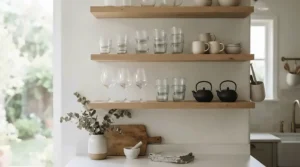
The apartment-dwelling casual host. Budget is tight, storage space is tighter, and entertaining happens maybe once a month. The Eco Living Recycled Glass Set or Amici Home Vino glasses make sense here — multi-use, inexpensive enough that a breakage doesn’t sting, and stylish enough for a casual gathering of friends.
The frequent weeknight wine drinker. This buyer opens a bottle two or three nights a week and runs the dishwasher constantly. Durability and clarity after repeated washes matter more than artisan flair. The Bormioli Rocco Planeo set is the clear match — its commercial-grade construction is built for exactly this frequency of use.
The intentional gift-giver. Shopping for a housewarming, wedding, or a friend who genuinely cares about sustainability credentials. The NOVICA Modern Blue set or Pacific Merchants Tonalá glassware deliver a documented artisan story and visual distinctiveness that a mass-produced set simply can’t match, justifying the higher price for a meaningful occasion.
Common Problems & Fixes
Problem: cloudy glass after repeated dishwasher use. This is usually hard-water etching, not a defect. Solution: switch to a rinse-aid dishwasher setting and hand-dry immediately rather than letting glasses air-dry with mineral-laden water still on the surface.
Problem: uneven volume between glasses in a hand-blown set like the Refresh Glass or NOVICA lines. Solution: this is an inherent trait of authentic hand-blown recycled glass wine glasses, not damage — pour by eye rather than assuming factory-identical capacity, and treat the variation as part of the handmade character you paid for.
Problem: green or blue tint interfering with judging wine color. Solution: for any serious tasting where color assessment matters, keep one clear-glass set like the Bormioli Rocco Planeo on hand, and reserve tinted artisan pieces for casual sipping where aesthetics matter more than clinical wine evaluation.
Problem: rim chips from storage. Solution: store glasses upright, spaced apart, ideally with a stemware rack or padded shelf liner rather than stacked inside one another.
Problem: uncertainty about how much recycled content a glass actually contains. Solution: look for manufacturer statements with a specific percentage rather than vague “eco-friendly” language — a documented number is a stronger signal than marketing copy alone.
How to Choose Recycled Glass Wine Glasses
Choosing the right recycled glass wine glasses comes down to seven practical criteria, in order of importance for most buyers:
- Confirm actual recycled content. Look for a stated percentage or explicit “made from recycled/upcycled glass” claim rather than a general “eco-friendly” label, which can be vague marketing rather than a substantiated claim.
- Match capacity to your typical pour. 12-16 oz suits most reds and whites; smaller 8 oz glasses work better for multi-use households.
- Decide stemmed versus stemless. Stemless is more breakage-resistant and dishwasher-friendly; stemmed allows proper swirling and keeps hand warmth off the bowl.
- Check for lead-free construction. Nearly all modern recycled glass wine glasses are lead-free by default, but it’s worth confirming for older or vintage-style pieces.
- Consider tint versus clarity needs. Clear glass is better for color-judging wine; tinted recycled glass is often more visually distinctive for casual entertaining.
- Weigh handmade character against uniformity. Artisan hand-blown sets carry natural variation; factory-made sets prioritize matching glasses.
- Match the price tier to frequency of use. Budget sets make sense for daily wear-and-tear; artisan sets suit special-occasion or gift purposes.
Common Mistakes When Buying Recycled Glass Wine Glasses
The most frequent mistake is assuming “recycled glass” and “recyclable glass” mean the same claim — they don’t. Recyclable simply means the glass could theoretically be recycled later; recycled content means the glass you’re holding was actually made using reclaimed material. Buyers who skip this distinction sometimes end up with ordinary virgin glass marketed loosely as “green.”
A second common mistake is buying a full stemmed set for daily use, then being frustrated by breakage rates — stemmed glassware is inherently more fragile than stemless, and daily dishwasher rotation is harder on delicate stems. A third mistake is ignoring capacity: an 8-ounce glass looks identical in a product photo to a 16-ounce glass, but the daily-use experience is very different. Finally, some buyers assume higher price automatically means higher recycled content, when in reality artisan labor and shipping from small studios often drive cost more than material sourcing does — it pays to check the actual material claim rather than inferring quality from price alone.
Recycled Glass Stemware vs Traditional Crystal Stemware
Recycled glass stemware and traditional crystal stemware solve different priorities, and the choice usually comes down to what you value more: environmental footprint or textbook wine-tasting performance. Traditional lead crystal was historically prized for its brilliance and ring when tapped, but modern buyers increasingly avoid it — the FDA advises against storing food or liquid in lead crystal glassware due to potential lead contamination, a concern that simply doesn’t apply to standard recycled soda-lime glass. Recycled glass stemware, by contrast, is virtually always lead-free, dishwasher-safe, and made without the energy-intensive mining and refining that virgin crystal production requires.
Where traditional crystal still wins is optical clarity and rim thinness for serious sommelier-level tasting — thin-cut crystal genuinely does concentrate aromatics slightly better than thicker recycled glass. But for the overwhelming majority of home wine drinkers, that difference is marginal next to the environmental and safety trade-offs.
| Factor | Recycled Glass Stemware | Traditional Crystal Stemware |
|---|---|---|
| Environmental footprint | Lower — reuses existing material | Higher — virgin material, more energy |
| Lead content | Virtually always lead-free | Sometimes contains lead oxide |
| Price range | Generally lower to mid-range | Often higher, especially fine crystal |
| Best For | Everyday and eco-conscious buyers | Formal tasting and heirloom collecting |
The table above makes the trade-off pretty concrete: if you’re outfitting a household for regular use, recycled glass stemware wins on cost, safety, and sustainability without meaningfully sacrificing the wine-drinking experience. Crystal still has a place for a serious collector’s cabinet, but it’s no longer the automatic “better” choice it once was.
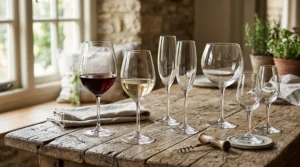
What to Expect: Real-World Performance
On paper, specs like “12 oz capacity” or “Star Glass composition” don’t tell you what daily life with recycled glass wine glasses actually feels like. In practice, expect slightly more visual character than mass-market clear glass — faint tints, the occasional tiny air bubble, subtle weight differences glass to glass, especially with hand-blown sets like Pacific Merchants Tonalá or NOVICA Modern Blue. These aren’t defects; they’re the visible fingerprint of the recycling and hand-forming process.
Durability-wise, well-made recycled glass performs comparably to standard glassware — it’s the manufacturing quality, not the recycled content itself, that determines chip and crack resistance. A commercial-grade set like the Bormioli Rocco Planeo will survive weekly dishwasher rotations for years, while thinner artisan pieces reward careful hand-washing. Expect clarity that’s good but not laboratory-perfect on tinted or budget sets — fine for everyday wine enjoyment, less ideal if you’re formally evaluating color for a tasting competition.
Sustainable Drinkware Brands Worth Knowing
Beyond the seven products featured above, a handful of sustainable drinkware brands consistently show up across recycled and eco-conscious glassware searches. Bormioli Rocco, an Italian glassmaker operating since 1825, has publicly documented sustainability initiatives including reduced-refuse manufacturing and meaningful recycled-glass incorporation across product lines. Pacific Merchants Trading Company works directly with artisan cooperatives in Tonalá, Mexico, positioning fair-trade labor practices alongside its recycled-material sourcing. NOVICA operates as a fair-trade marketplace connecting individual global artisans — including Mexican glassblowers like Lourdes Martinez — directly with U.S. buyers, with a documented share of proceeds returning to the maker.
When evaluating any sustainable drinkware brand, look past generic “eco-friendly” badge language and check for specifics: a stated recycled-content percentage, documented fair-trade or labor certifications, or transparent sourcing information about where and how the glass is actually made. Brands that provide this level of detail tend to be more trustworthy than those relying on vague green marketing alone.
Recycled Glass Manufacturing: How Cullet Becomes Your Wine Glass
Understanding recycled glass manufacturing helps explain both the price and the visual character of the glasses on this list. The process starts with cullet — crushed glass from collected bottles, jars, or factory waste — which is sorted, cleaned of contaminants like metal caps and ceramics, and color-sorted where possible. During recycling, glass cullet is melted and reshaped into new items, including drinking glasses, via a glass cullet production process that requires specialized crushing equipment because glass is abrasive enough to wear down standard machinery.
Once cleaned, cullet is blended with traditional raw materials — silica sand, soda ash, limestone — and fed into a furnace, typically melting at high temperatures before being shaped either by machine pressing (common for factory-made stemless glasses like the Amici Home Vino or Bormioli Rocco Planeo) or hand-blown by an artisan using a blowpipe, as with the NOVICA and Pacific Merchants lines. The proportion of cullet used varies widely by manufacturer — some incorporate 30 percent, others push toward much higher shares — which is exactly why checking a brand’s stated recycled-content percentage matters more than assuming “recycled glass” is a uniform standard across every product.
Recycled Glass Wine Glasses as Eco-Friendly Kitchenware: Safety & Care
As eco-friendly kitchenware, recycled glass wine glasses carry a genuine safety advantage over some traditional alternatives: standard recycled soda-lime glass contains no lead, unlike older crystal stemware. The FDA specifically warns that food or liquid shouldn’t be stored in lead crystal glassware due to potential lead contamination, and recommends against pregnant women, children, and babies using lead crystal at all — a concern that modern recycled glassware manufacturing generally sidesteps entirely, since post-consumer cullet used in drinkware is almost never leaded.
That said, “eco-friendly” as a label deserves scrutiny rather than blind trust. Marketers are expected to substantiate specific environmental claims rather than lean on vague green language, and unqualified recycled-content claims should reflect real, verifiable sourcing. When shopping for eco-friendly kitchenware generally — not just wine glasses — favor brands that state an actual recycled-content percentage or third-party verification over those using “green” as a purely aesthetic descriptor.
✨ Don’t Miss These Exclusive Deals!
🔍 Take your glassware collection to the next level with these carefully selected recycled glass wine glasses. Click on any highlighted item to check current pricing and availability. These sustainable picks will help you host authentic, eco-conscious gatherings your friends and family will love!
Price Range & Value Analysis
Value in recycled glass wine glasses doesn’t scale linearly with price — it scales with how the price maps to your actual use case. A $25 factory-made set like Red Co. Premium Collection delivers strong per-glass value for someone who wants five sets of everyday stemware without worrying about breakage. A $40-$50 commercial-grade set like Bormioli Rocco Planeo costs more upfront but, given its documented durability for repeated dishwasher cycles, likely has a lower long-term cost per use if you’re hosting weekly. Artisan sets in the $60-$80 range, like NOVICA Modern Blue or Pacific Merchants Tonalá, aren’t really competing on cost-per-glass at all — you’re paying for fair-trade labor transparency and one-of-a-kind craftsmanship, which is a values-based purchase more than a pure durability calculation.
| Price Tier | Example Product | Value Logic |
|---|---|---|
| Under $30 | Red Co., Eco Living, Amici Home Vino | Best cost-per-glass for daily, low-stakes use |
| $30-$50 | Refresh Glass, Bormioli Rocco Planeo | Best long-term durability and story value |
| $60-$80+ | NOVICA Modern Blue, Pacific Merchants | Best for artisan sourcing and gifting |
The takeaway from this breakdown is straightforward: don’t buy premium artisan recycled glass wine glasses purely for everyday abuse-resistance — a mid-tier commercial set like the Bormioli Rocco Planeo will outlast them under heavy dishwasher rotation. Save the artisan tier for pieces you’ll treat with a bit more care.

Frequently Asked Questions
❓ Are recycled glass wine glasses safe to drink from?
❓ How can you tell if wine glasses are actually made from recycled glass?
❓ Are recycled glass wine glasses dishwasher safe?
❓ Do recycled glass wine glasses cost more than regular wine glasses?
❓ What's the difference between recycled glass and upcycled glass wine glasses?
Conclusion
Recycled glass wine glasses have moved well past novelty status — in 2026, they range from six-dollar-a-glass factory sets to genuinely collectible artisan stemware, and the environmental case for choosing them keeps getting stronger. The FTC’s own consumer guidance reminds shoppers to check whether a recycled-content claim is specific and substantiated rather than vague, so as you shop beyond this list, that’s the single habit worth carrying forward: look for a real percentage, not just a green leaf icon.
Across the seven sets covered here, the Red Co. Premium Collection and Eco Living Recycled Glass Set are the easiest entry points for budget-conscious buyers, the Bormioli Rocco Planeo is the strongest all-around pick for frequent hosts who need durability, and NOVICA Modern Blue or Pacific Merchants Tonalá reward anyone shopping for a meaningful, story-rich gift. Whichever tier fits your table, you’re trading a small amount of manufacturing perfection for a genuinely smaller environmental footprint — and for most home wine drinkers, that’s an easy trade to make.
✨ Ready to upgrade your table sustainably? Check current availability on any set above before prices or stock change! 🍷🌿
Recommended for You
- Thin-Walled Glass Wine Glasses: 7 Stunning Picks for 2026
- 7 Best Borosilicate Glass Wine Glasses in 2026
- 7 Best Soda-Lime Glass Wine Glasses for Everyday Use (2026)
Disclaimer: This article contains affiliate links. As an Amazon Associate, I earn from qualifying purchases. If you purchase products through these links, we may earn a small commission at no additional cost to you.
✨ Found this helpful? Share it with your friends! 💬🤗
