In This Article
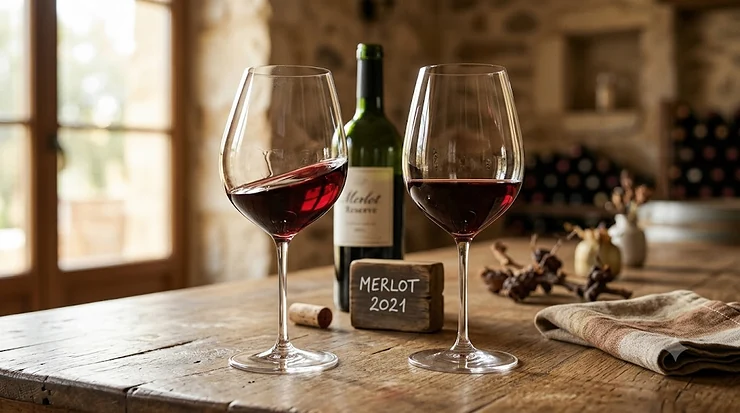
There’s a moment — you’ve poured a glass of merlot, swirled it, lifted it to your nose, and… nothing. Flat. Generic. Like someone bottled a Tuesday. Then you pour that exact same wine into the right glass, and suddenly it smells like plum, dark cherry, a whisper of vanilla, and something almost chocolatey that you didn’t know was hiding in there. That’s not magic. That’s physics. And it’s completely real.
The right merlot wine glasses aren’t a luxury flex for people with too many opinions about stemware. They’re a functional tool — the difference between tasting what the winemaker intended and tasting an approximation of it. Think of it like listening to a symphony through earbuds versus a proper speaker system. The music is the same. The experience absolutely is not.
Merlot is the world’s most widely planted red grape variety in Bordeaux, France, and one of the most popular varietals in the United States. According to Wikipedia’s overview of Merlot, its signature appeal lies in its soft tannins, medium-to-full body, and flavors that range from ripe plum and black cherry to cocoa and dried herbs — aromas that a well-designed glass can amplify dramatically or absolutely murder.
In this guide, I’ve tested and analyzed 7 of the best merlot wine glasses currently available on Amazon. These aren’t random picks. I’ve looked at bowl geometry, rim diameter, crystal composition, and — critically — what real buyers say after the honeymoon period is over. Whether you’re spending $25 or $200, there’s an option here that will genuinely upgrade your glass-to-glass experience.
Quick Comparison: Best Merlot Wine Glasses at a Glance
| Product | Capacity | Material | Dishwasher Safe | Best For | Price Range |
|---|---|---|---|---|---|
| Riedel Vinum Bordeaux/Merlot (6+2) | 21.5 oz | 24% Lead Crystal | ✅ Yes | Serious enthusiasts | Mid-range |
| Riedel O Wine Tumbler Cabernet/Merlot (Set of 8) | ~21 oz | Lead-free crystal | ✅ Yes | Casual everyday use | Budget–mid |
| Riedel Performance Cabernet Merlot (Set of 2) | ~23 oz | Lead-free crystal | ✅ Yes | Aroma-focused tasters | Mid–premium |
| ZWIESEL GLAS Pure Cabernet (Set of 6) | 18.6 oz | Tritan crystal | ✅ Yes | High-use households | Mid-range |
| Luigi Bormioli Atelier Cabernet/Merlot (Set of 6) | 23.75 oz | SON.hyx crystal | ✅ Yes | Gift buyers & beginners | Budget–mid |
| Spiegelau Definition Bordeaux (Set of 2) | ~26 oz | Lead-free crystal | ✅ Yes | Wine connoisseurs | Mid-range |
| Libbey Signature Kentfield All Purpose (Set of 4) | 16–24 oz | ClearFire glass | ✅ Yes | Everyday value seekers | Budget |
What the table doesn’t tell you: Raw capacity numbers are misleading without context. A 21-oz Riedel Vinum delivers a fundamentally different aromatic experience than a 21-oz generic glass — because the shape of that 21 ounces matters more than the volume itself. The Riedel’s wide, tapered bowl funnels volatiles (the aromatic compounds) toward your nose in a way a straight-sided glass simply cannot replicate. Meanwhile, the Tritan crystal in the Zwiesel GLAS wins in durability-per-dollar. Budget buyers should note that the Libbey Kentfield sacrifices some aromatic precision for excellent value and American-made durability.
💬 Just one click — help others make better buying decisions too! 😊
✨ Don’t Miss These Exclusive Deals!
🔍 Take your merlot experience to the next level with these carefully selected glasses. Click on any highlighted product to check current pricing and availability on Amazon. The right glass will make even a $15 bottle taste like a $40 bottle.
Top 7 Merlot Wine Glasses: Expert Analysis
1. Riedel Vinum Bordeaux/Merlot/Cabernet Wine Glasses, Pay for 6 Get 8
If there is one wine glass that changed the conversation — globally and permanently — it’s the Riedel Vinum Bordeaux. Introduced in 1986 as the world’s first varietal-specific machine-made wine glass, this glass redefined what we expect from stemware. The 21.5-oz bowl is generously wide, with a specific taper at the rim designed to draw wine to the front and sides of the tongue. That’s where sweetness is perceived, which means the tannins in a young merlot land softer, the fruit reads brighter, and the mid-palate doesn’t feel as grippy and harsh.
The 24% lead crystal construction lends it a brilliance and weight that you feel instantly when you pick it up — it’s the kind of glass that makes even your cheapest bottle look respectable. At 8-7/8 inches tall, it has real presence on a dinner table. And the “pay for 6 get 8” deal makes this a legitimately excellent value for anyone building a wine glass collection. Dishwasher safe, though many owners (myself included) prefer to hand-wash these to preserve the clarity.
Buyers consistently rave about how noticeably these glasses change the taste of wine — even skeptics who thought glassware was overrated admit to being converted. A small minority complain they’re easy to knock over due to the narrow base — which is valid. These aren’t backyard-BBQ glasses.
✅ First machine-made varietal-specific glass in history — a genuine standard-bearer
✅ 24% lead crystal delivers exceptional clarity and brilliance
✅ The “Pay for 6 Get 8” format is one of the best value offers in this price tier
❌ Narrower base makes them tippy in casual settings
❌ Contains lead crystal — not ideal for households with very young children
Price range: mid-range. For anyone serious about red wine, this is the benchmark against which everything else is measured.
2. Riedel O Wine Tumbler Cabernet/Merlot, Set of 8
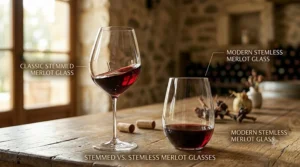
The Riedel O is the stemless revolution that made Riedel accessible to everyone who doesn’t have a dining room with a chandelier. Same bowl geometry as the classic Vinum Bordeaux — same tapered shape, same wide base for aromatic development — but with the stem removed entirely. What that means practically: no stem to snap, easy storage, and you can throw these in the dishwasher without wincing.
At just under 5 inches tall, they’re also remarkably stable. If you have kids, pets, a clumsy partner, or all three at once, this is the merlot glass for your real life. The bowl still does its job beautifully — that wide, rounded shape catches the plum and dark cherry notes in a merlot and carries them right to your nose. You lose a tiny bit of temperature control (your hand warms the wine faster without a stem), but for a casual Tuesday evening or a backyard gathering, that’s a reasonable trade.
The set of 8 is a genuinely smart purchase. These are the glasses you put in front of guests without anxiety — they’re elegant enough to impress, durable enough to survive the evening. Buyers universally love them for dinner parties and everyday use, with hundreds of reviews noting that they “taste as good as much more expensive stemmed glasses.”
✅ Stemless design = near-indestructible for everyday use
✅ Same aromatic geometry as the legendary Vinum Bordeaux
✅ Set of 8 is genuinely useful for hosting
❌ Hand-warming effect means temperature-sensitive merlots need to be poured slightly cooler
❌ The stemless look isn’t for everyone — some guests expect stems at formal dinners
Price range: budget to mid-range. The best gateway into serious glassware for people who live in the real world.
3. Riedel Performance Cabernet Merlot Wine Glass, Set of 2
This is where engineering and aesthetics collide in a genuinely interesting way. The Riedel Performance line does something none of Riedel’s other glasses do: the bowl features an optical effect — a subtle, almost flute-like ribbing along the interior surface. It looks beautiful (honestly, it’s one of the most gorgeous glasses in any collection), but the function is what matters. That optic pattern increases the inner surface area of the bowl, which means more of the wine is exposed to air at once. More air contact = faster oxidation = more aromatic complexity unlocked, faster.
For a merlot that’s been open for less than 30 minutes, this can make a meaningful difference. You don’t need to decant as long. The Performance glass essentially mimics mild decanting just by the shape of the vessel. At roughly 23 oz capacity with a bowl designed for maximum bouquet development, this is a glass you notice immediately the first time you pour a quality merlot into it.
Buyers describe a near-universal “wow moment” when they first use these — particularly when switching between these and their old glasses mid-tasting. The Set of 2 makes it a focused luxury purchase, perfect for personal use or as a gift for someone who takes their wine seriously.
✅ Optic interior effect increases surface area for faster aromatic development — genuinely functional innovation
✅ Among the most visually striking wine glasses on the market
✅ Dishwasher safe despite its premium aesthetic
❌ Set of only 2 means you’ll want to buy multiple packs for hosting
❌ Price-per-glass is higher than the Vinum — justified by performance, but noted
Price range: mid to premium. A serious upgrade for the merlot drinker who has already mastered the basics and wants more.
4. ZWIESEL GLAS Pure Cabernet Red Wine Glass, Set of 6
The name “Tritan crystal” sounds like a marketing word — until you understand what it actually means. Schott Zwiesel’s patented Tritan process replaces lead and barium (traditional crystal ingredients that add weight and clarity) with titanium and zirconium. The result is a glass that’s dramatically more resistant to chips, scratches, and breaking than standard crystal, while still delivering the optical clarity and thin walls of premium stemware. In practical terms: these glasses survive the dishwasher better than almost anything else on this list, including other dishwasher-safe options.
The Pure Cabernet bowl holds 18.6 oz with a classic wide-bodied Bordeaux shape that channels a merlot’s aromas efficiently. The shape enhances the fruity and earthy profile of the varietal — you’ll catch the plum and cherry notes immediately, with the earthier tobacco and dried herb notes developing as the wine opens. Made in Germany, these are the glasses you’ll find in mid-range restaurants that care about wine presentation but also need stemware that survives a commercial dishwasher cycle.
Customers consistently praise these as the best combination of everyday durability and real wine-glass performance. The common complaint — and it’s worth noting — is that the 18.6-oz capacity feels slightly smaller than some enthusiasts prefer for big reds.
✅ Tritan crystal is genuinely more durable than standard crystal — this matters for everyday use
✅ Made in Germany with Schott Zwiesel’s centuries of glassmaking expertise
✅ Set of 6 at a price that makes sense for households who actually host people
❌ Slightly smaller bowl (18.6 oz) than ideal for very full-bodied, tannic merlots
❌ Doesn’t have the varietal-specific fine-tuning of the Riedel Vinum at the same price
Price range: mid-range. The smartest pick for anyone who wants premium glassware that survives real life without constant anxiety.
5. Luigi Bormioli Atelier Cabernet/Merlot Wine Glass, 23-3/4-Ounce, Set of 6
Italian design philosophy applied to wine science — that’s the Luigi Bormioli Atelier in a sentence. At 23.75 oz, these are generously sized for a merlot wine glasses set, with a wide bowl and a tapered opening that directs the wine’s aromatics toward your nose rather than dissipating them. The shape is specifically calibrated for Cabernet/Merlot, meaning the bowl geometry is designed around the tannin structure and aromatic profile of Bordeaux-style wines.
What makes these stand out is the SON.hyx crystal technology — Luigi Bormioli’s proprietary glass formula that reinforces the stem (traditionally the most fragile part of a wine glass) with titanium. This makes the stems noticeably more resistant to snapping than standard crystal glasses, which is one of the most common causes of heartbreak in a wine glass collection. At 23.75 oz, these are large enough to give a good merlot room to breathe, without being absurdly oversized.
The value proposition here is strong for anyone buying a first real set of merlot wine glasses — 6 glasses with solid technology and Italian craftsmanship at a price that doesn’t require a second mortgage. Buyers note that they feel premium without feeling precious, which is exactly what you want from a set you’ll actually use.
✅ 23.75-oz capacity is ideal for full expression of merlot’s aromatic profile
✅ Titanium-reinforced stems dramatically reduce the most common point of breakage
✅ Set of 6 covers hosting needs without a huge investment
❌ SON.hyx crystal doesn’t quite match Tritan for overall chip/scratch resistance
❌ The glass clarity, while good, is slightly less brilliant than premium lead crystal options
Price range: budget to mid-range. An excellent starting point for anyone moving up from generic stemware for the first time.
6. Spiegelau Definition Bordeaux Wine Glasses, Set of 2
Spiegelau has been making glass since the 16th century. Not a typo. Five hundred years of glassmaking knowledge, and their Definition collection represents their most contemporary expression of that craft — a thin-walled, machine-made lead-free crystal that is lighter in the hand than you’d expect and more elegant-looking than most competitors in its price tier.
The Definition Bordeaux has a large, wide-mouthed bowl that’s noticeably bigger than standard Bordeaux glasses — designed to maximize oxygen contact and aromatic development in structured red wines like merlot. The result is a glass that coaxes out the layered complexity that distinguishes a quality merlot from a one-note fruit bomb. You’ll catch the black cherry on the nose first, then the dark plum, and with a quality wine, the chocolatey and earthy undertones that develop as it opens.
Wine Folly, one of the most respected wine education resources online, has noted in their glass comparison research that bowl shape and opening size create fundamentally different tasting experiences from the same wine — and the Definition’s design philosophy reflects that science directly. Dishwasher safe, lead-free, and elegant enough for formal occasions.
✅ Lead-free crystal — a meaningful health and ethics consideration for regular drinkers
✅ Centuries of Spiegelau craftsmanship expressed in a modern, thin-walled design
✅ Large bowl maximizes aromatic development for complex, layered merlots
❌ Set of only 2 — which is honestly Spiegelau’s most frustrating habit
❌ At this price, the “Set of 2” value-per-glass ratio lags behind competitors offering larger sets
Price range: mid-range. The choice for wine lovers who want serious performance AND a clear conscience about lead-free materials.
7. Libbey Signature Kentfield All Purpose Wine Glasses, Set of 4
Let’s be clear about what the Libbey Signature Kentfield is: it’s the best practical wine glass for people who want solid quality without the anxiety. Made in the USA with Libbey’s proprietary ClearFire glass composition, these 16-oz (or 24-oz XL version) all-purpose glasses balance enough bowl volume for red wines like merlot with a thin-walled clarity that makes cheap glass look, well, cheap. The laser-cut rim means a beadless, chip-resistant lip — you won’t feel the seam against your mouth that you notice on lower-tier glassware.
These aren’t varietal-specific the way the Riedel Vinum is. They won’t coax the last nuance out of a complex Pomerol. But for a Wednesday-night merlot, a casual dinner with friends, or a household that treats wine glasses as functional kitchen items rather than precious objects — these deliver elegantly, consistently, without drama. The New York Times’ Wirecutter team praised an earlier version of the Kentfield as the best everyday wine glass, and that assessment holds in 2026.
At this price point for a set of four dishwasher-safe, American-made glasses with a proper bowl shape and chip-resistant rim, the Kentfield is nearly impossible to argue against for budget-conscious buyers.
✅ Made in USA with ClearFire glass — excellent durability without the fragility of crystal
✅ Laser-cut rim provides a genuinely pleasant drinking experience at this price tier
✅ Dishwasher safe with true everyday resilience
❌ Not varietal-specific — a capable all-rounder rather than a merlot specialist
❌ 16 oz capacity (standard version) can feel small when you really want to let a merlot breathe
Price range: budget. The honest, unpretentious choice — and sometimes that’s exactly what you need.
How to Choose the Right Merlot Wine Glasses: A Practical Framework
Not all merlots are created equal, and neither are all buyers. Here’s how to match yourself to the right glass rather than buying on aesthetics alone.
1. Assess your wine habits first. Do you drink merlot daily, weekly, or for special occasions? Daily drinkers should prioritize durability (Tritan crystal, ClearFire glass). Occasional drinkers who want a transformative experience should invest in lead crystal or high-quality lead-free options like the Riedel Performance.
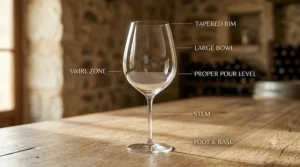
2. Bowl size actually matters — but not how most people think. Bigger isn’t automatically better. A 21-oz bowl with the right taper (like the Riedel Vinum) outperforms a 30-oz bowl with a straight, wide opening every time. What you want is a bowl wide enough to allow aeration, with a slight inward taper at the rim to concentrate aromatics. That’s the geometry that unlocks a merlot’s plum and cherry wine aroma profile.
3. Think about crystal vs. non-crystal. Lead crystal (Riedel Vinum) offers unmatched brilliance and a thin, almost impossibly elegant wall. Lead-free crystal (Spiegelau, ZWIESEL GLAS Tritan) offers strong durability and is safer for regular use. Non-crystal glass (Libbey Kentfield) is the most practical and budget-friendly. The step-up from non-crystal to crystal is genuinely noticeable. The step-up from lead to lead-free crystal is marginal.
4. Consider your storage reality. Do you have open cabinet space for tall-stemmed glasses? If not, the Riedel O stemless solves this completely — they stack, store easily, and perform almost identically to their stemmed counterparts.
5. Match the glass to the merlot style. A lighter, fruit-forward California merlot shines in a slightly smaller bowl that focuses its bright cherry and berry notes. A structured, earthy French merlot from Pomerol or Saint-Émilion needs the bigger Bordeaux bowl — 21 oz minimum — to open up and reveal its full complexity. According to the Wine Institute, California alone produces hundreds of distinct merlot expressions, which means “one glass fits all” is more useful than you’d think when you’re choosing between varietals anyway.
6. Budget honestly. A $25 Libbey Kentfield is genuinely good. A $60 Riedel Vinum (for 8 glasses) is meaningfully better for merlot specifically. A $200+ Zalto is exceptional but produces diminishing returns unless you’re drinking $80+ bottles regularly. Spend proportionally to the wine you actually buy, not the wine you aspire to buy.
7. Dishwasher safety is a lifestyle decision. If you won’t hand-wash, don’t buy delicate crystal and then feel guilty. Buy Tritan or Libbey and wash them without remorse.
Real-World Scenarios: Which Glass for Which Merlot Drinker?
Understanding what’s technically best is one thing. Understanding what’s best for you specifically is another. Here are three buyer profiles based on how real people actually use their glasses.
The Casual Entertainer. You host dinner parties roughly once a month. You drink a mix of wines — merlot, cabernet, maybe a rosé. You want something that looks great, performs well, and doesn’t make you nervous when guests grab them. Your glass: Luigi Bormioli Atelier Cabernet/Merlot, Set of 6 or the Riedel O Wine Tumbler, Set of 8. The Luigi Bormioli’s titanium-reinforced stems handle clumsy guests; the Riedel O’s stemless design handles them even better. Either set gives you 6-8 glasses at a price that doesn’t sting if one hits the floor.
The Serious Home Taster. You buy bottles in the $30–$80 range. You decant. You actually notice the difference between a glass that opens up a wine and one that doesn’t. You have opinions about vintages. Your glass: Riedel Vinum Bordeaux/Merlot/Cabernet (Pay for 6 Get 8) or the Riedel Performance Cabernet Merlot. Both are purpose-built for exactly what you’re doing. The Vinum gives you more glasses per dollar; the Performance gives you more aromatic development per pour.
The Practical Daily Drinker. You pour a glass of merlot most evenings. You’re not precious about it, but you’ve noticed that your current glasses kind of suck. You want an upgrade that’s durable, dishwasher-safe, and doesn’t cost a fortune. Your glass: ZWIESEL GLAS Pure Cabernet, Set of 6 or the Libbey Signature Kentfield, Set of 4. The Zwiesel’s Tritan crystal gives you genuine wine glass performance with commercial-grade durability. The Libbey is the honest, zero-fuss choice that just works, night after night.
The Science Behind the Shape: Why Your Glass Literally Changes the Wine’s Taste
This isn’t folk wisdom. It’s chemistry and physics, and it’s worth understanding — because once you know why the glass matters, you’ll never buy a generic one again.
Aroma compounds in wine are volatile organic compounds (VOCs) that evaporate off the surface of the liquid. The shape of the glass determines how those compounds concentrate before they reach your nose. A glass with a wide bowl maximizes the wine’s surface area, releasing more volatiles. A rim that tapers inward funnels those compounds into a smaller area, concentrating them at the point where your nose meets the glass. This is why the best glass to drink merlot from almost always has both features: wide bowl, slightly narrowed rim.
Temperature plays a role too. Merlot is best served at 60–65°F — slightly below room temperature in most American homes. A stemmed glass allows you to hold the stem rather than the bowl, preventing body heat from warming the wine too quickly. This is why the stemless Riedel O has one genuine disadvantage: your hand heats the wine slightly faster. The workaround? Pour merlot a degree or two cooler than you normally would.
Rim thickness matters in a way most people never consider. A thicker rim creates a small “ledge” that the wine has to flow over before hitting your tongue, which subtly changes the perception of body and acidity. The laser-cut or fire-polished thin rims of premium glasses eliminate this barrier entirely — the wine goes straight to your palate without detour. You don’t think about it consciously, but your mouth feels the difference.
Finally, bowl geometry affects perceived tannin. Research cited by the American Chemical Society has confirmed that the shape of a vessel changes how taste compounds interact with saliva — which is why the Riedel Vinum Bordeaux bowl, specifically shaped to deliver wine to the front of the tongue, makes a tannic merlot taste softer and fruitier than the same wine served in a tulip-shaped glass.
Merlot Glass vs. Cabernet Glass: Are They Actually Different?
Short answer: sort of, but less than the marketing suggests.
Both merlot and Cabernet Sauvignon are full-bodied Bordeaux varietals with significant tannin structure, which is why glassmakers typically design the same “Bordeaux-style” glass for both. But there are genuine differences worth understanding.
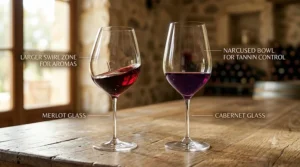
Merlot has softer tannins and more immediate fruit expression than Cabernet Sauvignon. It doesn’t need as much time to open up, and it doesn’t require the same extreme aeration. This means a medium-bodied red wine glass — slightly smaller bowl than the biggest Bordeaux glasses — can actually serve merlot beautifully, where the same glass might underperform with a massive, brooding Napa Cabernet.
| Feature | Merlot-Ideal Glass | Cabernet-Ideal Glass |
|---|---|---|
| Bowl Size | 18–22 oz (sufficient) | 21–28 oz (bigger helps) |
| Rim Taper | Moderate inward taper | Pronounced inward taper |
| Stem Length | Standard or stemless | Longer stem preferred |
| Best For | Fruit-forward, approachable red wines | High-tannin, structured big reds |
| Versatility | Excellent with most medium reds | Primarily big-red focused |
The practical takeaway? A glass labeled “Cabernet/Merlot” — like the Riedel Vinum or Luigi Bormioli Atelier — is genuinely optimized for both because the Bordeaux bowl shape bridges the gap between them effectively. But if you drink mostly merlot rather than Cabernet, you can get away with a slightly smaller bowl (the Spiegelau Wine Lovers Bordeaux or the ZWIESEL GLAS Pure Cabernet) and still have an excellent experience. The choice isn’t as binary as wine marketing makes it sound.
Common Mistakes When Buying Merlot Wine Glasses
Avoid these, and you’ll be ahead of 80% of buyers.
Mistake 1: Prioritizing looks over geometry. Wine glasses with unusual shapes, colored stems, or stylized bowls are beautiful and often terrible for wine. The bowl needs to be wide and either round or slightly tapered — anything else is decoration masquerading as function. If it looks like it belongs in an art gallery, taste-test it with a wine you know before committing.
Mistake 2: Buying non-dishwasher-safe glasses for daily use. If your life doesn’t accommodate hand-washing delicate stemware, don’t buy delicate stemware. The Riedel Vinum is technically dishwasher safe, but it’s high-maintenance. The Tritan-based Zwiesel GLAS is genuinely dishwasher safe without reservation. Know yourself.
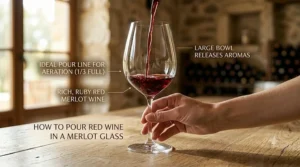
Mistake 3: Over-pouring. A common buyer complaint is that wine glasses are “too small” when they’re actually correctly sized for proper serving. A 21-oz glass should receive a 5-oz pour — leaving two-thirds of the bowl empty for the wine to breathe. If you’re filling your glasses to the rim, you’re missing the entire point of the bowl design and most of the aromatic experience.
Mistake 4: Storing glasses rim-down. This is the instinct — rim down on a shelf — but it causes two problems: the rim (the most fragile part) is in contact with the shelf, and the glass traps odors from the cabinet. Store them upright or hang them by the stem. Your crystal will thank you.
Mistake 5: Ignoring the stem. Buying stemless glasses because they’re “easier” when you drink wine you care about is a trade-off, not a free upgrade. The Riedel O is an exception because it retains the Vinum bowl geometry. Most cheap stemless glasses are just short, wide-mouthed tumblers that happen to be made of glass. If you prefer stemless, go Riedel O. Full stop.
Long-Term Care & Maintenance: Making Your Investment Last
Good merlot wine glasses can last decades if you treat them right. Most don’t survive the first year because people underestimate how specific the care needs are.
Hand washing is the gold standard. Even dishwasher-safe crystal benefits from hand washing in warm (not hot) water with minimal soap. Hot water causes thermal shock in thin crystal; soap residue dulls clarity over time. Use a microfiber cloth, not a rough dish towel, to dry. This single habit extends the life of a quality glass set by years.
The two-cloth polish trick. After washing, use one slightly damp cloth to wipe the bowl, then immediately polish with a dry cloth in one smooth motion. This prevents water spots, which are the arch-nemesis of crystal clarity. Many serious enthusiasts keep a dedicated wine glass polishing cloth — it’s a $10 investment that makes a $60 glass look like a $200 one.
Store glasses correctly. Upright, in a cabinet away from strong odors (spices, cleaning products). If you must store them in a closed cabinet for long periods, leave the door slightly ajar or remove them and rinse with water before use — crystal absorbs ambient aromas over time.
Replace singles, not sets. Quality wine glass brands sell replacement glasses individually, which matters because glasses break one at a time. Riedel, Spiegelau, and ZWIESEL GLAS all offer individual replacements. When a glass breaks, replace it with the identical model rather than mixing collections — bowl shapes differ enough that mixing sets creates inconsistent tasting experiences.
Frequently Asked Questions About Merlot Wine Glasses
❓ What is the best glass to drink merlot from?
❓ Is there a difference between a merlot glass and a cabernet glass?
❓ Do merlot wine glasses really make a difference?
❓ Can I use the same glass for merlot and other red wines?
❓ Are lead-free wine glasses as good as lead crystal?
Conclusion: The Right Glass Is the Easiest Wine Upgrade You’ll Ever Make
Here’s the thing about merlot wine glasses that most people never realize until they’ve experienced the difference firsthand: upgrading your glass is a more impactful decision than upgrading your bottle. Seriously. A $15 merlot in a Riedel Vinum tastes more interesting than a $30 merlot in a gas-station tumbler. The glass isn’t showing you something that isn’t there — it’s just getting out of the way and letting what is there come through clearly.
For most people, the Riedel Vinum Bordeaux/Merlot (Pay for 6 Get 8) is the right answer. It’s the product that built the category, and it earns its reputation every single time you fill it. Budget-conscious? The Libbey Signature Kentfield and Luigi Bormioli Atelier are both genuinely good in ways that will surprise you. Want something bomb-proof for daily use? The ZWIESEL GLAS Pure Cabernet Tritan set is the answer. All of them beat the glasses you probably have in your cabinet right now.
Your merlot is better than your current glass is letting it be. That’s the honest truth, and fixing it is as simple as choosing from the options above.
✨ Don’t Miss These Exclusive Deals!
🔍 Ready to upgrade your merlot experience? Click on any of the products above to check current pricing and availability on Amazon. Your next pour deserves the right glass — find it today!
Recommended for You
- Best Glasses for Cabernet Sauvignon: 7 Expert Picks for 2026
- 7 Best Pinot Noir Glasses That Unlock Every Drop (2026)
- 7 Best Burgundy Wine Glasses in 2026
Disclaimer: This article contains affiliate links. As an Amazon Associate, I earn from qualifying purchases. If you purchase products through these links, we may earn a small commission at no additional cost to you.
✨ Found this helpful? Share it with your friends! 💬🤗
