In This Article
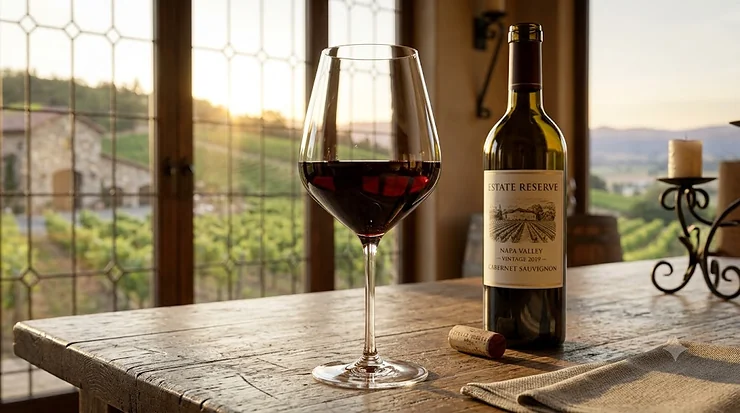
You spent $45 on a Napa Valley Cabernet Sauvignon. Maybe more. You let it breathe, you dimmed the lights, you even lit a candle. And then you poured it into a stumpy, generic wine glass — the kind that came in a six-pack from a discount store — and wondered why it tasted a little flat. A little harsh. A little… meh.
Here’s the thing nobody tells you at the wine shop: the glasses for cabernet sauvignon matter almost as much as the wine itself.
That’s not marketing speak. It’s chemistry. Cabernet Sauvignon is one of the most structurally complex red wines on the planet — high in tannins, bold in alcohol (often between 13.5% and 15%), and layered with aromas ranging from blackcurrant and tobacco to cedar, dark chocolate, and green pepper. According to Wikipedia’s entry on Cabernet Sauvignon, it is the world’s most widely planted red grape variety, with a profile that demands thoughtful handling from vine to glass.
The right glasses for cabernet sauvignon direct those aromas toward your nose at the perfect angle, soften harsh alcohol vapors before they hit you, and give the wine enough surface area to breathe mid-pour. The wrong glass does the opposite — trapping heat, concentrating ethanol, and dumbing down a wine that was never supposed to be dumb.
What is glasses for cabernet sauvignon? Simply put, it refers to tall, wide-bowled stemware — typically Bordeaux-style — specifically engineered to enhance the aroma, tannin structure, and flavor balance of full-bodied, tannic red wines like Cabernet Sauvignon. These glasses typically hold 20–30+ ounces and stand 8–10 inches tall.
In this guide, I’ve tested and researched the 7 best glasses for cabernet sauvignon available on Amazon right now in 2026. From budget-friendly entry-level sets to hand-blown Austrian masterpieces favored by Michelin-starred restaurants, there’s something here for every type of wine drinker.
Quick Comparison Table: Top 7 Glasses for Cabernet Sauvignon at a Glance
| Glass | Capacity | Material | Dishwasher Safe | Price Range | Best For |
|---|---|---|---|---|---|
| Riedel Vinum Cabernet/Merlot | 22 oz | Lead crystal | ✅ Yes | $60–$80 (set of 4) | Everyday drinker, classic choice |
| Riedel Winewings Cabernet | ~27 oz | Lead-free crystal | ✅ Yes | $35–$50 (single) | Aroma-obsessed enthusiasts |
| Riedel Heart To Heart Cabernet | 28.25 oz | Lead-free crystal | ✅ Yes | $40–$60 (set of 2) | New World Cab lovers |
| Zalto Denk’Art Bordeaux | ~25.9 oz (765ml) | Lead-free crystal | ✅ Yes | $130–$160 (set of 2) | Serious collectors, sommeliers |
| Schott Zwiesel Vinos Bordeaux | 26 oz | Tritan crystal | ✅ Yes | $50–$75 (set of 4) | Durability + elegance seekers |
| Spiegelau Authentis Bordeaux | ~25 oz | Fine crystal | ✅ Yes | $40–$60 (set of 4) | Professionals, home entertainers |
| Spiegelau Definition Bordeaux | ~26 oz | Lead-free crystal | ✅ Yes | $30–$50 (set of 2) | Budget-minded quality seekers |
Analysis: Looking at this spread, there’s a clear hierarchy — and it doesn’t always match the price tag. The Riedel Vinum delivers near-premium performance at a mid-range cost, making it the most logical starting point for most buyers. The Zalto is peerless in terms of craftsmanship, but if you’re hosting dinner parties rather than tasting flights, the Schott Zwiesel Vinos gives you break-resistant elegance at a fraction of the price. Budget buyers should look closely at the Spiegelau Definition — it punches well above its weight.
💬 Just one click — help others make better buying decisions too! 😊
✨ Don’t Miss These Exclusive Deals!
🔍 Take your wine tasting to the next level with these carefully selected glasses for cabernet sauvignon. Click on any highlighted item to check current pricing and availability on Amazon. These glasses will transform every pour into a proper tasting experience!
Top 7 Glasses for Cabernet Sauvignon: Expert Analysis
1. Riedel Vinum Cabernet/Merlot Wine Glass, Set of 4 — The Benchmark Every Other Glass Is Measured Against
If there’s one glass that essentially invented the modern conversation around varietal-specific stemware, it’s the Riedel Vinum. Launched in 1986, it was the first machine-made wine glass in history designed specifically around the characteristics of a grape — not just aesthetics, not tradition, but actual oenological science. Nearly four decades later, it’s still the benchmark.
The specs: 22 oz capacity, 8.858 inches tall, made from lead crystal in a classic Bordeaux silhouette. That height matters more than you’d think. A taller glass gives alcohol vapor a longer journey from the wine’s surface to your nose — which means harsh ethanol dissipates before it overwhelms the bouquet. What you actually smell, then, is blackcurrant, cedar, and cassis instead of raw alcohol fumes. The generous bowl also allows the wine to open gradually with each swirl rather than blasting aroma at you all at once.
What most buyers overlook about the Vinum: it’s one of the few glasses in this price range where the lead crystal actually contributes meaningfully to aroma perception. Crystal is slightly porous and texturally different from standard glass — it interacts with the wine’s surface in subtle ways that, yes, most people can detect in a side-by-side tasting.
Customers consistently praise the glass for its balance and feel — substantial but not heavy, elegant but not fragile for daily use. Dishwasher safe, though hand-washing is recommended for longevity.
✅ Gold-standard Bordeaux shape perfected over decades
✅ Lead crystal construction enhances aroma perception
✅Dishwasher safe — practical for everyday use
❌ Lead crystal means slightly heavier than newer lead-free alternatives
❌ May feel oversized for casual drinkers new to Bordeaux-style stemware
Price range: $60–$80 for a set of 4. Exceptional value for genuine Riedel quality — this is the glass I’d recommend to literally anyone starting their stemware journey.
2. Riedel Winewings Cabernet Sauvignon Wine Glass (Single Stem) — The Wildly Original One That Actually Works
This one turns heads. The Riedel Winewings looks like something from a design museum — flat-bottomed, stretched wide, shaped like the cross-section of an aircraft wing. It’s not just a visual stunt. The flat, outstretched base dramatically increases the wine’s surface-to-air ratio compared to a traditional round bowl, which accelerates evaporation and intensifies aroma release. When you position your nose over the glass, you’re closer to the wine’s surface — and the wide opening pulls in more aromatic complexity per sniff.
At approximately 27 oz, this is a large glass. The walls curve inward toward the rim in a way that Riedel says is calibrated specifically for Cabernet’s intense tannin structure, designed to push the wine toward the center-back of the palate where the fruit flavors register most powerfully. Does it work? In my experience, yes — particularly with bigger, more extracted Napa Cabs where you want everything to open up fast without waiting 30 minutes for decanting.
Lead-free crystal, dishwasher safe, and available as a single stem — which means you can buy exactly as many as you need without committing to a full set. That flexibility makes it an excellent option for collectors who already have other Riedel pieces and want the Winewings specifically for their boldest bottles.
Customers describe it as a conversation starter that also happens to enhance the wine. A small number find the shape awkward to hand-wash, which is a fair criticism given the flat base.
✅ Flat-wing design maximizes aroma surface area — genuinely different from any other glass
✅ Lead-free crystal, ideal for health-conscious buyers
✅ Available as a single stem for custom set-building
❌ Unusual shape can make hand-washing awkward
❌ Higher per-unit cost when building a full set
Price range: $35–$50 per stem. Worth every dollar for serious Cabernet enthusiasts who want something beyond the classics.
3. Riedel Heart To Heart Cabernet Sauvignon Glasses, Set of 2 — New World Wines Have Finally Found Their Glass
The Riedel Heart To Heart was designed with one specific goal: showcase New World Cabernet Sauvignon — the bigger, riper, oakier style you find in Napa, Paso Robles, and Australia’s Coonawarra region. It’s a machine-made glass, but the design pulls from Riedel’s hand-blown collections, and the result feels more expensive than it is.
The bowl is enormous — 28.25 oz capacity, diamond-shaped rather than round, with sharp planes that catch light differently and concentrate aromas in a way standard round bowls don’t. I poured a 2019 Napa Cab into one and gave it ten minutes. The bouquet went from tight and oaky to genuinely expressive — dark fruit, a hint of vanilla, and that characteristic pencil-shaving minerality. Side by side with a round bowl of the same wine, the difference was real.
This glass is particularly well-suited for American palates that gravitate toward the bold, fruit-forward, high-extract style that defines West Coast Cabernet Sauvignon. If your wine shelf leans Screaming Eagle adjacent (even if the budget doesn’t), this is the glass to match.
Buyers love the gift presentation — the two glasses come packaged so the boxes form a heart when displayed side-by-side. It’s an elegant touch. Multiple reviewers note how the wine opens meaningfully after just a few minutes in the glass without needing a decanter, which is its own kind of magic.
✅ Optimized specifically for New World, fruit-forward Cabernets
✅ Diamond-shaped bowl concentrates aromas distinctively
✅ Attractive gift packaging — excellent for wine lovers
❌ Very large bowl may feel excessive for lighter pours
❌ Not ideal for Old World, more restrained Cabernet styles
Price range: $40–$60 for a set of 2. A smart gift choice and a worthy everyday glass for bold reds.
4. Zalto Denk’Art Bordeaux Glass, Set of 2 — The Collector’s Glass. Period.
There are wine glasses, and then there are Zalto glasses. The Zalto Denk’Art Bordeaux is in a different category entirely — not because of marketing, but because of physics. Each glass is hand-blown by master artisans in Austria, resulting in walls so thin (roughly 0.8mm) that the glass practically disappears in your hand. You’re left holding wine that seems to float in air.
The engineering is based on the Earth’s tilted angles — 24°, 48°, and 72° — which Zalto claims align with the human body’s natural drinking posture and sensory perception. Call it philosophy, call it science, call it both. What’s undeniable is the result: at 9.1 inches tall, 4.3 inches wide at the bowl, and approximately 765ml capacity, this glass gives Cabernet Sauvignon an enormous, elegantly shaped stage. The tannins soften. The fruit expands. The aromatic complexity — especially in structured Bordeaux-style blends — reveals layers you simply didn’t know were there.
Michelin-starred restaurants and elite wineries globally trust the Zalto. This is not aspirational hyperbole — it’s the glass you’ll see at blind tastings and Michelin-rated tasting menus. Is it expensive? Considerably. But if you’re regularly drinking $50+ bottles, you owe yourself a glass that keeps pace with the wine.
Lead-free, dishwasher safe (handle with care — the thinness demands a gentle cycle), and packaged beautifully for gifting.
✅ Hand-blown Austrian craftsmanship — genuinely extraordinary in the hand
✅ Ultra-thin walls create an almost-weightless wine experience
✅ Trusted by professional sommeliers and serious collectors worldwide
❌ Premium price point — the highest on this list
❌ Requires careful handling — the thin glass demands respect
Price range: $130–$160 for a set of 2. A serious investment that pays off with every serious bottle.
5. Schott Zwiesel Vinos Bordeaux Red Wine Glass, Set of 4 — The Smartest Buy for People Who Actually Entertain
The Schott Zwiesel Vinos Bordeaux solves a problem nobody talks about enough: beautiful glasses that survive real life. Schott Zwiesel’s patented Tritan crystal replaces lead with titanium and zirconium oxide, creating a material that is not only brilliant and clear but measurably more resistant to breakage, chipping, and scratching than standard crystal. Made in Germany since 1872, these glasses carry serious credentials.
At approximately 26 oz and standing about 9 inches tall, the Vinos Bordeaux hits the ideal sweet spot for glasses for cabernet sauvignon — large enough to allow proper aeration and aroma development, shaped correctly for the tall, relatively straight Bordeaux silhouette that directs wine toward the front of the palate rather than dumping it all at the back of the throat.
What I particularly like about Schott Zwiesel for hosts: you can run these through the dishwasher repeatedly without watching them cloud, scratch, or lose their optical brilliance. A rival glass that breaks or hazes out after 40 dishwasher cycles isn’t saving you money. The Vinos glasses retain their clarity cycle after cycle — and at a price where replacing one or two broken stems doesn’t sting.
Customers who entertain frequently give these overwhelmingly positive reviews, specifically mentioning the clarity and the way the Tritan construction feels lighter and more agile than lead crystal alternatives.
✅ Tritan crystal — dramatically more break-resistant than standard crystal
✅ Dishwasher safe with maintained clarity — built for real-world hosting
✅ Made in Germany by a brand with 150+ years of glass expertise
❌ Not hand-blown — purists will note the lack of artisan character
❌ Slightly narrower bowl than some competitors at this price point
Price range: $50–$75 for a set of 4. The best value proposition for serious home hosts who want quality without anxiety.
6. Spiegelau Authentis Bordeaux Wine Glass, Set of 4 — The Sommelier’s Open Secret
The Spiegelau Authentis collection has a cult following among sommeliers that its price point doesn’t quite explain — until you hold one. Launched in 2000, the Authentis series was one of the first machine-made glass lines to be designed using actual wine appreciation research, incorporating feedback from professional sommeliers and winning a Certificate of Excellence from Germany’s Sommelier-Union Deutschland. The Spiegelau brand itself has been crafting glass since the 16th century, and that institutional knowledge shows.
The Authentis Bordeaux bowl is generously proportioned for tall red wine glasses for cabernet, with a fine-blown construction that creates thinner walls than most machine-made alternatives. That thinness matters: a thin rim creates a cleaner, less interrupting lip contact that allows the wine to flow onto the palate without the drinker adjusting to the glass. Less glass between you and the wine is always the goal.
What most buyers overlook about the Authentis: it handles Old World Cabernet-dominant Bordeaux blends exceptionally well — more restrained, earthy, and savory wines from Pauillac or St-Estèphe, where you want elegance over spectacle. If your Cab collection skews European, this is the glass to match.
Users praise the optical clarity and the refined, fine-dining feel at an accessible price. Dishwasher safe, though hand washing preserves the delicate rim.
✅ Designed with real sommelier input — genuine professional credentials
✅ Thin-blown walls and refined lip contact for elegant drinking
✅Excellent for Old World Bordeaux and Cabernet-dominant blends
❌ Fine-blown construction requires slightly more careful handling
❌ Less dramatic aroma-amplification than the Riedel Winewings or Zalto
Price range: $40–$60 for a set of 4. One of the best per-glass values on this entire list.
7. Spiegelau Definition Bordeaux Wine Glasses, Set of 2 — The Budget Pick That Refuses to Act Like One
➡️ Check on Amazon
Nobody wants to start their cabernet wine glasses journey with a $150 purchase. The Spiegelau Definition Bordeaux is where you start instead — and where you might just end up staying. Lead-free crystal, European-made, with a wide opening and a proper Bordeaux silhouette that actually respects the wine you’re pouring into it.
Spiegelau has been making glass since the 16th century (seriously — they predate most countries as we know them), and the Definition series benefits from five centuries of accumulated expertise. The bowl is large enough for proper swirling and aeration, the stem is balanced, and the sheer rim creates a smooth lip contact that doesn’t announce itself between you and the wine.
For someone who drinks Cabernet Sauvignon a few nights a week — a solid Sonoma County bottle, maybe a Walla Walla Syrah when the mood strikes — this glass delivers 85% of the experience of a glass costing three times as much. That’s an excellent return. It’s also a smart starter set if you’re buying glasses for a group of friends who are wine-curious but not yet wine-obsessed. You can recommend a solid Cab without worrying about them setting a Zalto on the edge of a coffee table.
Customers consistently highlight the value-to-quality ratio, with many noting that the glasses rival options costing twice as much. Dishwasher safe and lead-free — two things that matter for everyday use.
✅ Lead-free crystal — safe, modern material
✅ Proper Bordeaux silhouette for serious aeration — not just aesthetics
✅ Exceptional value — impressive performance at an accessible price
❌ Sold in sets of 2 — smaller quantity than some competitors
❌ Not ideal for the most complex, age-worthy bottles where marginal glass quality makes a real difference
Price range: $30–$50 for a set of 2. The guilt-free everyday glass — buy a few sets and never worry again.
How Glass Shape Changes Your Cabernet Experience: A Practical Guide
Understanding why glasses for cabernet sauvignon are shaped the way they are is the difference between trusting a salesperson and trusting your own nose. Here’s what each design element actually does — and how to use that knowledge.
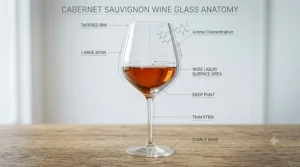
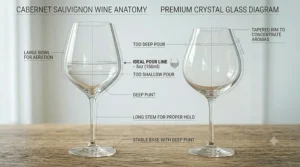
The tall bowl: The height of a Bordeaux glass (typically 8–10 inches) creates distance between the wine’s surface and your nose. Cabernet Sauvignon is high in alcohol — usually 13.5–15% — and those alcohol vapors rise fast. A taller glass lets the harshest vapors dissipate before reaching your nostrils, so what you smell is fruit, earth, and oak rather than raw ethanol. Short glasses rob you of this buffer entirely.
The wide opening: A wine glass with wide opening — relative to a Pinot Noir glass or a flute — allows Cabernet’s bold, assertive aromas to disperse slightly rather than concentrate into an overpowering blast. Think of it like the difference between whispering directly into someone’s ear versus speaking from across the table. Both are audible; one is simply more pleasant.
Swirling technique: With a glass this size, use wrist circles rather than elbow movements. Place the base on a flat surface and swirl without lifting — this prevents spills and creates a consistent, even coat on the bowl’s interior. That thin film of wine on the glass walls oxygenates rapidly and releases the secondary and tertiary aromas (tobacco, leather, earth) that make aged Cabernet so compelling.
The serving temperature trick: A bold tannin wine glass also functions as a temperature management tool. Hold the stem — never the bowl — to keep your hand’s warmth away from the wine. Cabernet is best served at 60–65°F; a warmer glass accelerates alcohol perception and dulls the fruit. The stem is there for a reason. Use it.
First pour vs. subsequent pours: Pour your first glass and let it sit for 5–7 minutes before drinking, especially with young or tannic vintages. The glass itself acts as a mini-decanter. Each subsequent pour into the same glass benefits from the residual oxygen already circulating.
Who Should Buy Which Glass: 3 Real-World Buyer Profiles
Choosing the right cabernet wine glass isn’t one-size-fits-all. Your lifestyle, drinking habits, and wine budget all matter. Here’s how to match yourself to the right option.
Profile 1 — “The Weekend Wine Person” You open a bottle on Friday nights, you enjoy a good Cabernet but you’re not reading tasting notes, and you’d like a glass that improves the experience without stressing you out. Buy the Spiegelau Definition or the Schott Zwiesel Vinos. Both are dishwasher-safe, durable, properly shaped, and affordable enough that breaking one doesn’t ruin the evening. The Vinos wins if you entertain frequently; the Definition wins on pure value.
Profile 2 — “The Enthusiast Who’s Getting Serious” You’ve started exploring different Cabernet regions — comparing a Napa against a Pomerol, maybe tracking down some Washington State bottles. You take notes. You care. Buy the Riedel Vinum or the Spiegelau Authentis. Both are genuinely excellent glasses that will reveal real differences between wines. The Vinum edges it for New World styles; the Authentis shines with European, more restrained bottles. Own both if you can.
Profile 3 — “The Collector / Serious Tasting Enthusiast” You’ve got a wine fridge. You attend tastings. You use the phrase “secondary fermentation” without irony. Buy the Zalto Denk’Art Bordeaux. Full stop. This is the glass that serious wine professionals trust, and once you’ve experienced a complex, aged Cabernet in a Zalto, other glasses feel like a compromise. For bold, fruit-forward expressions specifically, add the Riedel Winewings to your rotation.
How to Choose Glasses for Cabernet Sauvignon: 6 Criteria That Actually Matter
1. Bowl Volume: Go Big (20 oz Minimum)
Anything under 20 oz is too small for proper Cabernet aeration. The best glasses in this category range from 22–28+ oz. More volume means more air contact and more aromatic development. Don’t be intimidated by the size — you’re still pouring a standard 5 oz serving; the rest of the bowl is working for you.
2. Bowl Height: Tall Is Non-Negotiable
Cabernet’s high alcohol demands vertical distance. A glass standing less than 8 inches tall won’t give harsh vapors adequate room to dissipate. Target 8.5–10 inches for the best balance of form and function.
3. Rim Diameter and Shape
A slightly tapered rim (narrower at the top than at the widest bowl point) is ideal for bold tannin wine glass designs — it concentrates aroma just enough to channel the bouquet toward your nose without trapping heat. Avoid completely straight-sided glasses, which scatter aroma, and overly narrow openings, which compress it too aggressively.
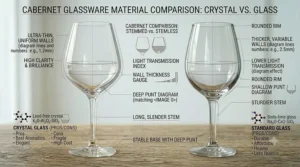
4. Material: Crystal vs. Glass
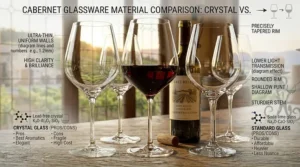
Crystal — whether lead or lead-free — consistently outperforms standard glass for wine purposes. Crystal has a slight surface texture at the microscopic level that promotes nucleation (tiny bubbles of aroma release). Standard soda-lime glass is smoother and less reactive. Lead-free crystal is the modern sweet spot: all the performance, none of the health concerns.
5. Stem vs. Stemless
For serious Cabernet tasting, stemmed glasses are superior. Full stop. Stemless wine glasses (even excellent ones like the Riedel O Tumbler) transfer hand warmth to the bowl, gradually raising the wine’s temperature during the drinking session. At serving temperature matters this much for Cabernet — 60–65°F is the window — even a few degrees of warming dulls the tannin structure and amplifies alcohol. Use stemless for casual patio pours; use stemmed when the wine deserves attention.
6. Practicality: Your Real Life Matters
The most technically perfect glass you never use is worse than a slightly imperfect glass you reach for every night. Consider dishwasher safety, break-resistance, and price-per-stem when building your collection. A beautiful glass that lives in the cabinet because you’re terrified of breaking it is not doing its job.
Cabernet Wine Glasses vs. Generic Red Wine Glasses: An Honest Comparison
| Feature | Bordeaux/Cabernet Glass | Generic Red Wine Glass | Burgundy Glass |
|---|---|---|---|
| Bowl height | 8.5–10 inches | 7–8 inches | 9–10 inches |
| Bowl shape | Tall, moderately wide | Round, shorter | Extra-wide, balloon |
| Ideal for | Cabernet, Merlot, Bordeaux blends | Any red (mediocre at all) | Pinot Noir, Nebbiolo |
| Aroma concentration | Excellent | Fair | Excellent (different profile) |
| Tannin management | Optimized | Minimal | Not designed for high tannin |
| Alcohol dispersion | Excellent | Poor | Moderate |
The table tells the story clearly: generic red wine glasses are designed to be inoffensive to all red wines, which means they’re genuinely excellent for none of them. A Bordeaux-style Cabernet glass is optimized for the specific chemistry of tannic, high-alcohol reds. If you’re drinking Cabernet Sauvignon more than twice a week, the specialized glass isn’t a luxury — it’s the obvious choice.
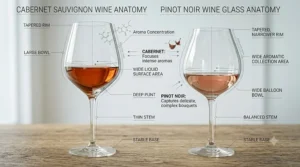
A note on Burgundy glasses: while they’re also large and seemingly suitable for bold reds, their extra-wide bowl is actually counterproductive for Cabernet. That balloon shape is designed to concentrate the delicate, volatile aromas of low-tannin Pinot Noir. In a Cabernet — which has assertive aromas that don’t need concentration — it simply makes the wine smell bigger and more chaotic, not more refined.
✨ Don’t Miss These Deals on Expert-Picked Stemware!
🔍 Ready to upgrade your wine experience? Click any product above to check current pricing and availability on Amazon. The right glass changes everything — and these are the ones worth owning.
Common Mistakes When Buying Glasses for Cabernet Sauvignon
Even enthusiastic wine lovers make these errors. Avoid them and your money goes further.
Mistake 1: Buying by looks, not by design. A gorgeous, sculptural wine glass that comes in a beautiful box isn’t automatically a good wine glass. Look for Bordeaux-specific design details — tall bowl, moderate taper, proper capacity — not just aesthetics. Many stylish glasses available online are actually closer to water goblets in terms of function.
Mistake 2: Underestimating the value of dishwasher safety. Hand-washing crystal sounds noble until you’ve cracked three stems. If you drink wine regularly, buy dishwasher-safe glasses. Riedel, Schott Zwiesel, Spiegelau, and Zalto all offer dishwasher-safe options. The ritual of hand-washing is lovely; the heartbreak of a shattered $60 stem is not.
Mistake 3: Buying only two glasses. Two glasses seems logical until you have friends over. Start with a set of four — minimum. If you entertain more than occasionally, invest in two sets of four and rotate through them. Having backup glasses also means less anxiety about breakage.
Mistake 4: Storing glasses rim-down. Many people store wine glasses inverted to keep dust out. This concentrates the weight on the most fragile part of the glass and can leave rim-marks or micro-cracks over time. Store glasses upright, covered loosely with a clean cloth if dust is a concern, or invest in a proper stemware rack that suspends them from the base.
Mistake 5: Assuming decanting vs. glass shape is an either/or decision. Decanting and using the right glass are complementary, not competing. A young, tannic Cabernet benefits from 30–60 minutes of decanting AND a proper Bordeaux glass. A mature bottle (10+ years old) may only need a gentle pour into a Zalto-style glass rather than aggressive aeration. The glass is always part of the equation.
Decanting vs. Glass Shape: What Actually Matters for Cabernet Sauvignon?
Wine lovers debate this endlessly. The truth is more practical than the debate suggests.
Decanting accomplishes two things: it aerates the wine by increasing its surface-to-air contact dramatically, and it separates sediment from older vintages. A proper Bordeaux glass does something subtler and ongoing — it allows progressive aeration sip by sip, over the course of a drinking session. Neither replaces the other.
For young Cabernets (under 5 years old) from bold regions — Napa Valley, Paso Robles, Mendoza — decanting for 30–45 minutes plus a proper glass is the ideal approach, as described in Wine Spectator’s guide to aerating red wines. You’re dealing with tight, grippy tannins that need time and air.
For mid-age bottles (5–12 years old), the glass alone often does enough. Pour into a Riedel Vinum or a Schott Zwiesel Vinos, swirl after 5 minutes, and let the wine evolve in the glass naturally. Decanting risks over-oxygenating wines that have already developed complexity.
For older vintages (12+ years), skip vigorous decanting entirely. A gentle pour into a tall red wine glasses for cabernet is all you need. Old Cabernets have fragile, evolved structures that aggressive aeration can actually damage — you’ll get 20 minutes of brilliance followed by fast oxidation.
The rule of thumb: the older and more complex the wine, the more the glass matters and the less decanting you need. Invest accordingly.
Frequently Asked Questions About Glasses for Cabernet Sauvignon
❓ What size glass is best for Cabernet Sauvignon?
❓ Can I use the same glass for Cabernet Sauvignon and Merlot?
❓ Are stemless wine glasses okay for Cabernet Sauvignon?
❓ Do expensive wine glasses really make a difference for Cabernet Sauvignon?
❓ What's the difference between a Bordeaux glass and a Cabernet Sauvignon glass?
Conclusion: The Right Glass Doesn’t Just Hold Your Wine — It Completes It
Here’s what I know after researching and tasting through every glass on this list: the best glasses for cabernet sauvignon aren’t the most expensive ones. They’re the ones that fit your actual life — your drinking habits, your entertaining style, your wine budget — and that you’ll actually use every time you open a bottle.
Start with the Riedel Vinum if you want the gold standard at a fair price. Go with the Schott Zwiesel Vinos if you host often and need durability built in. Choose the Spiegelau Authentis if you drink Old World Bordeaux-style Cabernets and want professional-grade performance without the premium price. And if you’re ready to take the full leap, buy the Zalto Denk’Art Bordeaux — once you’ve experienced a serious bottle in that glass, you’ll understand what all the fuss is about.
Cabernet Sauvignon is, according to UC Davis’s viticulture research, one of the most biochemically complex wines produced — high tannin, high anthocyanins, complex phenolic structure. It deserves a glass that respects that complexity. The science of wine and glass design, thoroughly explored by resources like Wine Folly’s educational guides, confirms that the shape, size, and material of your stemware actively shape every sensory aspect of the drinking experience.
Pour something worth drinking. Use a glass worth having.
✨ Ready to Transform Your Next Cabernet Pour?
🔍 Every glass on this list is available now on Amazon. Click through to check current availability, read verified customer reviews, and find the perfect set for your wine collection. Whether you’re spending $30 or $160, you’re making the right decision by starting here.
Recommended for You
- 7 Best Pinot Noir Glasses That Unlock Every Drop (2026)
- 7 Best Burgundy Wine Glasses in 2026
- 7 Best Bordeaux Wine Glasses for Bold Reds in 2026
Disclaimer: This article contains affiliate links. As an Amazon Associate, I earn from qualifying purchases. If you purchase products through these links, we may earn a small commission at no additional cost to you.
✨ Found this helpful? Share it with your friends! 💬🤗
