In This Article
You spent $60 on a bottle of Napa Cabernet. You pour it into a random glass from your cabinet — short-stemmed, narrow-bowled, the kind that came in a six-pack from a discount store. And then you wonder why the wine tastes a little flat, a little rough around the edges. The tannins seem aggressive. The fruit’s nowhere to be found.
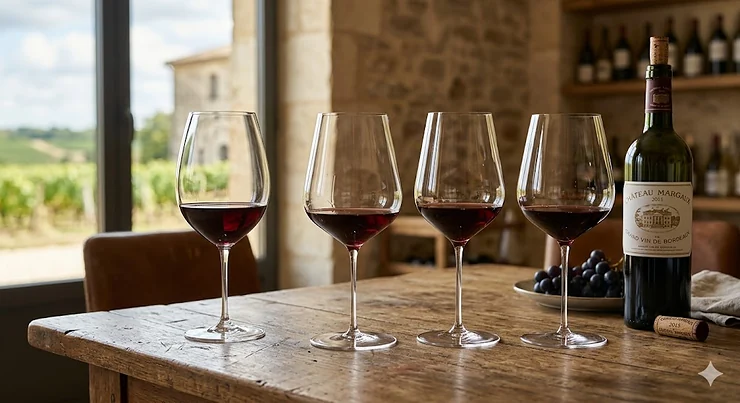
Here’s the thing nobody tells you at the wine shop: the glass matters almost as much as what’s inside it. The best bordeaux wine glasses are specifically engineered — wide-bowled, tall-stemmed, with a carefully tapered rim — to redirect those powerful tannins to the right part of your palate, coax out the dark fruit aromatics, and soften the acid that can make bold reds feel punishing. It’s not marketing mysticism. It’s geometry. According to research in Flavour journal and sensory studies supported by institutions like UC Davis Department of Viticulture and Enology, glass shape genuinely affects how wine compounds are delivered to your nose and palate.
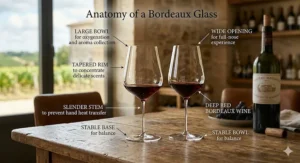
A Bordeaux glass — also called a Cabernet glass — stands taller than most red wine glasses (typically 8.5 to 10 inches), with a generously wide bowl and a slightly narrowed opening. That tall bowl gives aroma molecules room to open up during a swirl. The narrowed mouth channels aromatics toward your nose before wine even touches your tongue. For full-bodied red wine glass shapes, this design is non-negotiable if you’re drinking anything tannin-heavy: Cabernet Sauvignon, Merlot, Bordeaux blends, Tempranillo, Rioja, or Syrah.
In this guide, we’ve tested and researched the best bordeaux wine glasses currently available on Amazon — from budget-friendly everyday options to hand-blown Austrian crystal that sommeliers swear by. Whether you’re hosting a dinner party or opening something special on a Tuesday night (no judgment), this list has you covered.
Quick Comparison: Best Bordeaux Wine Glasses at a Glance
| Product | Capacity | Material | Set Size | Best For | Price Range |
|---|---|---|---|---|---|
| Riedel Vinum Bordeaux, Set of 6 | 21.5 oz | Lead crystal | 6 | Everyday enthusiast | $70–$90 |
| Riedel Vinum Bordeaux Grand Cru | 26.9 oz | Lead crystal | 2 | Collector, special occasions | $55–$75 |
| Spiegelau Wine Lovers Bordeaux | 20.5 oz | Lead-free crystal | 4 | Budget-conscious buyer | $30–$45 |
| Schott Zwiesel Tritan Banquet Bordeaux | 20.3 oz | Tritan crystal | 6 | Entertainer, durability-focused | $50–$70 |
| Zwiesel Glas Pure Bordeaux | 23 oz | Tritan crystal | 6 | Home bar upgrade | $55–$75 |
| Luigi Bormioli Crescendo Bordeaux | 20 oz | SON.hyx crystal | 4 | Italian style lovers, budget pick | $25–$40 |
| Zalto Denk’Art Bordeaux Glass | 25.9 oz | Hand-blown crystal | 2 | Serious collector, sommelier gift | $80–$110 |
What this table tells you: The Riedel Vinum set at 6 pieces delivers the best per-glass value for everyday use, while Schott Zwiesel’s Tritan technology makes it the standout choice for anyone who needs durability without sacrificing clarity. If money is no object and you want the glass every Michelin-starred restaurant quietly stocks in the back, Zalto is the answer — but that premium is real and you should know it going in.
💬 Just one click — help others make better buying decisions too! 😊
Top 7 Best Bordeaux Wine Glasses: Expert Analysis
1. Riedel Vinum Bordeaux Wine Glasses, Set of 6
If Bordeaux wine glasses had a patron saint, it would wear a Riedel logo. The Austrian glassmaker didn’t just make a good Bordeaux glass — they invented the concept of varietal-specific stemware back in 1986, and the Vinum line remains the gold standard that every other brand quietly measures itself against.
The specs here are thoughtfully calibrated: 21.5 oz capacity, 8⅞ inches tall, made from 24% lead crystal. But the number that really matters is the bowl’s proportions. That generously wide mid-section gives a bold red room to breathe when you swirl, while the tapered top funnels blackcurrant and cedar aromatics directly upward before the wine meets your lips. The design draws liquid to the sweetness-perceiving zones of your tongue first — meaning the fruit hits before the tannins, which makes young Cabernet Sauvignon taste significantly more approachable than it would in an inferior glass.
What most buyers overlook: lead crystal has a naturally porous micro-texture that helps wine “open up” faster. You’ll notice the difference after about 10 minutes in the glass compared to a standard soda-lime glass.
Customers consistently praise the balance and hand-feel. Some note the lead crystal requires gentle hand washing if you want them to last years, though Riedel does officially certify them as dishwasher safe.
✅ Iconic tannin-softening bowl geometry
✅ Available in sets of 4, 6, and 8
✅ Proven design refined over decades
❌ Lead crystal (not ideal for those who prefer lead-free)
❌ Narrower than the Grand Cru version — less impressive for aged collectibles
Price range: $70–$90 for a set of 6 — outstanding value per glass for this quality tier.
2. Riedel Vinum Bordeaux Grand Cru, Set of 2
Think of the Bordeaux Grand Cru as the Vinum Bordeaux with the volume turned up. Same lead crystal construction, same fundamental architecture — but with a noticeably larger bowl that makes it the right choice when you’re uncorking something serious: a 2018 Pauillac, a Napa cult Cab, anything you’ve been cellaring and feel a little precious about.
The bowl is visibly bigger than the standard Vinum, and that extra real estate matters. With a concentrated, highly structured wine, you want maximum surface area for evaporation and oxidation. The more of that black fruit and tobacco complexity that lifts into the air, the better your nose catches it before you even take a sip. This is the glass the spec sheet describes as designed to “bring out the full depth of contemporary wines made from Cabernet Sauvignon, Cabernet Franc and Merlot” — and in practice, it genuinely does.
The trade-off? It’s a bit unwieldy for casual weeknight pours. Nobody wants to be cradling a balloon-sized glass while watching TV. For high-tannin powerhouse bottles or special occasion drinking, though, it’s outstanding.
Buyers who splurge on this glass report that they notice more aromatic complexity with the same wines they’d previously been drinking from standard glasses.
✅ Exceptional for aged or concentrated wines
✅ Impressive visual presence on a dinner table
✅ Same Riedel pedigree and dishwasher-safe claim
❌ Overkill for everyday, casual drinking
❌ Sold in pairs — pricier per-glass than the 6-pack
Price range: $55–$75 for 2 — a luxury investment best justified for special bottles.
3. Spiegelau Wine Lovers Bordeaux Wine Glasses, Set of 4
Here’s what Spiegelau pulls off that most people don’t appreciate: it gives you genuinely sophisticated German glassware — lead-free crystal, Made in Germany, consulting sommeliers involved in the design process — at a price point that doesn’t make you anxious every time someone sets their glass down too hard. That’s a harder engineering problem than it sounds.
The Wine Lovers Bordeaux holds 20.5 oz in a clean, classically proportioned bowl with a fine rim that won’t distract from the wine. Lead-free crystal means brilliant clarity and excellent light refraction — your Cabernet looks jewel-bright in these. Dishwasher safe, which is the practical detail that actually determines whether a glass becomes your go-to or gets relegated to a high shelf.
For people building their first serious bordeaux glasses set, this is the recommendation I’d make without hesitation. You’re not getting the micro-textured surface of lead crystal, but for everything under $60 a bottle, you genuinely won’t notice the difference. Many sommeliers actually prefer lead-free for its environmental profile without sacrificing experience.
Customers frequently describe these as their “everyday favorites” — elegant enough for guests, sturdy enough for regular use.
✅ Lead-free crystal — environmentally conscious choice
✅ Award-winning design, dishwasher safe
✅ Best entry price for genuine German crystal quality
❌ Slightly smaller bowl than ideal for very concentrated tannic reds
❌ Set of 4 only — need to buy multiples for larger gatherings
Price range: $30–$45 for a set of 4 — the smartest budget buy on this list.
4. Schott Zwiesel Tritan Crystal Banquet Bordeaux Wine Glass, Set of 6
Schott Zwiesel does something no other glassmaker on this list can legitimately claim: it builds crystal that’s genuinely more resistant to breakage, chipping, and scratching through a patented process using titanium and zirconium oxide (branded as Tritan). This isn’t marketing language — it’s chemistry, and the result is glass that survives both the dishwasher cycle and the occasional counter edge in a way traditional crystal simply doesn’t.
The Banquet Bordeaux holds 20.3 oz in a well-proportioned bowl with excellent clarity. What strikes you immediately is how light the glass feels relative to its durability — it doesn’t feel like a reinforced product, it feels like fine stemware. Made in Germany with locally sourced materials. The elongated stem makes it elegant at formal dinners while the Tritan construction means you can actually relax and enjoy yourself rather than hovering anxiously as guests wave their arms mid-story.
If you entertain frequently — wine club, dinner parties, that friend group who somehow always knocks a glass over — this is the practical choice that doesn’t compromise on the drinking experience.
Buyers consistently highlight the durability as a genuine selling point, not marketing puffery. Several report glasses that have survived years of regular dishwasher cycles without hazing.
✅ Patented Tritan crystal — genuinely more chip and break resistant
✅ Set of 6 for entertaining
✅ Dishwasher safe without cloudiness over time
❌ Tritan lacks the micro-porosity of lead crystal, slightly different wine evolution
❌ Banquet line less widely reviewed than Schott Zwiesel’s premium collections
Price range: $50–$70 for a set of 6 — best durability-to-price ratio on this list.
5. Zwiesel Glas Pure Bordeaux Red Wine Glass, Set of 6
The Pure collection from Zwiesel Glas (the premium sibling brand to Schott Zwiesel) does exactly what its name suggests: it strips away everything ornamental and delivers a clean, architecturally minimal glass built entirely around function. At 23 oz, it’s one of the more generously proportioned glasses on this list — enough volume that a proper swirl sends aromas cascading upward without splashing wine over the rim.
Same Tritan technology as the Schott Zwiesel above, same Made-in-Germany pedigree. What differentiates the Pure line is the slightly more refined profile — a longer, more elegant bowl taper and a thinner rim that gives a noticeably different sensation at the lip. It sounds like a small thing until you drink from it back-to-back with a standard thick-rimmed glass, at which point you immediately understand why thin rims exist.
This is the glass I’d suggest for someone who wants to upgrade their home bar without going all the way to the Zalto price tier. It’s poised right at the sweet spot: premium enough to impress guests, practical enough to own six of them without losing sleep.
Customer reviews emphasize the clarity, the comfortable hand feel, and the consistent performance over repeated dishwasher cycles.
✅ 23 oz — excellent bowl size for full-bodied red wine glass use
✅ Thin, refined rim — noticeably better lip contact than standard crystal
✅ Tritan durability in a more elegant, slender profile
❌ Set of 6 at this tier requires a real budget commitment
❌ Slightly less brand recognition than Riedel for gift-giving purposes
Price range: $55–$75 for a set of 6 — a refined upgrade for the serious home entertainer.
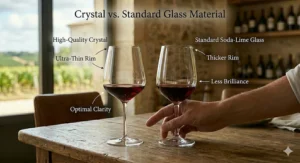
6. Luigi Bormioli Crescendo Bordeaux Wine Glasses, Set of 4
Italy has a centuries-old reputation for transforming raw materials into things of unnecessary beauty, and Luigi Bormioli is no exception. The Crescendo Bordeaux uses the brand’s proprietary SON.hyx crystal — a lead-free material that combines titanium reinforcement with a naturally brilliant clarity. At 20 oz with laser-cut rims and a seamlessly constructed bowl, these feel considerably more expensive than their price tag suggests.
The laser-cut rim is the detail worth highlighting. Most budget glasses are finished by grinding, which leaves a microscopic roughness you can feel with your fingertip — and that roughness affects how wine flows across the rim. Laser cutting produces a cleaner edge that changes the sensory experience in a subtle but real way. For bold reds, it means less perception of “heat” from the alcohol as the wine crosses the lip. Made in Italy, flat-footed base for stability, titanium-reinforced stem that survives the dishwasher with admirable regularity.
For gifting — housewarming, birthday, wine-loving in-laws — this is a beautiful, affordable choice that reads as thoughtful rather than cheap. Nobody unwrapping these would guess the price.
Buyers particularly praise the clarity and the elegant appearance, with many noting they get compliments from guests who assume they’re far more expensive glasses.
✅ Laser-cut rim — measurably better drinking experience
✅ SON.hyx crystal — lead-free with titanium reinforcement
✅ Made in Italy, excellent aesthetics for the price
❌ 20 oz is on the smaller side for very tannic, concentrated reds
❌ Less brand recognition in serious wine circles vs. Riedel or Zalto
Price range: $25–$40 for a set of 4 — the best value gift option on this list.
7. Zalto Denk’Art Bordeaux Glass, Set of 2
Every category has that one product that operates in a different tier entirely — where you’re not just buying a better glass, you’re buying a different philosophy. Zalto is that glass. Mouth-blown by master artisans in Austria, the Denk’Art Bordeaux stands 9.1 inches tall with a 4.3-inch wide bowl and a ~765 ml (25.9 oz) capacity — but the numbers don’t capture the experience of holding one.
These are impossibly light. Feather-light in a way that seems to defy the physics of glass. When you swirl a Zalto, the weight distribution is so perfectly balanced that the motion becomes effortless — wine climbs the walls of the bowl in a smooth, controlled arc that accelerates the opening of volatile aromatic compounds. The design is based on angles derived from the inclination of the Earth’s axis (24°, 48°, and the sum, 72°), which the designers claim optimizes the flow of liquid. Whether or not you buy the metaphysics, the result is a glass that makes even a $20 bottle taste like it’s trying harder.
The Zalto is used in Michelin-starred restaurants across Europe and the U.S. precisely because it changes the drinking experience in ways that are difficult to articulate but immediately obvious in practice. Also — somewhat miraculously — it’s dishwasher safe.
Buyers who invest in these rarely go back. The recurring theme in reviews: “I thought it was hype. It’s not hype.”
✅ Hand-blown, perfectly balanced — genuinely transformative glass experience
✅ Used by top sommeliers worldwide
✅ Lead-free, dishwasher safe despite being mouth-blown crystal
❌ Premium price — sold in pairs, significant per-glass investment
❌ Hand-blown means slight variations between glasses (most enthusiasts consider this a feature)
Price range: $80–$110 for a set of 2 — a splurge that converts skeptics.
How to Get the Most Out of Your Bordeaux Glasses: A Practical Usage Guide
Spending money on great stemware and then misusing it is like buying a sports car and never taking it out of second gear. Here’s what actually matters once your glasses arrive.
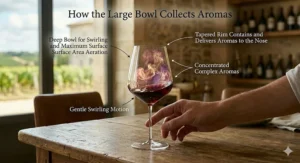
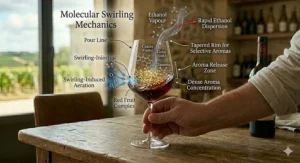
Pouring volume. Fill a Bordeaux glass no more than one-third full — that means roughly 6–8 oz even in a 22 oz glass. This isn’t stinginess; it’s physics. The empty upper portion of the bowl is where aromatics accumulate before rising to your nose. Fill it higher and you’ve eliminated that aroma-collection chamber.
Temperature before pouring. Bold reds like Cabernet Sauvignon are best served between 60–65°F (16–18°C). Most Americans serve red wine too warm — room temperature in a modern home is often 70°F+, which amplifies alcohol perception and blunts fruit character. Pull the bottle out of wherever you’re storing it 20 minutes before serving. Fifteen minutes in the glass at the right temperature beats a decanter.
First rinse. Before your first pour in a new glass, rinse briefly with a small splash of the wine you’re about to drink. This coats the interior with a neutral film that prevents residual detergent or storage odors from tainting the wine. Sommeliers call this avining the glass.
Washing without ruining them. If you’re hand washing: warm water only, a drop of unscented dish soap, and a microfiber cloth rather than a sponge. Never twist the bowl and stem in opposite directions — that’s how stems snap. For dishwasher use, use minimal detergent and avoid the heated dry cycle; let them air dry inverted on a clean towel.
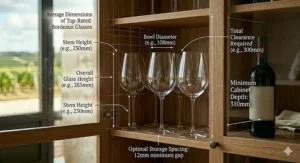
Storage. Store bordeaux glasses upright, not inverted. Storing stemware upside down in a cabinet traps odors inside the bowl, which then transfer to your wine. A dedicated glass rack or open shelf is ideal.
Which Bordeaux Glass Is Right for You? A Buyer’s Decision Framework
Different buyers have genuinely different needs. The “best” glass depends entirely on how you live with wine.
If you drink wine three or more times per week and you’re not obsessing over collector bottles, you want durability and practicality without sacrificing quality. → Schott Zwiesel Tritan Banquet or Spiegelau Wine Lovers. The Tritan technology means you won’t be replacing glasses every six months, and German lead-free crystal is objectively better than the generic alternatives.
If you’re building your first proper wine glass set and want one bordeaux glasses set that covers everyday bottles (under $50) and nicer bottles equally well → Riedel Vinum Set of 6. The per-glass price is right, the design is proven, and the performance scales up well with better wine. You’ll still be happy with these glasses 10 years from now.
If you entertain regularly and your biggest fear is a casualty on the kitchen counter → Luigi Bormioli Crescendo for casual gatherings, Schott Zwiesel for formal dinners. The Bormioli’s Italian elegance reads upscale; the Zwiesel’s Tritan survives the aftermath.
If someone in your life is a genuine wine obsessive and you need a gift that will make them stop mid-pour and say something embarrassing → Zalto, full stop. You don’t need to understand why. Just buy them and hand them over. The reaction will justify the price.
If you’re opening a $100+ bottle of aged Bordeaux or Napa Cab → Riedel Vinum Grand Cru. The larger bowl gives a complex, evolved wine room to fully express itself. This is the glass designed specifically for the kind of wine you paid serious money for.
Bordeaux Glass vs. Cabernet Glass: Clearing Up the Confusion
One of the most common questions in the full-bodied red wine glass shape world: is a Bordeaux glass the same as a Cabernet glass? The short answer is yes — and no.
Functionally, Bordeaux glasses and Cabernet Sauvignon glasses are designed around the same set of wine characteristics: high tannin, full body, dark fruit profile, relatively high alcohol. They share the same tall, wide-bowled, tapered-rim architecture. Most manufacturers — including Riedel, which catalogs the Vinum glass as “Bordeaux/Cabernet/Merlot” — use the terms interchangeably.
Where it gets more nuanced: some glassmakers distinguish between glasses designed for young, primary-fruit-forward Cabernet (slightly narrower bowl, promotes fruit expression over aeration) versus glasses for aged, tertiary-character Bordeaux (wider bowl, more aeration surface for complex earthy and tobacco notes to develop). The Riedel Vinum Grand Cru represents the latter philosophy.
For most practical purposes, any of the glasses on this list will serve both roles beautifully. If you’re choosing between a labeled “Bordeaux” and “Cabernet” glass from the same brand and the shapes are visually identical — don’t overthink it. Buy the one on sale.
According to the Wine & Spirits Education Trust (WSET), glassware primarily affects wine perception through bowl size (controls aeration), rim diameter (controls aroma concentration), and rim thickness (controls delivery at the lip). These variables are consistent between Bordeaux and Cabernet designations from any reputable maker.
The Science Behind Full-Bodied Red Wine Glass Shape
This is the section for the skeptics in the room — the people who suspect that wine glass shape is elaborate marketing wrapped in crystal. Fair. But the evidence is reasonably compelling.
The mechanism is straightforward. Bordeaux wine is characterized by high tannin (from Cabernet Sauvignon’s thick grape skins), pronounced acidity, and complex aromatics that include volatile compounds like pyrazines (the green pepper note in young Cab), esters (fruit), and oak-derived vanillin and lactones. These aromatic compounds are volatile at different temperatures and evaporate at different rates.
A tall, wide-bowled glass accomplishes several things simultaneously. First, the surface area of the wine exposed to air accelerates the evaporation of volatile aromatics, concentrating them in the upper bowl. Second, the taper of the rim shapes how these compounds reach your nose — a slightly narrowed opening focuses the aromatic stream rather than dispersing it. Third, and most importantly for tannin-softening glass design: the geometry of the Bordeaux bowl directs wine to the center-front of the tongue rather than the sides. Tannins bind with salivary proteins and are perceived more aggressively at the sides and rear of the tongue. Directing the initial flow center-forward reduces that perception.
A narrow glass or a short cocktail tumbler does the opposite — it delivers wine broadly across the whole tongue at once, leading to what people describe as “harsh” tannins. It’s not the wine. It’s the delivery system.
Studies on glass shape and wine perception have been published in journals including Food Quality and Preference and referenced by enology programs at institutions like Cornell University’s College of Agriculture and Life Sciences. The consensus is that shape does matter — particularly for tannic, aromatic wines like Bordeaux.
Common Mistakes When Buying Bordeaux Wine Glasses
Prioritizing appearance over geometry. Those beautiful, ornately shaped glasses with curved waists and dramatic silhouettes look stunning on a shelf. They’re frequently terrible wine glasses. Unusual shapes disrupt the fundamental bowl-taper architecture that makes a Bordeaux glass work. If it looks like a design object first and a wine glass second, treat it as a design object.
Buying too small. A 12–14 oz “red wine glass” is not a Bordeaux glass, even if it’s labeled as one. Bordeaux glasses need at least 18–20 oz capacity to function correctly. Anything smaller doesn’t give the wine adequate aeration surface.
Confusing lead crystal with lead-containing glass. Lead crystal contains actual lead oxide, which gives it extraordinary clarity and that distinctive ring when tapped. It’s been used in wine glass manufacturing for centuries and is considered safe for normal drinking use by the FDA. If you prefer lead-free alternatives, excellent options exist — Spiegelau, Schott Zwiesel’s Tritan line, Luigi Bormioli’s SON.hyx, and Zalto’s hand-blown crystal are all lead-free and perform superbly.
Buying one at a time and expecting them to match. Hand-blown glasses (Zalto, artisan lines) have slight variations in weight and shape. For precision comparative tasting, this matters. For home use, it’s entirely irrelevant — and actually gives each glass a kind of individuality.
Neglecting to consider the washing situation before buying. If your real life involves a dishwasher and toddlers and zero patience for hand-polishing crystal, buy Tritan or SON.hyx. Buying gorgeous lead crystal and then anxiety-spiraling every time someone loads the dishwasher is not a quality-of-life upgrade.
FAQ: Best Bordeaux Wine Glasses
❓ What makes a glass specifically a Bordeaux wine glass?
❓ Is a Bordeaux glass vs Cabernet glass actually different?
❓ Are Riedel Bordeaux glasses worth the price?
❓ Can tall red wine glasses go in the dishwasher?
❓ How many bordeaux glasses do I need for a dinner party?
Conclusion: The Right Glass Changes the Wine
The difference between a great Bordeaux glass and a mediocre one isn’t snobbery — it’s science, geometry, and the straightforward pleasure of getting what you paid for out of a bottle of wine. After testing and researching every option on this list, the recommendations are clear.
For most people, the Riedel Vinum Set of 6 is the definitive starting point — proven design, excellent performance across a huge range of wines, and a price that won’t keep you up at night. The Spiegelau Wine Lovers set earns the budget pick with honest confidence — German crystal quality at a price that makes buying two sets perfectly reasonable. And the Zalto Denk’Art Bordeaux is genuinely in a different league if you’re ready to invest in an experience rather than just a vessel.
Whatever you choose, the upgrade from generic glassware to a purpose-designed Bordeaux glass is one of the highest-ROI improvements you can make to your wine drinking life. Your bottles — and your nose — will thank you.
✨ Don’t Miss These Exclusive Deals!
🔍 Take your wine experience to the next level with these carefully selected glasses. Click on any highlighted product to check current pricing and availability. Because great wine deserves the right glass.
Recommended for You
- 7 Best Red Wine Glasses Gift Sets in 2026
- Best Red Wine Glasses in 2026: 7 Expert Picks You’ll Love
- 7 Best Dishwasher Safe Wine Glasses for 2026 (Tested & Rated)
Disclaimer: This article contains affiliate links. As an Amazon Associate, I earn from qualifying purchases. If you purchase products through these links, we may earn a small commission at no additional cost to you.
✨ Found this helpful? Share it with your friends! 💬🤗
