
In This Article
Here’s a confession: for years I drank Sauvignon Blanc out of whatever glass was closest to the dish rack. A juice tumbler. A coupe leftover from a wedding. Once, memorably, a mason jar. The wine tasted fine, mostly because I didn’t know what I was missing. Then a sommelier friend poured the same bottle into a proper white wine glass at her place, and the difference wasn’t subtle — it was like someone had turned the brightness up on the whole glass of wine.
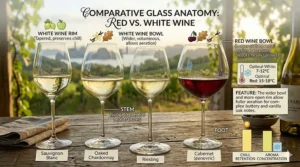
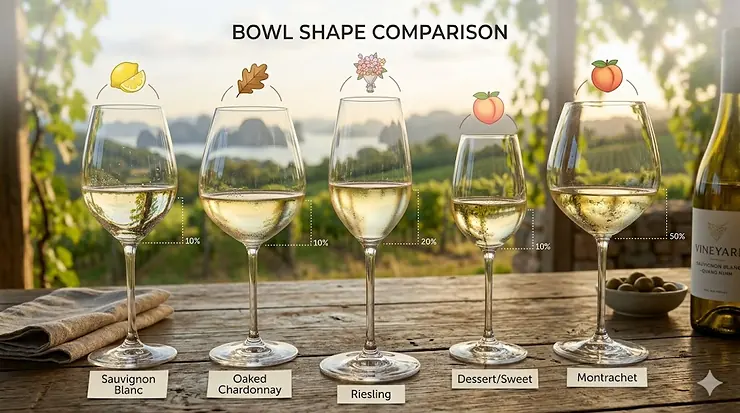
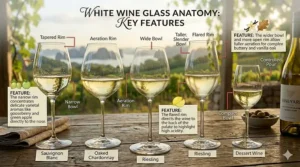
That’s the thing nobody tells you about white wine glasses: the shape isn’t decoration, it’s plumbing for aroma. A narrower bowl funnels scent toward your nose instead of letting it scatter into the room, which matters more for whites than reds because white wine’s aromatics tend to be lighter and more easily lost. Get the shape wrong and you’re drinking a flatter, duller version of what the winemaker intended.
This guide rounds up seven real, currently-sold options — from a $20-ish everyday set to glassware sommeliers actually use — based on materials, capacity, durability, and what owners report after months of actual use. No fluff, no fictional “Top Pick” that doesn’t exist on a shelf anywhere. Just straightforward advice on which glass fits your wine habit, your dishwasher, and your budget.
Quick Comparison Table
| Glass | Capacity | Stem | Best For | Price Range |
|---|---|---|---|---|
| Libbey Vina White Wine Glasses (Set of 6) | 18.25 oz | Stemmed | Everyday use, budget hosting | Under $35 |
| JoyJolt Sidney White Wine Glasses (Set of 4) | 17 oz | Stemmed | Modern dinner parties | $35–$50 |
| ZWIESEL GLAS Pure Sauvignon Blanc (Set of 6) | 14 oz | Stemmed | Durability + restaurant-grade feel | $55–$75 |
| Riedel Vinum Viognier/Chardonnay (Set of 2) | ~13 oz | Stemmed | Serious Chardonnay/Viognier drinkers | $40–$55 |
| JoyJolt Claire White Wine Glasses (Set of 2) | 11.4 oz | Stemmed | Gifting, small households | $20–$30 |
| Black Swan Stemless White Wine Glasses (Set of 4) | 23.1 oz | Stemless | Casual sipping, kids/pets in the house | $45–$60 |
| Gabriel-Glas StandArt Crystal (Set of 2) | 16 oz | Stemmed | One glass for everything | $40–$55 |
A few things jump out once you line these up side by side. The Libbey and JoyJolt Claire sets sit firmly in “won’t cry if one breaks” territory, which matters more than people admit — wine glasses chip, that’s just physics meeting clumsy hands. The Riedel and ZWIESEL options cost more because they’re solving a narrower problem (literally and figuratively): aroma concentration for specific grape characteristics rather than generic “wine glass” duty. And the Gabriel-Glas earns its spot by refusing to pick a lane — it’s the rare glass that sommeliers and Tuesday-night drinkers both reach for.
💬 Just one click — help others make better buying decisions too!😊
Top 7 White Wine Glasses: Expert Analysis
I picked these to cover real budget tiers and real use cases — not seven variations on the same $40 stemware. Here’s how each one actually performs once it’s out of the box.
1. Libbey Vina White Wine Glasses, Set of 6
The Libbey Vina White Wine Glasses are the wine-glass equivalent of a reliable sedan: nothing flashy, everything functional. Each glass holds 18.25 ounces with a tapered bowl narrow enough to corral aroma, and the whole set is dishwasher-safe — no babysitting required after dinner. What that capacity actually means in practice: you can pour a generous 6-ounce serving and still have headroom to swirl without sloshing wine onto the tablecloth, which is the entire point of a wine glass that isn’t filled to the brim.
In my experience, this is the white wine glasses set of 6 most people should start with if they’re not yet sure how much they care about stemware. Reported feedback skews toward “sturdier than expected for the price,” with the occasional note about thin stems needing gentle handling.
✅ Pros: Generous 6-glass count, dishwasher safe, narrow bowl actually concentrates aroma
❌ Cons: Stems aren’t reinforced like pricier sets; not built for heavy-handed dishwashing technique
Sitting comfortably under $50 for best white wine glasses shoppers on a budget, this set delivers real value — you’re paying for glass, not brand prestige, and that’s a fair trade for a starter set.
2. JoyJolt Sidney White Wine Glasses, Set of 4
JoyJolt Sidney glasses step things up a notch with European-made crystal and a cleaner, more contemporary silhouette than the Libbey. Each glass holds 17 ounces, which lands in the sweet spot for Chardonnay or an oaked white that benefits from a bit more bowl real estate to breathe.
What most buyers overlook about crystal stemware in this price tier is that the thinner glass walls aren’t just about looks — they change how the wine feels on your lip, almost imperceptibly smoother than thicker soda-lime glass. JoyJolt built its reputation as a Brooklyn-based glassware company, and these glasses reflect that mid-tier sweet spot: nicer than basics, not precious enough to fear daily use.
✅ Pros: European crystal clarity, dishwasher safe, reinforced stems for stability
❌ Cons: Set of 4 means no spares if your dinner party runs to six
For anyone hosting more than a couple of friends regularly, this is a smart step up from a starter set without jumping straight to luxury pricing.
3. ZWIESEL GLAS Pure Sauvignon Blanc White Wine Glass, Set of 6
This is where things get serious about durability. ZWIESEL GLAS Pure glasses are made from Tritan crystal — a patented titanium-and-zirconium-oxide blend that’s noticeably more chip-resistant than standard crystal. The 14-ounce capacity is smaller than some competitors, but that’s intentional: Sauvignon Blanc’s bright, herbaceous aromas don’t need a huge bowl to develop, they need precision.
The spec sheet won’t tell you this, but the angled bowl design isn’t just aesthetic flair — it changes the angle at which wine hits your palate, something Schott Zwiesel (the parent brand) has leaned on since 1872. If you’ve ever had a “crystal” glass crack from ordinary dishwasher heat, this is the rebuttal: Tritan crystal is built to survive that exact scenario.
✅ Pros: Exceptional chip resistance, genuinely dishwasher safe (not just labeled that way), elegant angular design
❌ Cons: Smaller capacity than some sets; premium price for a Sauvignon Blanc-specific shape
This is the dishwasher safe white wine glasses pick for anyone who’s broken one too many “delicate” sets and wants glassware that survives contact with reality.
4. Riedel Vinum Viognier/Chardonnay Glasses, Set of 2
Riedel didn’t just make wine glasses — the company essentially invented the idea that grape variety should dictate glass shape, dating back to 1986 when Georg Riedel launched the original Vinum line. The Riedel Vinum Viognier/Chardonnay glass channels that legacy into a bowl shaped specifically to soften Chardonnay’s lower acidity while still showcasing its richer, oakier notes.
In practice, what this means is a noticeably different drinking experience compared to an all-purpose glass — the wine seems to land further back on the tongue, smoothing out alcohol heat and letting fruit characteristics lead. Riedel recommends hand-washing despite the glasses technically being dishwasher safe, mostly to avoid the slow clouding that detergent residue causes over time on fine crystal.
✅ Pros: Varietal-specific design backed by decades of glassmaking research, lead crystal clarity, recognizable sommelier-grade brand
❌ Cons: Set of 2 only (pricier per-glass than larger sets); hand-wash strongly recommended despite dishwasher-safe label
If you’re a one-varietal-loyalist who drinks mostly Chardonnay or Viognier, this is the glass built around your exact habit rather than a compromise.
5. JoyJolt Claire White Wine Glasses, Set of 2
The JoyJolt Claire collection takes a different design route: a long-stemmed, narrow bowl wine glass design with a sleek cylindrical silhouette rather than the classic rounded tulip shape. Made in the Czech Republic, each 11.4-ounce glass leans more architectural than traditional — think clean lines over ornate curves.
Here’s the practical case for buying just two: not every household needs a dozen wine glasses cluttering a cabinet. For couples or small apartments, a Set of 2 in a nice gift box (which is how these typically ship) solves the “we only ever drink wine together anyway” problem without the storage tax of a full set.
✅ Pros: Distinctive modern shape, compact for small kitchens, attractive gift packaging
❌ Cons: Smaller capacity limits generous pours; only available as a 2-pack, so scaling up means buying multiples
A smart pick if your wine routine is more “Tuesday night with my partner” than “hosting eight people for a tasting.”

6. Black Swan Stemless White Wine Glasses, Set of 4
Stems break. That’s not pessimism, it’s just the most common point of failure in wine glassware, and the Black Swan Stemless set sidesteps the whole problem with a stable, footed base instead. Each glass holds a substantial 23.1 ounces — the largest capacity on this list — and the entire collection is handmade across eight different decorative styles.
What most reviews don’t mention explicitly but matter a lot: stemless glasses are dishwasher-safe top-rack only, and Black Swan specifically recommends handling with care since the lead-free glass, while sturdy in shape, runs thinner than you’d expect from something this large. If you’ve got kids, pets, or just a track record of knocking things off tables, the stability here is the actual selling point — not the capacity.
✅ Pros: No stem to snap, generous capacity, comes in a high-end gift box
❌ Cons: Top-rack dishwasher only; thinner glass than its size suggests despite the sturdy-looking base
This is the practical choice for anyone who’s tired of replacing snapped stems and wants wine glasses that survive a busy household.
7. Gabriel-Glas StandArt Crystal Wine Glasses, Set of 2
The Gabriel-Glas StandArt exists to answer a specific complaint: why do I need six different glass shapes for six different wines? Designed by Swiss wine critic René Gabriel, this 16-ounce universal glass is blown from a single piece of lead-free crystal with no seams or joints — a detail that matters because seamed glassware is exactly where stress fractures start over years of use.
In my experience, what sets this apart from other “all-purpose” claims is that it doesn’t feel like a compromise glass. The broad bowl and gently conical shape are engineered to open aromatics across wine styles rather than flattening everything into sameness, which is why it’s become a favorite among sommeliers and even a few Michelin-starred kitchens looking for one glass that works across an entire tasting menu.
✅ Pros: Genuinely versatile across white, red, and sparkling wine, laser-cut chip-resistant rim, dishwasher safe
❌ Cons: Premium price for a set of just 2; the universal design means it won’t outperform a varietal-specific glass for connoisseurs chasing precision
If you want to own fewer glasses without sacrificing quality, this is the closest thing to a “last wine glass you’ll ever need to buy.”
Practical Usage Guide: Get the Most Out of Your New Glasses
Buying the right glass is half the battle — caring for it properly is the other half, and this is where most people quietly sabotage their investment within the first month.
First wash, every time: Even “ready to use” glassware picks up packing residue. A quick rinse with warm water before first use removes any factory dust or oil film that can otherwise mute your wine’s aroma on the very first pour.
Dishwasher placement matters more than the safety label: Top rack only, stems wedged so they can’t knock against other glassware during the wash cycle. The biggest cause of “dishwasher-safe” stemware breaking isn’t the heat — it’s glasses clinking together mid-cycle.
Avoid the stacking trap: Never store stemmed glasses bowl-down stacked inside each other. Rims are the thinnest, most vulnerable point, and stacking transfers pressure exactly where the glass can least handle it. Store upright in a cabinet, or hang from a stemware rack if you have one.
Polish before serving, not just after washing: Even dishwasher-safe crystal can come out with faint water spots. A quick polish with a lint-free cloth right before guests arrive makes a noticeable difference in presentation — and yes, people notice cloudy glasses even if they can’t articulate why something feels “off.”
Real-World Scenarios: Match the Glass to Your Life
The weeknight solo sipper: If you’re pouring yourself one glass of Sauvignon Blanc after work a few times a week, durability beats prestige. The Libbey Vina or Black Swan Stemless set makes the most sense — dishwasher-friendly, replaceable without guilt, and built for routine rather than ceremony.
The dinner party host: Hosting six or eight people regularly means you need a set, not a pair. The JoyJolt Sidney or ZWIESEL GLAS Pure sets strike the right balance of “looks impressive on the table” and “survives a full dishwasher load after dessert.”
The one-varietal devotee: If your wine rack is 80% Chardonnay and you’ve thought seriously about glass shape before, the Riedel Vinum or Gabriel-Glas StandArt are worth the investment. You already know the difference matters; these glasses are built around exactly that conviction.

How to Choose White Wine Glasses: 6 Things That Actually Matter
- Bowl shape relative to your usual wine. Lighter, more aromatic whites (Riesling, Sauvignon Blanc) do better with narrower bowls that funnel scent; fuller whites (oaked Chardonnay) benefit from more surface area to breathe.
- Stem vs. stemless. Stems keep your hand’s warmth away from the wine and look more traditional; stemless glasses sacrifice a little temperature control for serious durability gains.
- Material: crystal vs. standard glass. Crystal (lead or lead-free) tends to be thinner and clearer, but standard glass is tougher and cheaper to replace when it inevitably gets broken.
- Capacity for your typical pour. A glass that’s too small forces awkward overfilling; one that’s too large makes a normal pour look stingy. Aim for something that comfortably fits a 5–6 ounce pour with room to swirl.
- Dishwasher compatibility — read the fine print. “Dishwasher safe” sometimes still comes with a manufacturer recommendation to hand-wash for longevity. If you’re not going to baby your glasses, prioritize sets that are genuinely built for machine washing.
- Set size vs. household size. Buy for your actual entertaining habits, not aspirational ones. A set of 2 collecting dust because you bought “enough for a party that never happens” isn’t a deal, no matter the price.
Common Mistakes When Buying White Wine Glasses
The most common misstep is buying based on looks alone — a beautiful glass with the wrong bowl shape for your usual wine style is still the wrong glass. A close second: ignoring capacity until the first pour looks comically small or absurdly oversized on the table.
People also underestimate how often glasses get replaced. Buying an expensive set of 2 when you regularly host larger groups means constant top-ups from a different, mismatched set — not exactly the polished table presentation most people are going for. And a genuinely sneaky mistake: assuming “lead-free crystal” and “dishwasher safe” automatically mean zero special care. Several of the glasses above technically qualify for the dishwasher but still ship with a manufacturer note recommending hand-washing for long-term clarity.
Stemmed vs Stemless White Wine Glasses: Which Wins?
| Factor | Stemmed | Stemless |
|---|---|---|
| Durability | Lower (stem snaps easily) | Higher (no weak point) |
| Temperature control | Better (hand away from bowl) | Worse (hand warms the wine faster) |
| Storage | Needs more vertical space | Stacks/stores more compactly |
| Best For | Formal dinners, tasting nights | Daily use, outdoor settings, households with kids/pets |
Looking at this side by side, there’s no universal winner — it’s a genuine tradeoff. Stemmed glasses keep your palm from heating up a chilled Sauvignon Blanc, which matters more than people think on a warm evening. Stemless glasses trade that temperature advantage for resilience, which is exactly why options like the Black Swan Stemless set show up so often in households with toddlers or a dog with an enthusiastic tail.
Features That Actually Matter (And Those That Don’t)
Actually matters: Bowl shape and capacity, since these directly affect how the wine smells and tastes. Genuine dishwasher safety (not just a label, but a manufacturer recommendation that matches) also matters enormously for anyone who isn’t washing glassware by hand every night.
Doesn’t matter as much as marketing suggests: Elaborate cut-crystal patterns and decorative etching. They look striking on a shelf but add zero functional benefit to aroma or taste — and frankly, they’re often harder to keep streak-free after washing. Branding prestige matters less than people assume, too; a $25 Libbey glass with the right bowl shape will outperform a $90 ornamental glass with the wrong one, every time.
White Wine Glasses for Every Budget
If you’re shopping specifically for best white wine glasses under $50, the Libbey Vina (set of 6), JoyJolt Claire (set of 2), and Gabriel-Glas StandArt typically land in or near that range, depending on current Amazon pricing — though as always, check current price before buying since these fluctuate. Mid-range shoppers willing to spend $50–$75 get access to the ZWIESEL GLAS Pure and Riedel Vinum lines, both backed by serious glassmaking heritage. Above that tier, you’re mostly paying for hand-blown craftsmanship and brand prestige rather than a dramatically different drinking experience — which is worth it for some people and not others.
✨ Don’t Miss These Exclusive Deals!
🔍 Take your wine nights to the next level with these carefully selected glasses. Click on any highlighted item to check current pricing and availability. These picks will help you create the kind of evening your friends and family will actually remember!
White Wine Serving Temperature (and Why Your Glass Shape Matters)
Glass shape and serving temperature aren’t separate conversations — they’re the same conversation. According to sommeliers interviewed by Wine Enthusiast, lighter whites benefit from a stemmed glass with a U-shaped bowl that captures floral aromas and directs the wine toward the front of the palate, while fuller whites like Chardonnay perform better in a rounder, wider bowl that distributes flavor more evenly across the tongue.
On temperature specifically, Wine Folly generally recommends serving white wines warmer than refrigerator temperature, somewhere between 49 and 55 degrees Fahrenheit. Pull a bottle straight from the fridge and it’s almost always too cold — those first few sips will taste muted before the wine warms slightly in the glass. A glass with a slightly larger bowl, like the JoyJolt Sidney or ZWIESEL GLAS Pure, actually helps here by giving the wine a bit more surface area to warm gradually as you drink.
Is Lead Crystal Safe? What the FDA Actually Says
A few of the glasses on this list, including the Riedel Vinum, use traditional lead crystal for its clarity and weight. Worth knowing: the FDA has published guidance addressing lead content in glassware and ceramicware intended for food contact, noting that properly manufactured products shouldn’t pose a safety hazard under normal use conditions. Separately, extension researchers note that the FDA recommends against everyday use of lead crystal, suggesting occasional use is fine, with extra caution for pregnant women and young children.
Translating that into a practical rule: pouring wine into a lead crystal glass for the duration of a meal is a non-issue. The real risk shows up with prolonged storage — leaving wine or spirits sitting in a lead crystal decanter for days, not the few hours it takes to enjoy a glass with dinner. If that’s a concern for your household, every lead-free option on this list (Gabriel-Glas, ZWIESEL GLAS Tritan, Black Swan, JoyJolt) sidesteps the question entirely.
Long-Term Cost & Maintenance: Dishwasher-Safe vs Hand-Wash Only
| Glass | Listed Care | Real-World Longevity Notes |
|---|---|---|
| Libbey Vina | Dishwasher safe | Holds up well; occasional stem chip with rough handling |
| JoyJolt Sidney | Dishwasher safe | Reinforced stems reduce breakage vs basic sets |
| ZWIESEL GLAS Pure | Dishwasher safe | Tritan crystal genuinely resists chips long-term |
| Riedel Vinum | Dishwasher safe (hand-wash recommended) | Clarity fades faster with machine washing over years |
| Gabriel-Glas StandArt | Dishwasher safe | Seamless construction reduces stress-fracture risk |
The pattern here is pretty clear once you look at total cost of ownership rather than sticker price alone: a $25 set that needs replacing every year isn’t actually cheaper than a $50 set that lasts five years without a single casualty. Tritan crystal and seamless construction (ZWIESEL GLAS and Gabriel-Glas, respectively) are the two features most directly tied to long-term durability rather than just first-impression quality.
A Brief History of the Wine Glass
The shape we now take for granted is younger than most people assume. According to Wikipedia, the word “glass” as a drinking vessel only entered English around 1382, and for centuries before that, wine was served in cups made from precious metals rather than glass at all. The real shift toward variety-specific stemware didn’t happen until the 1980s — Claus Riedel was the first glassmaker to recognize that glass shape genuinely impacted wine tasting, launching his Sommeliers Collection in the late 1950s as the first variety-oriented glassware line. Everything from the Riedel Vinum to the Gabriel-Glas StandArt on this list traces its design philosophy back to that single insight.

FAQ
❓ What is the best capacity for white wine glasses?
❓ Are white wine glasses set of 4 better than set of 6 for small households?
❓ Can you put dishwasher safe white wine glasses on any rack?
❓ Does a narrow bowl wine glass design really change the taste?
❓ What's the difference between a U-shaped wine glass and a standard tulip shape?
Conclusion
If there’s one thing worth taking away from all this, it’s that the “right” white wine glass depends entirely on how you actually drink — not on what looks most impressive in a cabinet. Casual weeknight drinker? Grab the Libbey Vina or Black Swan Stemless and stop overthinking it. Serious about Chardonnay specifically? The Riedel Vinum earns its price tag. Want one elegant glass that handles everything from a crisp Sauvignon Blanc to an occasional glass of red? The Gabriel-Glas StandArt is about as close to a universal answer as glassware gets.
None of these seven options is wrong, exactly — they’re just built for different versions of a wine-drinking life. Pick the one that matches yours, not the one with the prettiest box.
Recommended for You
- Oversized Red Wine Glasses: 7 Best Picks That Actually Improve Flavor (2026)
- 7 Best Shiraz Wine Glasses That Truly Elevate Every Sip (2026)
- Best Merlot Wine Glasses: 7 Top Picks for 2026 Revealed
Disclaimer: This article contains affiliate links. As an Amazon Associate, I earn from qualifying purchases. If you purchase products through these links, we may earn a small commission at no additional cost to you.
✨ Found this helpful? Share it with your friends! 💬🤗
