
In This Article
Somewhere between “I should own nicer glasses” and actually buying them sits a graveyard of chipped tumblers, one mismatched goblet from a set of six, and that plastic cup you still use because, well, it’s fine, right? A modern wine glasses set is the fix — a cohesive, current-looking collection of stemware (or stemless tumblers) designed for how people actually drink wine in 2026: casually, often, and without a butler polishing the crystal beforehand. In plain terms, a modern wine glasses set is a matched group of contemporary-styled wine glasses — usually four, six, or twelve pieces — built with cleaner lines, tougher glass, and dishwasher-safe construction instead of the ornate, hand-wash-only stemware your grandmother owned.
We spent time digging through real product listings, brand specs, and aggregated customer feedback on Amazon to find seven sets worth your money, spanning budget stemless tumblers to a featherweight splurge that sommeliers genuinely love. Every pick below gets the same treatment: honest specs, honest trade-offs, no invented “we tested this for three weeks” theater. If a claim about durability or dishwasher safety shows up here, it’s coming from the manufacturer’s stated specs or aggregated review sentiment, clearly labeled as such.
Whether you’re building a registry, shopping for a housewarming gift, or just tired of drinking cabernet out of a jam jar, this guide walks through the seven best modern wine glasses sets, how to actually choose between them, and the stuff — stemware weight, glass durability, gift boxing — that most listings gloss over. According to Wikipedia’s overview of wine glass design, stemware has always been built around three parts (bowl, stem, foot), but “modern” versions increasingly ditch or reinvent that stem entirely, which is exactly why the category can feel confusing to shop.
Quick Comparison Table
| Set | Style | Capacity | Best For |
|---|---|---|---|
| Libbey Signature Greenwich | Stemless, angular | 18 oz | Best overall value |
| JoyJolt Sidney | Stemless, sculptural | 19 oz | Housewarming gifts |
| Schott Zwiesel Modo | Stemmed, geometric | 15 oz | Daily durability |
| Riedel O Wine Tumbler | Stemless, varietal-specific | 11–22 oz | Wedding registries |
| Gabriel-Glas StandArt | Stemmed, universal | 16 oz | Wine-lover splurge |
Look at the spread here and a pattern jumps out fast: capacity and price rise together, but “modern” doesn’t automatically mean stemless — three of our top five picks still have a stem, just a slimmer, more architectural one than what you’d find in a traditional set. If you’re outfitting a first apartment, the Libbey Signature Greenwich or JoyJolt Sidney cover 90% of casual use cases without asking you to hand-wash anything. Buyers building a registry or shopping for a serious wine drinker should lean toward the Riedel O Wine Tumbler or Gabriel-Glas StandArt, where the extra cost buys shape precision, not just polish.
Just one click — help others make better buying decisions too!😊
Top 7 Modern Wine Glasses Sets: Expert Analysis
Sourcing note: every product below is a real, currently listed item with verifiable specs pulled from manufacturer and retailer listings. Price ranges are approximate and reflect research at the time of writing — always check current pricing before buying, since retail prices shift constantly.
1. Libbey Signature Greenwich — best value for everyday upgrades
The standout here is simple: it’s a Made-in-USA, six-glass set that still manages an angular, contemporary silhouette instead of looking like standard diner glassware. Each 18-ounce stemless tumbler uses Libbey’s angled body design, which reads more “boutique wine bar” than “big-box bulk buy,” despite the accessible price point. Libbey backs this with ClearFire glass construction, a proprietary formula the company says improves brilliance and chip resistance compared to standard soda-lime glass — in practice, that means the rim stays smoother through repeated dishwasher cycles instead of dulling.
Based on the spec comparison with pricier stemless sets on this list, the Greenwich earns its spot through sheer efficiency: six glasses for less than what some brands charge for four. That math makes it the obvious pick for anyone stocking a first home bar, hosting book club, or replacing glasses that didn’t survive last year’s holiday party. Reviewers consistently note the stable, wide base as a strong point for households with pets, kids, or a slightly-too-enthusiastic dog tail. A common critique in aggregated feedback is that six glasses disappear fast once you’re regularly entertaining — so this may be a “buy two sets” situation for serious hosts.
Pros:
- ✅ Made in the USA with reinforced, chip-resistant rims
- ✅ Set of six covers small dinner parties without restocking
- ✅ Angular modern shape looks pricier than the cost suggests
Cons:
- ❌ No stem means wine warms faster in your hand
- ❌ 18 oz capacity can look oversized for a modest pour
Price range: generally under $30 for the set of six, making it one of the most affordable entries here. For the person who just wants matching, decent-looking glasses without overthinking it, this is the value verdict: hard to beat.
2. JoyJolt Sidney — sculptural stemless set built for gifting
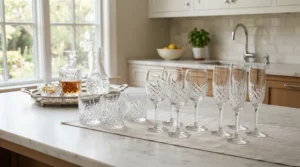
JoyJolt Sidney leans hard into a tapered “bulb” shape that gives it a distinctly showroom-modern look — sleek, rounded, and noticeably more sculptural than a standard tumbler. Made from European crystal glass, each glass holds a generous 19 ounces, enough for full-bodied reds, chilled whites, or a sneaky-large glass of sangria. The stemless base is engineered wide and stable, which functionally matters more than it sounds: fewer stem-related breakages, easier dishwasher loading, easier storage in a cabinet that wasn’t designed around long-stemmed goblets.
What most buyers overlook about this set is the packaging itself — it ships in a presentation-ready gift box, which the brand highlights as a selling point rather than an afterthought. That’s a real practical advantage if you’re shopping for someone else and don’t want to buy a separate box or bag. Reviewers consistently mention the glasses as dishwasher-safe without clouding, and JoyJolt backs the set with a limited one-year warranty against manufacturing defects — worth knowing before you assume “crystal” automatically means fragile.
Pros:
- ✅ Comes pre-packaged in a gift-ready box
- ✅ Large 19 oz capacity suits reds, whites, and cocktails
- ✅ European crystal construction with a one-year warranty
Cons:
- ❌ Set of 4 runs out fast for bigger gatherings
- ❌ Stemless shape means less “formal” presentation than classic goblets
Price range: typically in the $25–$40 zone depending on retailer promotions. If gift boxing options matter to you as much as the glass itself, this is one of the few sets on this list where that’s baked into the purchase rather than sold separately.
3. LUNA & MANTHA — budget-friendly hand-blown gift set
Here’s a set that proves “hand-blown” and “affordable” aren’t mutually exclusive. LUNA & MANTHA ships as a set of four 15-ounce stemmed glasses made from ultra-clear crystal, and the standout is how the glass practically disappears in photos — no visible seams, no cloudy tint, just wine floating in a nearly invisible vessel. That clarity comes from the crystal formula rather than any coating, according to the manufacturer’s listing, which means it should hold up better over time than glasses relying on surface treatments.
Based on the spec sheet, the long stem and thin rim put this set closer to a traditional silhouette than most stemless options here, but the minimalist detailing (no cuts, no etching, no colored accents) keeps it squarely in modern territory. Here’s what to weigh: because it’s positioned as a budget entry point into hand-blown-style glassware, don’t expect the reinforced stems you’d get from a premium European brand — treat it as an everyday-elegant option rather than heirloom stemware. It’s frequently marketed around gifting occasions, which tracks with the included presentation packaging.
Pros:
- ✅ Ultra-clear crystal look at a budget price point
- ✅ Long, elegant stem suits traditional-leaning table settings
- ✅ Ships gift-ready for weddings, birthdays, and housewarmings
Cons:
- ❌ Thinner stems are more breakage-prone than stemless designs
- ❌ Set of 4 limits use for larger gatherings
Price range: generally under $25 for the set, making it one of the most accessible stemmed options on this list. The value verdict is straightforward — for the price, you’re getting a surprisingly elegant look, provided you handle the stems with reasonable care.
4. Physkoa Modern Square — boldest silhouette on this list
If everything else here reads as “tastefully contemporary,” Physkoa Modern Square is the one that actually turns heads. The standout is right in the name: a square, flat-bottomed base beneath a tall, oversized 21-ounce bowl, hand-blown in an Italian-influenced style. That square foot isn’t just decorative — it changes how the glass sits and photographs, which is likely why this design shows up so often in tablescape and registry-inspiration posts.
Key spec interpretation: hand-blown glass tends to run heavier per glass than machine-made alternatives, and Physkoa’s own messaging leans into that, framing the added weight as a stability and craftsmanship feature rather than a flaw. On paper this means each glass feels more substantial in hand than the featherweight Riedel or Gabriel-Glas options later on this list — a genuine trade-off between “delicate elegance” and “sturdy presence,” not an objective downgrade. Aggregated buyer sentiment frequently praises the resonant “ring” when the glass is tapped, which the brand attributes to the crystal formulation, though as with any hand-blown product, expect minor variation from glass to glass rather than machine-perfect uniformity.
Pros:
- ✅ Eye-catching square base sets it apart visually
- ✅ Large 21 oz bowl suits full-bodied red wines
- ✅ Individually hand-blown for a craftsmanship-forward look
Cons:
- ❌ Heavier stemware weight than machine-made competitors
- ❌ Tall, wide shape may not fit shorter dishwasher racks
Price range: typically in the $35–$55 range for a set of four. This is the pick for someone who wants their glassware to double as a conversation piece, not just a vessel.
5. Schott Zwiesel Modo — toughest daily-driver crystal
German engineering shows up in glassware too, apparently. Schott Zwiesel Modo uses the brand’s proprietary Tritan crystal — a lead-free formulation that Schott Zwiesel markets specifically around break- and dishwasher-resistance, not just clarity. The set’s geometric goblet shape, with its tall, angular silhouette, is the most architecturally “modern” of the stemmed options here, closer to a piece of Bauhaus design than a traditional wine glass.
What most buyers overlook about spec sheets like this is that “dishwasher-safe” claims vary wildly in how true they hold up over years of actual use — and this is one of the few areas where Schott Zwiesel’s Tritan process is specifically engineered to resist the clouding and etching that ordinary glass develops after repeated hot-water cycles. Reviewers testing similar Schott Zwiesel lines have specifically flagged the glass as “durable and highly resistant to breakage and clouding,” which lines up with the brand’s own claims about the Tritan formulation. The trade-off is a smaller 15-ounce capacity than some competitors and a price that reflects German manufacturing rather than mass-market production.
Pros:
- ✅ Tritan crystal resists breakage and dishwasher-induced clouding
- ✅ Bold geometric goblet shape reads as genuinely modern
- ✅ Made in Germany with decades of stemware engineering behind it
Cons:
- ❌ 15 oz capacity is modest next to oversized competitors
- ❌ Premium pricing compared to basic glass alternatives
Price range: commonly in the $40–$60 range for a set of four. If glass durability is your top priority — more than capacity, more than price — this is the set built specifically to answer that concern.

6. Riedel O Wine Tumbler — registry-ready varietal precision
Riedel didn’t invent the wine glass, but the company more or less invented the idea that different grape varietals deserve differently shaped glasses — and the Riedel O Wine Tumbler brings that philosophy into a stemless, dishwasher-friendly format. The standout here is precision: this Cabernet/Merlot-shaped tumbler is engineered with a specific bowl geometry meant to showcase structured red wines, rather than the one-size-fits-most approach most stemless sets take.
Here’s what the spec sheet won’t tell you plainly, but Riedel’s own research and decades of varietal-glass development suggest: bowl shape genuinely can influence how aromas concentrate before reaching your nose, which is where most of what we perceive as “taste” actually happens. A 2017 academic review in the journal Beverages, co-authored by Oxford researchers, examined exactly this question — whether drinking-vessel shape measurably affects flavor perception — and found real, if debated, evidence that glass geometry changes perceived taste and aroma. That’s honest context for why a “varietal-specific” glass isn’t purely marketing. The catch: since each O Wine Tumbler shape is tuned to particular grapes, building full coverage (reds, whites, sparkling) means buying more than one shape, which adds up compared to an all-purpose set.
Pros:
- ✅ Varietal-specific bowl shape backed by Riedel’s tasting research
- ✅ Stemless design is registry-friendly and breakage-resistant
- ✅ Fully dishwasher safe despite the crystal build
Cons:
- ❌ Single-varietal focus means multiple sets for full coverage
- ❌ Less formal-looking than stemmed glassware for weddings
Price range: generally in the $30–$50 bracket depending on the varietal set and pack size. For registries specifically, this is a smart “start small, expand later” pick — guests can gift one shape now, another for a future occasion.
7. Gabriel-Glas StandArt — featherweight splurge sommeliers love
Every list needs one glass that makes you understand why some people spend real money on stemware, and that’s Gabriel-Glas StandArt. Developed by wine critic René Gabriel as a single “one glass for everything” shape, it’s a lead-free crystal design that weighs roughly 5 ounces empty — remarkably light for a 16-ounce-capacity glass — and is engineered as one continuous, seamless piece with no stress points where the bowl meets the stem.
Based on the spec comparison with every other entry on this list, this is the outlier: it’s not trying to be varietal-specific, oversized, or heavily styled. It’s trying to be the single best-performing universal shape, full stop, and independent reviewers testing the glass alongside pricier options have specifically praised how it “performed perfectly” across reds, whites, and sparkling wine in side-by-side comparisons. That stemware weight matters more than people expect — a lighter glass genuinely feels different in hand, and some sommeliers argue it changes how deliberately you sip. The honest trade-off is fragility-adjacent pricing: a set of two costs more than some of the six-glass sets above, so this isn’t the pick for a household that regularly loses glasses to overenthusiastic dishwashing or clumsy guests.
Pros:
- ✅ Remarkably light stemware weight for its 16 oz capacity
- ✅ One universal shape replaces multiple varietal-specific glasses
- ✅ Dishwasher safe despite the delicate, seamless design
Cons:
- ❌ Set of 2 requires multiple purchases for entertaining
- ❌ Higher price per glass than any other pick on this list
Price range: typically $50–$90 for a set of two, positioning it as the clear splurge option here. If you’re buying for a genuine wine enthusiast rather than a casual drinker, this is the one that signals you actually did the research.
Top 7 Modern Wine Glasses Sets — Full Spec Comparison
| Set | Style | Capacity | Material | Best For |
|---|---|---|---|---|
| Libbey Signature Greenwich | Stemless, angular | 18 oz | ClearFire glass | Everyday value |
| JoyJolt Sidney | Stemless, sculptural | 19 oz | European crystal | Gifting |
| LUNA & MANTHA | Stemmed, minimalist | 15 oz | Hand-blown crystal | Budget elegance |
| Physkoa Modern Square | Stemmed, square base | 21 oz | Hand-blown crystal | Statement design |
| Schott Zwiesel Modo | Stemmed, geometric | 15 oz | Tritan crystal | Daily durability |
| Riedel O Wine Tumbler | Stemless, varietal | 11–22 oz | Machine-made crystal | Wedding registries |
| Gabriel-Glas StandArt | Stemmed, universal | 16 oz | Lead-free crystal | Wine-lover splurge |
Stacking all seven side by side, the capacity range (11 to 22 ounces) tells its own story: bigger isn’t automatically better, since oversized bowls like the Physkoa Modern Square‘s 21 ounces are built for aeration on full-bodied reds, not for filling to the brim. Material is the real dividing line — Tritan and lead-free crystal formulations (Schott Zwiesel Modo, Gabriel-Glas StandArt) trade a bit of sparkle for meaningfully better dishwasher and chip resistance, while hand-blown crystal (Physkoa Modern Square, LUNA & MANTHA) trades some uniformity for visual character. If you only remember one takeaway from this table, make it this: match the “Best For” column to your actual habits, not your aspirational wine-collector fantasy.
Practical Usage Guide: Getting the Most from Your Set
Buying the glasses is the easy part — keeping them looking good for years is where most people slip up. First 30 days matter more than you’d think: hand-wash new stemware once before first use even if it’s labeled dishwasher-safe, since manufacturing residue and packaging dust can dull that first pour’s aroma. After that, load stemless tumblers on the top rack, bowl-down, with enough spacing that they can’t clink against each other mid-cycle — that single habit prevents most rim chips.
For stemmed glasses, a lot of dishwashers simply weren’t designed with tall stems in mind, so check your appliance’s top-rack clearance before assuming a 9-inch-tall goblet will fit without tipping. A common first-month mistake is stacking glasses inside each other for storage — don’t; the friction point where bowls meet is exactly where hairline cracks start, even on tougher Tritan builds. If you’re storing glasses long-term, store them upright rather than upside down on delicate stems, and give hand-blown pieces slightly more breathing room than machine-made ones, since minor shape variation means they don’t always nest as predictably.
One optimization trick barware fans swear by: run an occasional vinegar-and-water rinse cycle to prevent the faint film hard water can leave on crystal, particularly with the deeper bowls found on premium sets like the Gabriel-Glas StandArt. It’s a five-minute habit that meaningfully extends how long your glasses look showroom-new.
Real-World Scenarios: Matching Glasses to Your Life
Consider a recent college graduate furnishing a first apartment on a tight budget, hosting casual game nights maybe twice a month. That person doesn’t need varietal precision or hand-blown Italian glass — they need six sturdy, good-looking glasses that survive a dishwasher and a slightly chaotic apartment. The Libbey Signature Greenwich is built exactly for this use case: low per-glass cost, high glass count, minimal fragility anxiety.
Now picture someone furnishing a first home after years of renting, finally ready to host actual dinner parties instead of ordering pizza on paper plates. Budget is more flexible, frequency of use is high, and the environment (a proper dining table, maybe a bar cart) calls for something that looks intentional. This is where the Physkoa Modern Square or Schott Zwiesel Modo earn their keep — statement-worthy enough for guests to notice, durable enough for weekly rotation.
Finally, imagine a couple building a wedding registry who genuinely care about wine but don’t want to ask guests to buy them a $200 crystal decanter set. Splitting the difference between accessible and aspirational, the Riedel O Wine Tumbler hits that sweet spot — recognizable brand credibility, registry-friendly stemless durability, and a price point most guests can comfortably gift without flinching.
Gift Boxing Options: What to Look for When Buying as a Present
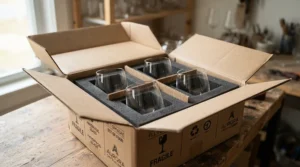
If you’re buying any of these sets as a gift, packaging matters almost as much as the glass itself — nobody wants to unwrap bubble wrap and a shipping label on their birthday. Several sets on this list address gift boxing options directly rather than treating it as an afterthought. The JoyJolt Sidney and LUNA & MANTHA both ship in presentation-ready boxes specifically marketed toward gifting occasions, meaning you can skip the extra wrapping step entirely.
Reviewers consistently flag branded gift boxes as a meaningful plus for wedding, housewarming, and holiday purchases, since it eliminates the awkward “great gift, terrible presentation” problem. What most buyers overlook here is that gift boxing quality varies more than you’d expect — some brands use flimsy printed cardboard, while others (particularly European-manufactured sets like Schott Zwiesel Modo and Gabriel-Glas StandArt) include foam-lined, reusable boxes that double as long-term storage. If gift boxing options are a deciding factor for your purchase, check the specific listing photos before buying, since packaging quality often isn’t detailed in the bullet points.
How to Choose a Modern Wine Glasses Set
Shopping this category gets overwhelming fast once you realize “modern wine glasses” spans everything from $20 tumblers to $90 crystal pairs. Here’s a practical framework, built around the factors that actually change your day-to-day experience:
- Decide stemmed vs. stemless first. Stemless sets are more breakage-resistant and dishwasher-friendly; stemmed glasses look more formal and keep wine cooler longer since your hand isn’t warming the bowl directly.
- Match capacity to your typical pour. A 15-ounce glass filled to a standard 5-ounce pour leaves plenty of room to swirl; a 21-ounce oversized bowl is built for that swirl-and-sniff ritual, not for filling to the top.
- Check the material claim specifically. “Crystal” without further detail could mean lead crystal, lead-free crystal, or Tritan — each behaves differently in the dishwasher and under everyday handling.
- Confirm dishwasher-safe claims against your actual dishwasher. Older units with harsher heat-dry cycles can still degrade glasses rated dishwasher-safe faster than newer, gentler cycles.
- Consider stemware weight relative to how you’ll use it. Heavier glass feels sturdier for daily use; ultralight glass (like the Gabriel-Glas StandArt) feels more premium but demands gentler handling.
- Factor in set size versus your actual entertaining frequency. A set of 12 sounds practical until you realize storage space is finite — six is the sweet spot for most households.
- If gifting, prioritize presentation. Gift boxing options can be the deciding factor between two otherwise comparable sets.
Stemware Weight: Why It Matters More Than You Think
Stemware weight is one of those specs nobody asks about until they’re holding two glasses side by side and one just feels better. On the lighter end, the Gabriel-Glas StandArt weighs around 5 ounces empty despite a generous 16-ounce capacity — a deliberate engineering choice meant to make the glass feel like an extension of your hand rather than a heavy vessel you’re gripping. On the heavier end, hand-blown sets like the Physkoa Modern Square intentionally add weight, framing it as a stability and craftsmanship signal rather than a downside.
Here’s the honest trade-off: lighter glass typically correlates with thinner walls, which can mean better sensory experience (some sommeliers argue thin rims deliver wine more precisely to the palate) but also more fragility under rough handling. Heavier glass survives more real-world abuse — a slightly clumsy toast, a wobbly coffee table — but loses some of that “delicate crystal” sensation premium buyers are often chasing. Reviewers frequently mention weight as a surprise factor after purchase, since online listings rarely emphasize it compared to capacity or price. If you’ve never handled premium stemware before, this is genuinely one of the more useful things to research before buying rather than after.
Glass Durability: Tritan, Lead-Free Crystal, and Everyday Toughness
Glass durability comes down to composition more than price tag, and this is where the marketing term “crystal” gets genuinely confusing. Traditional lead crystal contains lead oxide, which increases sparkle and refraction but raises legitimate health questions with regular use — Canada’s national health authority specifically advises against routinely drinking from lead crystal glassware, particularly for children and pregnant women, since acidic liquids like wine can leach trace lead over time. Every set featured in this guide is explicitly marketed as lead-free crystal or Tritan, which sidesteps that concern entirely.
Tritan, the material behind Schott Zwiesel Modo, is a proprietary copolyester-reinforced crystal formulation specifically engineered for break- and scratch-resistance — the spec sheet claim is backed by the brand’s decades-long reputation in commercial and restaurant glassware, where durability isn’t optional. Lead-free crystal, used in sets like Gabriel-Glas StandArt and Riedel O Wine Tumbler, still delivers clarity and a satisfying resonant “ring” without the lead content, though it typically can’t match Tritan’s raw impact resistance. What most buyers overlook is that “dishwasher safe” and “durable” aren’t synonyms — a glass can survive the dishwasher fine while still chipping easily if dropped, so match your material choice to your actual risk factors (kids, pets, clumsy roommates) rather than just the dishwasher label.

Dishwasher Safe Modern Wine Glasses: What Actually Survives the Cycle
Every set on this list is labeled dishwasher safe modern wine glasses, but “safe” covers a wide range of real-world outcomes. On one end, Tritan crystal like Schott Zwiesel Modo is specifically engineered to resist the clouding and etching that develops after hundreds of hot-water cycles — this is arguably the single biggest advantage of Tritan over standard glass. On the other end, delicate hand-blown pieces like LUNA & MANTHA or Physkoa Modern Square are dishwasher-rated by the manufacturer, but aggregated review patterns for hand-blown glassware in general suggest more caution is warranted with thinner stems, regardless of brand.
Practical tips that make a real difference: position glasses so they never touch each other or other dishware during the cycle, skip the heated dry setting when your dishwasher offers a choice, and avoid overloading the top rack past the manufacturer’s stated capacity. A common complaint in aggregated feedback across multiple stemware brands is glasses “coming out cloudy,” which is frequently a hard-water mineral deposit issue rather than a manufacturing defect — a rinse-aid setting or occasional vinegar cycle usually resolves it. If your household runs the dishwasher daily, prioritize Tritan or reinforced stemless designs over delicate hand-blown stemware, since real-world frequency matters more than the “dishwasher safe” label alone.
Modern Wine Glasses for a Housewarming Gift
Buying modern wine glasses for a housewarming gift means threading a specific needle: something that feels thoughtful and a little elevated, without assuming you know someone’s exact wine preferences or entertaining habits. Stemless sets tend to win here, since they’re forgiving of storage space in a kitchen the recipient is still organizing, and they photograph well without requiring the giver to guess at glassware trends.
The JoyJolt Sidney checks nearly every housewarming box: gift-ready packaging out of the box, a large enough capacity to double as a casual all-purpose glass, and a modern sculptural shape that looks intentional on a new bar cart or open shelving. A budget-friendlier alternative, the Libbey Signature Greenwich, works well when you’re gifting alongside other housewarming items and don’t want glassware to dominate the budget. Reviewers frequently mention gifting stemless sets specifically because recipients don’t need to own dedicated wine-glass cabinet space yet — a real consideration for anyone just moved into a first house or apartment.
Modern Wine Glass Set for Wedding Registry
A modern wine glass set for wedding registry purposes carries different logic than a personal purchase, since multiple guests may be choosing from the same list, and price accessibility matters as much as quality. Registry guidance from retailers like Williams Sonoma’s own glassware registry guide recommends registering for roughly twice as many wine glasses as dinnerware place settings, precisely because stemware breaks more often than plates and gets used more frequently at parties.
The Riedel O Wine Tumbler is particularly well-suited to registries because its varietal-specific shapes let couples register for multiple styles over time — a red-wine shape now, a white-wine shape as a later anniversary gift, building out a full collection gradually rather than all at once. For couples wanting a single splurge-worthy registry item that a group of guests might pool together to buy, the Gabriel-Glas StandArt offers that “special occasion” feeling without requiring an entire matched dinner service. Whichever set you choose, registering for a stemless option as a secondary, everyday-use set alongside a more formal stemmed choice covers both casual weeknight wine and dinner-party entertaining.
Common Mistakes When Buying a Modern Wine Glasses Set
The single most common mistake is buying based purely on photos without checking capacity — a glass that looks elegantly oversized in a product image can turn out to hold far less than expected once you account for the recommended fill line sitting well below the rim. Second, buyers frequently skip checking dishwasher-rack compatibility for tall stemmed glasses, only to discover after purchase that their dishwasher’s top rack clearance is a full inch too short.
A third mistake: assuming “crystal” universally means fragile and expensive, when lead-free and Tritan crystal formulations have specifically closed that durability gap in recent years. Fourth, shoppers often underestimate how many glasses they actually need — buying a set of 2 or 4 for a household that regularly hosts, then scrambling to buy a second mismatched set within a year. Finally, gift shoppers sometimes prioritize the glass itself and forget to check gift boxing options entirely, ending up with beautiful stemware in a plain shipping box that undercuts the gifting moment.
Modern Wine Glasses vs Traditional Wine Glasses
The core difference isn’t really about elegance — traditional cut-crystal stemware can look stunning — it’s about how each category is engineered for actual daily use. Traditional wine glasses often prioritize ornate cuts, hand-wash-only care instructions, and higher lead content, which historically delivered more sparkle at the cost of practicality. Modern wine glasses sets, by contrast, are built around dishwasher compatibility, lead-free or Tritan materials, and simplified silhouettes that photograph as “current” rather than “inherited.”
| Feature | Modern Wine Glasses Set | Traditional Cut-Crystal Glasses |
|---|---|---|
| Care | Dishwasher safe (most sets) | Often hand-wash only |
| Material | Lead-free crystal or Tritan | Frequently lead crystal |
| Style | Clean lines, geometric, minimal cuts | Ornate cuts, etchings, patterns |
| Everyday use | Designed for frequent use | Often reserved for special occasions |
Looking at the comparison above, the practical case for modern sets is strongest for anyone who actually uses their wine glasses weekly rather than saving them for holidays — dishwasher compatibility alone removes a real barrier to regular use. Traditional cut-crystal still holds appeal for collectors and formal entertaining, but the lead-content consideration is worth factoring in if the glasses will see regular rotation rather than occasional display. Buyers who want “the best of both” increasingly land on universal-shape modern glasses like the Gabriel-Glas StandArt, which borrows the elegance of traditional stemware without the lead or the hand-wash requirement.

Frequently Asked Questions
❓ What is the best modern wine glasses set for beginners?
❓ Are modern stemless wine glasses as good as stemmed ones?
❓ How many glasses should a modern wine glasses set include?
❓ Can modern wine glasses go in the dishwasher?
❓ What is a good gift budget for a modern wine glasses set?
Conclusion
Choosing a modern wine glasses set really comes down to matching the glass to your actual life, not your Pinterest board. Casual, frequent use points toward stemless, dishwasher-tough options like the Libbey Signature Greenwich or Schott Zwiesel Modo. Gifting occasions favor sets with built-in presentation, like the JoyJolt Sidney or LUNA & MANTHA. Registries benefit from the flexibility of varietal-specific options like the Riedel O Wine Tumbler, and genuine wine enthusiasts deserve a look at the featherweight precision of the Gabriel-Glas StandArt.
None of these are wrong choices — they’re just built for different moments. What matters is buying with actual specs in mind: capacity, material, stemware weight, and dishwasher compatibility, rather than just how a glass looks in a single product photo. Do that, and whichever set you land on should genuinely earn its spot in your cabinet for years, not just until the next big sale.
Recommended for You
- Borosilicate vs Soda-Lime Glass Wine Glasses: 7 Best Picks 2026
- 7 Best Glass Wine Glasses For Large Gatherings And Parties (2026)
- 7 Best Budget Glass Wine Glasses in 2026: Real Picks & Tips
Disclaimer: This article contains affiliate links. As an Amazon Associate, I earn from qualifying purchases. If you purchase products through these links, we may earn a small commission at no additional cost to you.
✨ Found this helpful? Share it with your friends! 💬🤗
