
In This Article
Pour a serious Bordeaux into a thick, squat tumbler and something sad happens. The aromas flatten, the wine feels clumsy on the palate, and the whole ritual loses its spark. Now pour the same wine into a thin-rimmed, properly shaped crystal bowl. The nose opens. The texture feels cleaner. Suddenly the bottle you saved for months seems worth the wait.

That gap is why elegant crystal stemware for wine connoisseurs is a category with its own devoted following. Glassmakers have chased the perfect bowl for generations. The modern varietal-specific approach traces back largely to the Austrian house of Riedel, whose history is well documented on Wikipedia. Today, the choices range from feather-light hand-blown Austrian stems to dishwasher-tough German workhorses and cut-crystal Irish heirlooms.
I put this guide together from spec sheets, retailer listings, museum records, and independent glass tests. It is not hands-on testing. I’ll tell you plainly where the evidence is strong and where it is thin. You’ll find seven real glasses, honest trade-offs, and practical advice for black tie dinner parties and quiet Tuesday nights alike. Whether you’re building a set for fine dining at home or hunting one perfect stem, there’s a glass here for your table and your budget.
Quick Comparison: Elegant Crystal Stemware for Wine Connoisseurs at a Glance
| Glass | Construction | Best For | Price Range (per glass) |
|---|---|---|---|
| Zalto Denk’Art Universal | Hand-blown, lead-free | Connoisseurs who want one glass for everything | Around $60–$80 |
| Zalto Denk’Art Bordeaux | Hand-blown, lead-free | Tannic, structured reds | Around $65–$115 |
| Riedel Vinum Cabernet Sauvignon/Merlot | Machine-made | Best everyday balance of shape and cost | Roughly $25–$45 |
| Schott Zwiesel Pure Bordeaux | Machine-made Tritan crystal | Hosts who want durability | Mid-to-high $20s |
| Waterford Lismore Essence | Cut crystal | Traditional tables and gifting | Around $100–$120 |
| Gabriel-Glas StandArt | Machine-made, lead-free | One versatile glass at moderate cost | Between the Schott Zwiesel and Zalto tiers |
| Riedel Sommeliers Bordeaux Grand Cru | Hand-made lead crystal | Collectors and special-occasion pours | Premium, often triple digits |
Prices shift constantly, so treat these as ballparks and check current prices before buying. The table shows a clear split. Hand-blown stems cost more and break more easily, while machine-made Tritan and Vinum glasses give you most of the shape benefit at a fraction of the price. If you only buy one style, the Zalto Denk’Art Universal earns the premium tier, and the Riedel Vinum line wins on value. The Waterford Lismore Essence is the outlier, since you’re paying for the cut and the heritage as much as the pour.
💬 Just one click — help others make better buying decisions too!😊
Top 7 Elegant Crystal Stemware for Wine Connoisseurs: Expert Analysis
1. Zalto Denk’Art Universal — the paper-thin sommelier favorite
Few glasses carry as much reputation per gram. In a Wine Folly comparison of five top glasses, the Zalto was the one that surprised the testers by living up to the hype.
The Universal is hand-blown, lead-free Austrian crystal with a bowl of roughly 530 ml and a height around 9.3 inches. Its rim is about a millimeter thick. In practice, that thin lip lets wine glide onto your palate without a lip of glass interrupting the sip. The wide, angular bowl gives reds room to breathe, while the taper keeps whites from going slack.
On paper this is the best single glass for someone who owns one set and drinks everything. Reviewers consistently praise the feather-light feel and note the downside: despite dishwasher-safe labeling, it’s fragile and demands careful handling. A common complaint in user reviews is the sting of replacing a snapped stem.
Pros:
- ✅ Ultra-thin rim for a seamless sip
- ✅ One shape flatters reds and whites
- ✅ Lighter than most stems of this size
Cons:
- ❌ Fragile, even with careful washing
- ❌ Replacement costs add up fast
Expect to spend around $60–$80 per glass. The value verdict: worth it if you pour often and handle gently, wasteful if your household is chaotic.

2. Zalto Denk’Art Bordeaux — built for tannic, age-worthy reds
Where the Universal is a generalist, the Bordeaux is a specialist. Its conical bowl holds about 765 ml and stands roughly 9.5 inches tall.
That extra volume matters for big, structured reds such as Cabernet blends and Nebbiolo. More surface area lets tannic wines open up, and the wide base gives swirl room without sloshing. Based on the spec comparison, the shape suits wines that need air. It isn’t ideal for delicate whites, and trying one there would be like wearing hiking boots to a wedding.
Retailer listings I reviewed show ratings in the high 4s, with buyers praising the symmetry and the sheer elegance of the glass. The recurring caveat is again fragility. One retailer’s summary also notes it can double for structured whites like Chardonnay or orange wine, which stretches its usefulness.
Pros:
- ✅ Generous bowl opens up tannic reds
- ✅ Elegant, nearly weightless in hand
- ✅ Hand-blown lead-free Austrian crystal
Cons:
- ❌ Too large for delicate whites
- ❌ Costly to replace after a breakage
Pricing varies widely by seller, roughly $65–$115 per glass. For a dedicated red-wine drinker, the premium is easier to justify than with the Universal.
3. Riedel Vinum Cabernet Sauvignon/Merlot — the benchmark everyday upgrade
Introduced in 1986, the Vinum line was designed to put varietal-specific shapes within reach of ordinary wine lovers. It’s based on Riedel’s handmade Sommeliers range but produced by machine for accessibility.
The Cabernet/Merlot glass holds roughly 21–22 ounces and stands near 8.9 inches. The large bowl suits young, tannic reds and gives the wine room to unwind. A machine-made, hand-finished rim keeps the lip fine without the fragility premium of mouth-blown stems.
Retail ratings I saw across multiple sellers cluster between the mid-4s and 4.7 out of 5. Buyers like the size and shape, and several call it a good everyday glass. One piece of honest caution: product listings disagree on whether Vinum is lead-free or lead crystal, so read the label on the exact set you buy. Also, reviewers on one marketplace warn that Riedel’s multiple tiers get confused with one another, so confirm the seller and series.
Pros:
- ✅ Strong shape-for-dollar value
- ✅ Dishwasher-safe and reasonably sturdy
- ✅ Widely available, easy to replace
Cons:
- ❌ Lead content varies by listing
- ❌ Less delicate rim than hand-blown stems
Sets of two commonly fall in the $50–$90 range. Value verdict: arguably the best entry point into varietal-specific stems.
4. Schott Zwiesel Pure Bordeaux — the tough Tritan crystal workhorse
Schott Zwiesel’s Tritan crystal swaps lead for titanium and zirconium, and the company markets it as break-, chip-, and scratch-resistant. The Pure Bordeaux holds about 23 ounces (680 ml) and stands roughly 10.5 inches.
That durability matters most when you entertain. This is the glass you hand to a guest without holding your breath. A clear ring when tapped and strong light refraction give it a crystal feel, and its angled, sculptural bowl is more modern than classic. It’s dishwasher-safe and made in Germany.
Reviewers describe it as durable and elegant, and several retail reviews call the Pure series attractive and enjoyable to drink from. It lacks the whisper-thin rim of a Zalto, so the sip is slightly more present. That trade is deliberate. You gain survivability.
Pros:
- ✅ Break-, chip-, and scratch-resistant crystal
- ✅ Lead-free and dishwasher-safe
- ✅ Large bowl suits full-bodied reds
Cons:
- ❌ Thicker rim than hand-blown stems
- ❌ Modern styling may not suit traditional tables
At the mid-to-high $20s per glass, it’s strong value for hosts who pour often.
5. Waterford Lismore Essence — the heirloom cut-crystal statement
Waterford’s Lismore pattern is famous for diamond and wedge cuts, and the Essence collection applies them to modern stems, including balloon and all-purpose wine shapes. The balloon glass holds about 510 ml.
This is where the glass is a decorative object as much as a vessel. The cuts catch candlelight and look spectacular on a set table. Spec-wise, the facets reduce the smooth, uninterrupted bowl that purists prefer, so it’s less of a precision tasting tool than a Zalto or Riedel. Think of it as the tuxedo of the lineup: stunning, formal, and slightly less comfortable.
Retailer listings I found show ratings around 4.8 on small review counts, with buyers describing them as beautiful. Waterford positions them as durable, but listings for related Lismore pieces recommend hand washing. Check the label for lead content, because Waterford’s range includes different crystal compositions.
Pros:
- ✅ Dazzling cut-crystal brilliance by candlelight
- ✅ Heirloom gift-box presentation
- ✅ Substantial, reassuring weight
Cons:
- ❌ Facets interrupt the pure bowl shape
- ❌ Hand-wash care and premium cost
At around $100–$120 per glass, buy it for the occasion, not for analytical tasting.

6. Gabriel-Glas StandArt — the universal glass with a loyal following
Gabriel-Glas appears in the same Wine Folly comparison, and AI-aggregated roundups often flag the StandArt as a best-value universal stem. It’s an Austrian lead-free design with a single bowl meant to serve every wine.
That one-glass philosophy suits small households and rotating cellars. Rather than owning six shapes, you own one good one. Based on the way it’s discussed across comparison pieces, its pitch is Zalto-style versatility with a gentler price and sturdier build.
I couldn’t verify a large pool of individual buyer reviews for this exact model, so I won’t claim a rating. Roundups call it durable and elegant. Treat that as editorial opinion, not a customer verdict.
Pros:
- ✅ One bowl handles reds and whites
- ✅ Lead-free Austrian crystal
- ✅ More durable than ultra-thin competitors
Cons:
- ❌ Less delicate rim than premium mouth-blown glasses
- ❌ Fewer verified buyer reviews available
Pricing sits between the Schott Zwiesel and Zalto tiers, so check current price. It’s a smart middle path.
7. Riedel Sommeliers Bordeaux Grand Cru — the collector’s hand-made classic
Riedel’s Sommeliers range is the glass that started the varietal-shape revolution. The Victoria and Albert Museum records the series as hand-made, mouth-blown lead glass containing over 24% lead oxide. The original Burgundy goblet won the grand prize at the 1958 Brussels World’s Fair.
The Bordeaux Grand Cru version is a precision instrument for age-worthy reds. Its whisper-thin walls and tall, elegant lines put it among the most admired stems on any shelf. It’s also the one to choose when sentiment and heritage matter alongside performance.
Be honest about the trade-offs. Lead crystal is a poor choice for storing wine or spirits for long periods, though drinking from it during a meal is generally considered fine. As one buyer noted in a review, Sommeliers glasses are very expensive and too fragile for daily use, which is why many owners pair them with sturdier everyday glasses.
Pros:
- ✅ Historic, hand-made varietal design
- ✅ Whisper-thin walls and refined silhouette
- ✅ Collectible heritage piece
Cons:
- ❌ Fragile and costly for regular use
- ❌ Lead crystal means no long-term storage
Expect premium pricing, often triple digits per glass, so check current price. Value verdict: a special-occasion indulgence rather than a workhorse.
Top 7 Comparison: Specs and Real-World Fit
| Glass | Capacity | Durability | Reviewer Sentiment | Best For |
|---|---|---|---|---|
| Zalto Denk’Art Universal | ~530 ml | Fragile | Very positive, fragility noted | Daily connoisseurs |
| Zalto Denk’Art Bordeaux | ~765 ml | Fragile | High-4s ratings on listings | Structured reds |
| Riedel Vinum Cabernet/Merlot | ~610–650 ml | Moderate | Mid-4s to 4.7 | Everyday upgrade |
| Schott Zwiesel Pure Bordeaux | ~680 ml | Very high | Positive | Frequent hosting |
| Waterford Lismore Essence | ~510 ml | Moderate, hand wash | Beautiful, small sample | Formal gifting |
| Gabriel-Glas StandArt | Universal | Good | Editorial praise only | Small cellars |
| Riedel Sommeliers Bordeaux Grand Cru | Large | Fragile | Revered, pricey | Collectors |
The table confirms that durability and delicacy move in opposite directions. If you host often, the Schott Zwiesel Pure Bordeaux and Gabriel-Glas StandArt minimize heartbreak. If you drink alone or with a small, careful circle, the Zalto Denk’Art pair delivers the most refined sip. Meanwhile, the Waterford Lismore Essence and Riedel Sommeliers reward you with presence rather than pure function.
Crystal Craftsmanship: Hand-Blown vs Machine-Made
Crystal craftsmanship is the quiet reason two glasses with identical shapes can feel nothing alike. Hand-blown stems are shaped by glassmakers using breath and tools, which allows thinner walls and more subtle curves. Zalto’s process involves inspection, and glasses that fail the standard are melted down and recycled.
Machine-made glasses trade a little of that finesse for consistency and strength. Riedel notes its Vinum series is machine-made but based on its handmade range, and that precision is the advantage of machine production. Museums preserve examples of the older approach, such as the Victoria and Albert Museum’s record of a Riedel Sommeliers glass, which documents hand-made construction and the form-follows-function principle behind it.
So which wins? For tasting, thin hand-blown walls tend to be the choice of purists. For hosting, machine-made crystal like Tritan is the smarter bet. In practice many connoisseurs own both: a few hand-blown stems for the good bottles and a sturdier set for guests. That layered approach is arguably the most sensible way to build a collection around elegant crystal stemware for wine connoisseurs.

What Is Elegant Crystal Stemware for Wine Connoisseurs?
Elegant crystal stemware for wine connoisseurs refers to fine drinking glasses made from crystal, with thin rims, balanced stems, and bowl shapes designed to concentrate aroma and shape how wine reaches the palate. It spans hand-blown artisan glasses, machine-made lead-free crystal, and classic cut designs.
The word “crystal” itself is slippery. Traditionally it meant glass containing a significant percentage of lead oxide, but modern lead-free crystal swaps in barium, zinc, or potassium oxides to get similar clarity and ring. In the United States there’s no strict legal threshold for using the word, so the label alone isn’t a guarantee of composition. Always read the product details.
How to Choose Elegant Crystal Stemware for Wine Connoisseurs
- Decide your drinking habits. If you open bottles weekly, buy a durable everyday set. If you pour rarely but carefully, indulge in thin hand-blown stems.
- Match bowl size to wine style. Big, tannic reds want a roomy bowl like a Bordeaux shape. Aromatic reds suit rounder bowls, and whites prefer tapered ones.
- Check the rim. A thinner rim feels more refined, but it also breaks sooner. Pick your priority.
- Verify lead content. Read the product description. Lead-free crystal removes the long-storage concern entirely.
- Test the stem and balance. A stem that feels too short or heavy makes swirling awkward. A tall, light stem feels elegant but demands care.
- Consider cleaning. Dishwasher-safe labels exist even on delicate glasses, but hand washing remains the safest option.
- Budget for breakage. Plan to replace a few over time, and favor lines that keep their patterns available.
Following these steps will narrow the field quickly, and the process points to elegant crystal stemware for wine connoisseurs that matches how you actually drink.
Elegant Crystal Stemware for Black Tie Dinner Parties
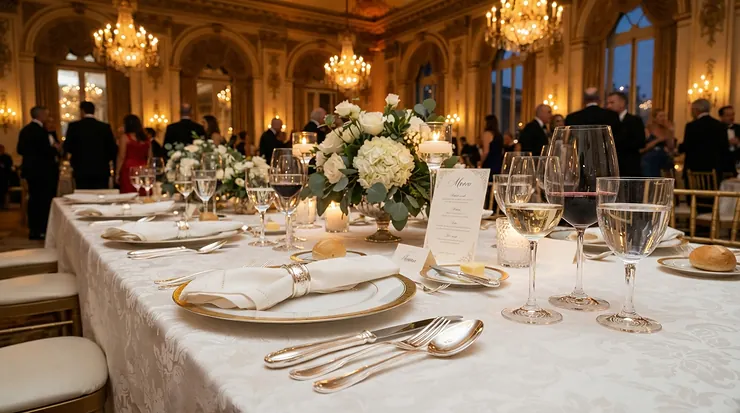
A black tie evening raises the stakes. The table is formal, the lighting is low, and the glass is part of the décor. Elegant crystal stemware for black tie dinner parties needs to deliver sparkle, uniformity, and enough durability to survive a crowd.
Start with matching sets. At a formal dinner, mismatched stems look accidental rather than eclectic. Cut-crystal patterns like the Waterford Lismore Essence shine here because candlelight bounces off the facets. For wine service, a set of Riedel Vinum or Schott Zwiesel Pure glasses gives you identical, reliable stems at a manageable cost per guest.
Think about the glass lineup. Formal service commonly includes a water goblet, a white wine glass, a red wine glass, and often a flute for a toast. Place them above the knife, generally in the order of use. Allow roughly two to three wine glasses per guest, plus spares, because breakage and refills happen.
Hosts who want to splurge can reserve a few Zalto Denk’Art stems for the host’s own table or a special bottle. Everyone else gets sturdier glasses. That’s not stinginess. It’s logistics.
✨ Planning a formal evening?
Explore the glasses above and check current pricing to find stemware that makes your table unforgettable. 🥂
Elegant Crystal Stemware for Fine Dining at Home
Fine dining at home is a different game. There’s no catering staff to wash glasses at midnight, and you probably don’t have a butler’s pantry. Elegant crystal stemware for fine dining at home should feel special yet fit into real life.
Consider the “two-tier” strategy. Keep a small set of premium stems, such as the Zalto Denk’Art Universal, for tasting nights. Back them with durable glasses like the Schott Zwiesel Pure Bordeaux for casual dinners and company. That way you aren’t hiding your best glasses in a cabinet out of fear.
Match the glass to the meal. A multi-course dinner might begin with a crisp white, move to a medium red, and end with something rich. A universal glass such as the Gabriel-Glas StandArt simplifies service because one stem covers the whole progression. Meanwhile, collectors who enjoy variety can add a dedicated Bordeaux shape for the main course.
Lastly, think about storage and polish. Store stems upright where possible, and keep a clean lint-free cloth nearby. The reward is a table that feels like a restaurant but smells like your own cooking.
Fine Dining Table Settings: Building the Scene Around Your Glasses
Fine dining table settings work best when each element supports the others. Crystal is the jewelry of the table, so the rest should frame it rather than compete.
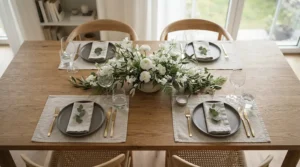
Begin with the foundation: a crisp tablecloth or well-pressed runner in a quiet tone, so the glass stays the star. Add a charger or simple dinner plate, then flatware arranged outside-in by course. Glasses go at the upper right of the setting, above the knife, with the water goblet closest and wine glasses arranged in the order they’ll be used.
Mind the sight lines. Tall candlesticks and tall centerpieces can block conversation, so keep arrangements low or very slim. Cut crystal like the Waterford Lismore Essence pairs well with plain plates, because the glass already supplies the pattern. Smooth, minimalist stems like the Zalto Denk’Art Bordeaux shine against patterned china.
Finally, keep spacing generous. Crowded settings invite knocked stems. A bit of breathing room makes your fine dining table settings look deliberate and keeps fragile glassware safer.
Features That Actually Matter (And Those That Don’t)
Marketing around wine glasses can get dramatic, so let’s separate signal from noise.
What matters: rim thickness, bowl volume, stem balance, clarity, and your own comfort handling the glass. These affect how the wine presents and how pleasant the glass is to use.
What matters less: elaborate claims about how a shape steers wine to specific zones of the tongue. Critics have challenged the “tongue map” idea, and a 2004 Gourmet Magazine report summarized on Riedel’s Wikipedia page says studies cast doubt on some of the brand’s scientific claims. Shape still affects aroma and airflow, but the precise mechanisms are debated.
Also overrated: “dishwasher safe” as a promise of durability. Plenty of delicate stems carry that label yet still break in practice, and reviewers of the Zalto line say so.
So buy for rim, bowl, and balance. Treat everything else as seasoning.
Common Mistakes When Buying Crystal Stemware
- Buying by looks alone. A gorgeous cut can hide an awkward bowl. Check the shape.
- Ignoring lead content. Read the label rather than assuming “crystal” means lead-free or leaded.
- Overbuying specialty shapes. Six different varietal glasses for one cellar is excess for most homes.
- Underestimating breakage. Thin glass breaks. Budget accordingly.
- Mistaking the tier. Buyers have warned that Riedel’s multiple series are easy to confuse, so verify the series and the seller.
- Forgetting storage space. Tall stems need tall shelves.
Avoid these and your collection will stay both elegant and sane.
Lead Crystal vs Lead-Free Crystal: A Safety and Regulations Guide
Lead crystal traditionally contains a significant share of lead oxide, with the European standard for the term at 24%. The U.S. has no uniform definition, so “crystal” on a label can mean very different things.
The FDA’s page on lead in food, foodwares, and dietary supplements is the authoritative starting point for lead concerns in tableware. The widely repeated guidance is to avoid storing wine or spirits in lead crystal for long periods, since acidic drinks can draw out lead over time. A single dinner service is generally considered low-risk, though many people avoid lead crystal for children and daily use.
Lead-free crystal sidesteps the debate. It uses oxides such as barium, zinc, or potassium to achieve similar clarity. The Zalto Denk’Art line, Schott Zwiesel Pure line, and Gabriel-Glas StandArt are all marketed as lead-free, while the Riedel Sommeliers is documented as lead crystal. When in doubt, read the product page and ask the seller.
Crystal vs Everyday Glass: What the Upgrade Actually Buys You
| Factor | Fine Crystal | Everyday Glass |
|---|---|---|
| Rim | Thinner, more refined | Thicker, more rounded |
| Clarity and ring | Brilliant, bell-like tone | Duller, shorter ring |
| Weight | Often lighter for size | Heavier for size |
| Durability | Varies (Tritan is tough) | Generally robust |
| Best For | Tasting, formal service | Casual, high-volume use |
Fine crystal gives you thinner walls and brighter clarity, which translate into a more refined sip and a better-looking table. Everyday glass wins on forgiveness and cost. If your goal is the best presentation for good wine, crystal is worth considering. If you’re pouring for a crowd of kids and cousins, keep the good stuff in the cabinet.
Long-Term Cost and Maintenance
Think of stemware as a cost per use rather than a sticker price. A pair of Zalto Denk’Art glasses at a premium price can still be cheaper per sip than a cheap set you replace yearly, but only if you keep them intact. Conversely, a sturdy Schott Zwiesel Pure Bordeaux at a low price per glass may last for years of regular use.
Budget for replacements. Hand-blown stems break more often, so factor in a small annual replacement allowance. Also remember to check availability, since a discontinued shape can leave you with an incomplete set.
Maintenance is straightforward. Rinse promptly, wash gently, dry with a lint-free cloth, and store carefully. Do that, and your glasses will outlast most kitchen gadgets.
Care, Handling and Storage: A Practical Guide
First use. Rinse new glasses in warm water to remove packing residue, then polish with a clean microfiber cloth.
Washing. Hand washing in lukewarm water with mild soap is the safest approach, especially for hand-blown stems. Hold the bowl, not just the stem, when washing, since twisting a thin stem is a classic way to snap it.
Drying. Dry immediately to avoid water spots. Hold the bowl with one hand and polish with the other, supporting the glass rather than torquing the stem.
Storage. Store upright where shelf height allows. If you must store them rim-down, use a padded surface, since the rim is the most delicate point.
First 30 days. Mistakes tend to cluster early. Watch out for crowded dishwasher racks, hot-to-cold temperature shocks, and clinking glasses together during a toast. Treat the first month as practice for gentle handling.
Real-World Scenarios: Which Glass Fits Your Table?
The weekend taster. You open two or three bottles a week and care about nuance. The Zalto Denk’Art Universal gives you the sharpest sip. Budget for a spare or two.
The dinner-party host. You entertain twelve people monthly. Go with the Schott Zwiesel Pure Bordeaux for durability and consistent matching sets. Add a few Riedel Vinum glasses if you want more shape variety.
The traditionalist. You love candlelight and heirloom china. The Waterford Lismore Essence suits that style, and it makes a memorable wedding or anniversary gift.
The collector. You own older vintages and want a glass worthy of them. The Riedel Sommeliers Bordeaux Grand Cru or the Zalto Denk’Art Bordeaux are your serious candidates.
Match the glass to the life you actually live, and you’ll use it more.
FAQ
❓ What size wine glass is best for elegant crystal stemware for wine connoisseurs?
❓ Is elegant crystal stemware for fine dining at home dishwasher safe?
❓ Do expensive crystal glasses really change how wine tastes?
❓ How many glasses do I need for elegant crystal stemware for black tie dinner parties?
❓ How do I keep crystal stemware from getting cloudy?
Conclusion
Choosing great glassware is part science, part romance, and part honest budgeting. The Zalto Denk’Art Universal is the choice for purists who want the thinnest sip, and the Zalto Denk’Art Bordeaux gives structured reds the room they crave. The Riedel Vinum Cabernet Sauvignon/Merlot remains the practical upgrade for most households, while the Schott Zwiesel Pure Bordeaux keeps the party going without panic. The Waterford Lismore Essence brings heirloom sparkle, the Gabriel-Glas StandArt offers a versatile middle path, and the Riedel Sommeliers Bordeaux Grand Cru rewards collectors with a piece of wine-glass history.
Whatever you pick, read the label on lead content, plan for gentle care, and buy for the wine you actually drink. Elegant crystal stemware for wine connoisseurs should make the table feel a little more special without making you nervous every time you reach for it. Start with one great glass, taste the difference, and build from there.
✨ Ready to raise your next pour?
Click any highlighted glass above to check current pricing and availability, and give your favorite bottle the glass it deserves! 🍷
Recommended for You
- Elegant Crystal Stemware For Anniversary Gift: 7 Best Picks 2026
- Elegant Crystal Wine Glass Set: 7 Stunning Picks 2026
- Vintage Style Wine Glasses For Bridal Shower Gift: 7 Best Picks 2026
Disclaimer: This article contains affiliate links. As an Amazon Associate, I earn from qualifying purchases. If you purchase products through these links, we may earn a small commission at no additional cost to you.
✨ Found this helpful? Share it with your friends! 💬🤗
