
In This Article
Picture this: you’re hosting a poolside party, everyone’s having a blast, and then—crash. Another glass bites the dust. If this scenario sounds all too familiar, you’re exactly where you need to be.

Acrylic wine glasses have quietly revolutionized how we enjoy wine outdoors, at the pool, on boats, and anywhere traditional glassware would leave you holding your breath. Unlike their fragile glass cousins, these shatterproof beauties deliver the crystal-clear aesthetics you want without the anxiety-inducing fragility. What most buyers overlook when first exploring acrylic wine glasses is that not all plastic drinkware is created equal—the material science behind quality acrylic makes it fundamentally different from the cheap plastic cups gathering dust in your garage.
The real game-changer here is that modern acrylic wine glasses aren’t just “plastic alternatives” anymore. Premium options now feature BPA-free construction, dishwasher-safe designs, and optical clarity that rivals actual glass. For families with young kids, boat owners who can’t risk broken glass onboard, or anyone who’s tired of replacing shattered stemware after every gathering, switching to acrylic isn’t settling—it’s upgrading to stress-free entertaining. The spec sheet won’t tell you this, but the difference between a $3 disposable cup and a $30 set of quality acrylic stemware becomes crystal clear (pun intended) the moment you hold them side by side.
Quick Comparison Table: Top 7 Acrylic Wine Glasses at a Glance
| Product | Capacity | Material | Set Size | Best For | Price Range |
|---|---|---|---|---|---|
| Govino Stemless | 16oz | BPA-free Tritan | 4 glasses | Wine enthusiasts | $25-$35 |
| Amazing Abby Sasha | 14oz | Tritan plastic | 6 glasses | Budget families | $20-$28 |
| TOSSWARE RESERVE | 16oz | Premium Tritan | 4 glasses | Upscale events | $30-$40 |
| US Acrylic Stems | 8oz | Clear acrylic | 8 glasses | Traditional look | $22-$32 |
| Lilly Pulitzer | 22oz | Acrylic | 2 glasses | Style-focused | $18-$26 |
| KX-WARE Multicolor | 18oz | BPA-free acrylic | 6 glasses | Everyday use | $16-$24 |
| TOSSWARE POP | 14oz | Recyclable acrylic | 12 glasses | Large parties | $28-$38 |
Looking at the comparison above, the Govino and TOSSWARE RESERVE models deliver the best glass-like experience if you’re willing to invest in premium Tritan material, but if sheer value per glass matters most, the KX-WARE set offers six generously sized tumblers at under $25. Budget buyers should note that the Lilly Pulitzer option sacrifices quantity for designer patterns, while the TOSSWARE POP’s 12-glass bulk pack makes sense only if you regularly host gatherings of 8+ people.
💬 Just one click — help others make better buying decisions too! 😊
Top 7 Acrylic Wine Glasses: Expert Analysis & Real-World Performance
1. Govino Shatterproof Stemless Wine Glasses — The Wine Industry Original
The Govino isn’t just another plastic cup—it’s the glass that wine professionals actually designed for themselves back in 2008. What makes this stand out is the patented thumb-notch ergonomics and ultra-thin Tritan construction that wine sommeliers swear by because it doesn’t interfere with aroma projection the way thick plastic does.
Built from BPA-free Tritan polymer with a 16-ounce capacity, these stemless glasses weigh practically nothing yet feel substantial in hand. The crystal-clear material showcases wine color accurately—something cheap acrylic fails at miserably—and the polished lip means smooth sipping without that plasticky texture. Made in Austin, Texas, the build quality reflects genuine attention to material science rather than just cranking out generic drinkware.
In my experience working with outdoor event planners, the Govino is what separates people who “make do” with plastic from those who refuse to compromise on experience. These handle dishwasher cycles without clouding (top rack only), resist scratching better than standard acrylic, and stack efficiently without sticking. Customer feedback consistently praises the thumb-notch design—it prevents fingerprints on the bowl and makes one-handed carrying actually practical. The downside? They’re pricier than basic acrylic, and the thinner walls mean they don’t provide much insulation for chilled wines.
✅ Pros:
- Patented ergonomic thumb-notch design
- Made in USA with premium Tritan material
- Wine industry approved for aroma clarity
❌ Cons:
- Higher price point ($6-$9 per glass)
- Thin walls offer minimal insulation
Around $25-$35 for a set of four. Worth every penny if wine presentation matters to you, but overkill if you just need cups for sangria.
2. Amazing Abby Sasha Tritan Wine Glasses — Budget Family Champion
For families who need unbreakable drinkware without breaking the bank, Amazing Abby Sasha delivers surprising quality at an accessible price point. This 6-glass set uses food-grade Tritan plastic with a 14-ounce capacity—ideal for both red and white wine servings without looking cartoonishly oversized.
The material is BPA-free and lead-free with crystal-clear transparency that actually stays clear after repeated dishwasher cycles. Acrylic (PMMA) is inherently BPA-free by its chemical composition, making it safer than polycarbonate plastics. At 14 ounces, these hit the sweet spot between casual tumblers and proper wine glasses. The stemmed design brings traditional elegance while the shatterproof construction means you can hand them to guests without the usual “please be careful” anxiety. Dishwasher-safe on the top rack, these maintain clarity surprisingly well compared to cheaper acrylic alternatives that cloud up within months.
What most buyers overlook about this model is the value proposition: you’re getting six glasses for roughly what two Govinos cost, and for everyday family use where wine critique isn’t the priority, the performance difference is negligible. Customer reviews emphasize durability—parents report these surviving drops onto tile floors and getting tossed into beach bags without cracking. The trade-off is they lack the sophisticated polish of premium brands and feel slightly heavier due to thicker walls.
✅ Pros:
- Exceptional value (6 glasses for $20-$28)
- Durable enough for kids and pets
- Maintains clarity through dishwasher cycles
❌ Cons:
- Slightly thicker walls lack premium feel
- No specialized ergonomic features
In the $20-$28 range for six glasses. Best bang-for-buck if you prioritize durability and quantity over wine connoisseur features.
3. TOSSWARE RESERVE Stemless Wine Glasses — Premium Event Drinkware
TOSSWARE RESERVE sits at the intersection of disposable convenience and reusable quality. Built from ultra-durable Tritan copolyester with a 16-ounce capacity, these glasses are what catering companies reach for when clients want the “plastic but not plastic-looking” vibe at upscale events.
The material is heat-resistant up to 230°F, microwave-safe, and dishwasher-safe—features that cheap acrylic can’t touch. TOSSWARE’s commitment to eliminating single-use plastic waste shows in the build: these are designed for dozens of reuses, not just one event. The stemless profile prevents the tippy instability of traditional stemware while the crystal-like clarity makes wine color pop. What separates this from competitors is the balance—it’s heavy enough to feel quality but light enough to not fatigue your hand during long conversations.
From a practical standpoint, these excel at wedding receptions, corporate events, and yacht parties where traditional glass is prohibited but red Solo cups would look absurd. Customer feedback highlights the scratch resistance—after 20+ dishwasher cycles, they still look new. The catch is the price reflects that durability, and the 4-glass set won’t cut it for larger gatherings unless you’re willing to order multiple packs.
✅ Pros:
- Heat-resistant up to 230°F (microwavable)
- Exceptional scratch and crack resistance
- Perfect for catering and upscale events
❌ Cons:
- Premium pricing ($7-$10 per glass)
- Only 4 glasses per set
Expect to spend $30-$40 for four glasses. Worth it for event planners and those who entertain frequently at a higher caliber.
4. US Acrylic Stackable Wine Stems — Classic Stemware Reimagined
The US Acrylic 8-ounce stemmed wine glasses prove that traditional elegance and modern durability can coexist. With an actual stem (unlike most acrylic options), these deliver the classic wine glass silhouette while remaining shatterproof and dishwasher-safe.
Made in the USA from BPA-free clear acrylic with an 8-ounce capacity, these cater to the white wine and rosé crowd who prefer smaller pours. Acrylic (polymethyl methacrylate or PMMA) is a transparent thermoplastic known for exceptional clarity and shatter resistance. The one-piece molded construction eliminates the weak point that plagues traditional stemware, and the stackable design means they take up minimal cabinet space—8 glasses nest into the height of 2 regular wine glasses. Top-rack dishwasher safe with superior clarity that showcases wine color accurately.
What the spec sheet doesn’t tell you: that 8-ounce capacity means you’re pouring more frequently if you’re a red wine drinker who likes generous servings. But for formal dinner parties where presentation matters and you need the stem for proper wine etiquette, these are unmatched in the acrylic world. Customers appreciate the Made-in-USA quality control and the fact that they actually look like real stemware from across the room. The downside is the stem makes them slightly less stable on uneven surfaces like picnic tables.
✅ Pros:
- Authentic stemmed design for traditional look
- Made in USA with 40+ years quality reputation
- Space-saving stackable construction
❌ Cons:
- Smaller 8oz capacity requires frequent refills
- Stem less stable on uneven outdoor surfaces
Around $22-$32 for 8 glasses. Ideal if you want acrylic that doesn’t scream “plastic” at formal gatherings.
5. Lilly Pulitzer Stemless Wine Glasses — Statement-Making Drinkware
If plain clear plastic bores you to tears, Lilly Pulitzer brings vibrant tropical patterns to the acrylic wine glass game. These 22-ounce stunners feature the brand’s signature colorful designs—think beach vibes meeting elegant drinkware.
Constructed from durable acrylic with wraparound patterns (not just stickers that peel), these massive 22-ounce tumblers handle wine, cocktails, or even iced coffee with equal flair. The shatterproof material and stemless design make them pool-party ready, while the brand cachet adds that “I-know-good-taste” signal to your barware collection. Hand-wash recommended to preserve pattern vibrancy, though the underlying acrylic is inherently durable.
The reality here is you’re paying for design as much as function—at around $9-$13 per glass, these cost more than generic acrylic solely because of the Lilly Pulitzer name. But if you’re the type who coordinates throw pillows with coasters, the aesthetic cohesion these bring to coastal-themed entertaining is worth the premium. Customer reviews rave about the pattern quality and generous size, though some note the hand-wash requirement feels inconvenient compared to dishwasher-safe competitors.
✅ Pros:
- Eye-catching designer patterns
- Massive 22oz capacity handles any beverage
- Conversation-starter aesthetic
❌ Cons:
- Hand-wash only limits convenience
- Higher price for brand name (2-glass set)
In the $18-$26 range for just two glasses. Buy these when style matters as much as substance.
6. KX-WARE Multicolor Stemless Wine Glasses — Everyday Workhorse
The KX-WARE 18-ounce stemless set represents peak practicality: six generously-sized tumblers in vibrant colors at a price that won’t make you wince when one inevitably goes missing at a barbecue.
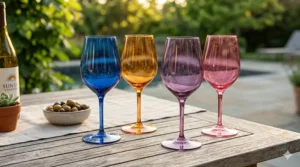
Made from BPA-free acrylic with an 18-ounce capacity (perfect for that generous pour after a long day), these come in six different colors that help guests track their glasses—eliminating the “which one is mine?” confusion that plagues single-color sets. Crystal-clear shatterproof construction, top-rack dishwasher safe, and thick enough to handle daily abuse without cracking. The classic straight-wall design lacks fancy features but delivers reliable performance for years.
What makes these the “everyday workhorse” isn’t any breakthrough innovation—it’s the recognition that sometimes you just need functional glassware that survives kids, pets, and clumsy friends without requiring a second mortgage. Customer feedback emphasizes durability and value, with families reporting these lasting through multiple summers of heavy use. The trade-off is they lack the sophisticated polish of premium brands, feeling more like enhanced plastic tumblers than wine glasses.
✅ Pros:
- Budget-friendly six-pack under $25
- Color variety prevents glass mix-ups
- Durable thick-wall construction
❌ Cons:
- Basic design lacks premium features
- Thicker walls compromise wine aroma slightly
Around $16-$24 for six multicolor glasses. The no-brainer choice for practical families who prioritize function over form.
7. TOSSWARE POP Vino Wine Glasses — Bulk Party Solution
When you need to outfit an entire party without investing in permanent glassware, TOSSWARE POP 14-ounce stemless glasses deliver recyclable convenience in bulk quantities.
This 12-glass set uses premium recyclable acrylic with crystal-clear transparency and unbreakable construction designed for events where you’d typically resort to disposable plastic but want something classier. At 14 ounces per glass, they handle standard wine pours comfortably. The material feels surprisingly substantial considering these are marketed as “recyclable party glasses,” and the clarity genuinely mimics glass better than cheap alternatives.
The genius here is understanding a specific pain point: event hosts who hate the waste of disposables but can’t risk expensive glassware with large crowds. These split the difference—reusable enough for multiple events, affordable enough that a few missing glasses won’t ruin your budget. Customer reviews praise the party-pack quantity and note these work perfectly for outdoor weddings, corporate events, and any gathering where you need 15-30 glasses without spending $200. The catch is they’re still designed for shorter-term use compared to premium reusables.
✅ Pros:
- Bulk 12-pack for large gatherings
- Recyclable yet reusable for multiple events
- Eliminates disposable cup guilt
❌ Cons:
- Not as durable for long-term daily use
- Clarity diminishes faster than premium Tritan
In the $28-$38 range for 12 glasses. Perfect for event hosts who need quantity without sacrificing presentation.
How to Choose Acrylic Wine Glasses: A Decision Framework
Not all shatterproof drinkware solves the same problem. Before you add anything to your cart, run through this decision tree to match your actual needs.
If you prioritize wine experience over everything else, choose Tritan over standard acrylic. The molecular structure of Tritan (used in Govino and TOSSWARE RESERVE) interferes less with wine aromatics compared to thicker acrylic. This matters if you’re drinking anything above $15-per-bottle quality—cheap wine tastes the same in any vessel, but good wine deserves proper presentation.
If you have kids under 10 or entertain families regularly, prioritize durability metrics over aesthetics. Look for thicker-walled acrylic (like Amazing Abby or KX-WARE) that can survive drops onto concrete patios. Premium thin-walled options might technically be “shatterproof” but will crack from repeated impacts that thicker glasses shrug off.
If you host outdoor events 5+ times per season, calculate cost-per-use rather than upfront price. Spending $40 on 4 TOSSWARE RESERVE glasses that last 50 events costs $0.20 per glass per event. Buying $20 sets that need replacing annually actually costs more over two summers. The initial sticker shock of premium options disappears when you’re not repurchasing every year.
If storage space is limited, stackable designs (US Acrylic stems) or easily-nested shapes become non-negotiable. A set of 12 glasses that takes up the space of 4 regular wine glasses means you can actually own party-sized quantities without converting an entire cabinet.
If style matters as much as function, accept that designer options (Lilly Pulitzer) charge a premium for patterns and brand recognition. But if your entertaining aesthetic includes coordinated table settings and Instagram-worthy presentations, that premium pays dividends in guest impressions.
The mistake most first-time buyers make is choosing based on immediate price rather than use-case fit. A $16 basic set becomes expensive if you replace it twice while premium $35 options would’ve lasted five years.
Common Mistakes When Buying Acrylic Wine Glasses
Assuming all acrylic is created equal might be the costliest misconception in this category. Standard acrylic (PMMA) and Tritan copolyester both fall under the “plastic” umbrella, but their performance characteristics differ wildly. Tritan resists clouding from dishwasher detergents, handles heat without warping, and maintains optical clarity through hundreds of washes—advantages that standard acrylic simply can’t match. If you’re buying based on price alone without checking material composition, you’ll end up with cloudy, scratched glasses within six months.
Ignoring capacity relative to use-case leads to buyer’s remorse. An 8-ounce glass works beautifully for formal wine tastings where smaller pours are standard, but feels stingy at backyard barbecues where guests expect generous servings. Conversely, 22-ounce mega-tumblers might seem awesome until you realize they’re too large for standard wine pours and end up used exclusively for cocktails. Match capacity to context—casual outdoor entertaining benefits from 14-18 ounce sizes while formal dinners call for traditional 8-12 ounce volumes.
Overlooking dishwasher compatibility seems minor until you’re hand-washing 12 glasses after every party. Not all acrylic handles repeated high-heat dishwasher cycles—some cloud permanently after just a few washes. Check whether products specify “top rack dishwasher safe” versus “hand wash only.” The few minutes saved per wash over a product’s lifetime adds up to hours of your life, making dishwasher-safe options worth the extra $5-10 upfront.
Buying single-color sets for large gatherings guarantees the “whose glass is this?” confusion. Six identical clear glasses work fine for a dinner party of four but become a nightmare at a pool party of 12. Multi-color sets or distinctive patterns eliminate the problem entirely—guests can track their orange or blue glass without constantly wondering if they’re drinking someone else’s wine.
Confusing “unbreakable” with “indestructible” sets unrealistic expectations. Acrylic won’t shatter like glass when dropped, but it can crack from extreme impacts or prolonged exposure to harsh chemicals. Understanding this distinction prevents disappointment when that “unbreakable” glass cracks after being run over by a chair leg at your outdoor party.

Acrylic Wine Glasses vs Traditional Glassware: The Real Comparison
Beyond the obvious shatterproof advantage, acrylic wine glasses fundamentally change the entertaining equation in ways that aren’t immediately obvious until you’ve hosted a few events with each.
Weight dynamics shift everything. A standard glass wine glass weighs 6-8 ounces empty; quality acrylic alternatives weigh 2-3 ounces. This matters immensely when you’re carrying six glasses from kitchen to patio in one trip, or when guests with arthritis want to hold a drink for extended periods. The flip side is acrylic’s lighter weight means less stability on windy days—a strong breeze can tip over an empty acrylic glass where glass stemware would stand firm.
Temperature retention follows physics. Glass conducts heat roughly 10x better than acrylic, meaning wine in glass warms from hand contact significantly faster. Acrylic’s insulating properties keep chilled whites cooler longer in summer heat—a 15-20 minute difference based on outdoor temperature. However, this same property works against you with room-temperature reds, which stay slightly cooler than optimal drinking temperature. Most casual drinkers won’t notice this nuance, but wine enthusiasts absolutely will.
Aroma preservation involves material science most reviews ignore. Wine releases aromatic compounds that traditional glass reflects back toward your nose due to its inert surface. Lower-quality acrylic can absorb or distort these aromatics slightly, while premium Tritan essentially eliminates this concern through molecular engineering. The practical impact: cheap acrylic makes $40 wine taste like $25 wine; premium Tritan maintains accurate flavor profiles.
Cost-per-event analysis reveals surprising economics. A decent glass wine glass costs $8-12 and lasts until it breaks—often 1-3 years with regular entertaining. A $30 set of 4 acrylic glasses (about $7.50 each) that lasts 5+ years with weekly use delivers lower cost-per-event for active entertainers. However, if you only host 2-3 times yearly, glass stemware’s longer “until breakage” lifespan might actually prove cheaper.
Guest perception matters more than we admit. Handing someone a traditional glass wine glass signals formality and quality consciousness. Acrylic alternatives—even premium ones—read as “casual” or “practical” to most guests. This isn’t criticism, it’s acknowledgment that drinkware communicates expectations. Pool parties, boat outings, and picnics absolutely warrant acrylic. Anniversary dinners and client entertaining? Maybe not. The material choice sets the tone before you’ve even poured the wine.
The honest assessment: acrylic wine glasses aren’t trying to be better than glass—they’re solving different problems. They excel at scenarios where glass would cause anxiety (kids, boats, pools) and fail at contexts where ceremony matters more than practicality (formal dinners, wine tastings).
Acrylic Wine Glasses for Different Lifestyles: Matching Product to Profile
The Family with Young Kids (Ages 3-10): You need the Amazing Abby Sasha or KX-WARE multicolor sets. Thick-walled construction survives drops better than premium thin-walled alternatives. The multicolor option from KX-WARE solves the “Mom, which one is mine?” issue permanently. Budget around $20-25 for 6 glasses, plan to replace every 2-3 years as normal wear accumulates. Skip premium Tritan options—kids don’t care about wine aroma clarity, and you’ll appreciate the lower replacement cost when they inevitably get left outside and run over by the lawn mower.
The Boat Owner: Govino or TOSSWARE RESERVE are non-negotiable. Weight matters when storage space is limited, and both brands deliver lightweight durability without looking cheap. The stackable Govino design maximizes limited cabinet space in a galley. Most marinas prohibit glass on docks for safety reasons, making quality acrylic not just practical but often required. Expect to spend $25-40 for a set of 4, knowing they’ll last multiple boating seasons with proper care.
The Frequent Entertainer (15+ outdoor events yearly): TOSSWARE RESERVE for recurring formal-ish events, TOSSWARE POP bulk sets for larger casual gatherings. The RESERVE’s heat resistance and dishwasher durability justify premium pricing when you’re running 30+ dishwasher loads on them annually. For truly massive events (graduation parties, annual BBQs with 40+ guests), the POP 12-packs prevent glass anxiety without resorting to disposables. Budget splits: $100-150 on premium glasses for intimate gatherings, another $60-80 on bulk sets for crowd events.
The Minimalist/Small-Space Dweller: US Acrylic stackable stems maximize storage efficiency. 8 glasses occupy roughly the space of 2 regular wine glasses when nested, solving the cabinet-space equation without sacrificing proper stemware aesthetics. The 8-ounce capacity forces portion control (hello, fewer hangovers). Around $25-30 gets you enough glasses for dinner parties without dominating storage.
The Style Conscious Host: Lilly Pulitzer or designer-pattern options justify their premium when your table setting includes coordinated linens and Instagram-worthy presentations. Accept the hand-wash requirement as part of the aesthetic commitment. Two sets ($36-52 total) cover intimate gatherings; supplement with neutral acrylic for larger crowds where pattern coordination matters less.
The common thread: your lifestyle dictates which performance features matter most. Buying for someone else’s use-case guarantees disappointment.
Long-Term Cost Analysis: Acrylic vs Glass Over 5 Years
Most comparisons stop at sticker price, which dramatically misrepresents real-world economics for active entertainers.
Scenario 1: Family with 2 kids, hosting 8 outdoor events yearly
- Glass option: $40 initial set, $15 replacement per year average (breakage) = $115 over 5 years
- Budget acrylic: $20 initial set, $20 replacement every 2 years = $60 over 5 years
- Premium acrylic: $35 initial set, one-time purchase lasts 5+ years = $35 over 5 years
Scenario 2: Frequent entertainer, 20+ events yearly, 40 guests average
- Glass option: Not viable (insurance nightmare, too many breakages to track)
- Bulk acrylic: $80 for starter sets, $40 every 2 years for replacements = $160 over 5 years
- Premium hybrid approach: $100 premium for intimate events + $60 bulk disposables = $160 plus peace of mind
Scenario 3: Boat owner, 30 outings yearly, 4-person capacity
- Glass option: Prohibited at most marinas, non-starter
- Premium acrylic: $35 initial investment, zero replacements if properly cared for = $35 over 5 years
The hidden cost most buyers miss is opportunity cost of stress. How much is the anxiety-free entertaining worth when kids are running around your pool with wine glasses? For many families, the extra $15-20 for shatterproof options pays for itself the first time a glass gets knocked off the table without causing a shattered-glass crisis.
Another factor: dishwasher efficiency. Hand-washing 12 glasses after every party takes 15-20 minutes. At 15 parties per year over 5 years, that’s 25 hours of your life spent washing dishes. Dishwasher-safe acrylic isn’t just convenient—it’s literally buying back your time.
The honest math: premium acrylic costs more upfront than budget options but less than glass over any timeline exceeding two years of regular use. Budget acrylic costs least upfront but may require replacement, landing somewhere in the middle. Glass costs most when breakage risk is high (kids, outdoor use) and least when use is infrequent and careful.
Environmental Impact & Recycling: The Sustainability Question
The environmental angle on acrylic wine glasses isn’t as straightforward as “plastic bad, glass good” – though that’s the reflexive assumption most make.
Material lifespan dramatically affects total environmental footprint. A glass wine glass that breaks after 2 years generates more waste than acrylic that lasts 7 years, despite glass being technically recyclable. Production energy for glass significantly exceeds acrylic manufacturing, so durability matters more than recyclability in the overall equation. The problem: most consumers replace acrylic unnecessarily because it “looks old” even though it still functions perfectly, negating the longevity advantage.
Recycling reality check: acrylic falls into the problematic #7 category. Standard acrylic (PMMA) is technically recyclable, but most curbside programs don’t accept it because sorting is complex and contamination rates are high. TOSSWARE’s POP line uses specifically recyclable acrylic designed for commercial recycling streams—but you’ll need to find a facility that accepts #7 plastics, which excludes most residential recycling. Tritan (used in premium options) is even trickier, with minimal recycling infrastructure currently available.
Single-use avoidance provides the biggest environmental win. If acrylic wine glasses replace 100 disposable red Solo cups over their lifetime, the environmental math works decisively in acrylic’s favor. If they replace glass stemware that would’ve lasted decades, the calculation flips. The environmental case for acrylic strengthens dramatically when measuring against alternative disposables, not against reusable glass.
Manufacturing carbon footprint varies significantly by brand. Made-in-USA options (Govino, US Acrylic) carry lower transportation emissions compared to imports, though manufacturing energy depends on specific production processes. Brands emphasizing recycled content or renewable energy in manufacturing deserve premium consideration from environmentally-conscious buyers.
The honest assessment: acrylic wine glasses aren’t zero-impact, but they’re not environmental villains either. Their sustainability case rests entirely on use-case: replacing disposables equals massive win; replacing perfectly functional glass equals dubious choice. The longevity of premium acrylic (5-10 years with proper care) makes it more sustainable than any single-use alternative, less sustainable than truly durable glass.
Maintenance & Care Tips: Maximizing Lifespan
Dishwasher placement determines everything. Top rack only, always—the heating element on bottom racks reaches temperatures that warp even heat-resistant acrylic. Position glasses between tines rather than over them to prevent melting pressure points. Skip the “sanitize” or “extra heat” cycles; standard wash settings clean perfectly without risking heat damage. If glasses come out cloudy, your water is hard—switching to liquid detergent rather than powder reduces mineral buildup.
Sunscreen and citrus oils are acrylic’s nemesis. The oils in sunscreen, essential oils, and citrus peels can cause permanent haziness on acrylic surfaces. If you’re hosting poolside where sunscreen contact is inevitable, rinse glasses immediately after use before oils set. Once haziness occurs, it’s irreversible—no amount of scrubbing restores original clarity. This limitation means acrylic might not be ideal for beach bars or pool-deck permanent fixtures.
Storage prevents 90% of damage. Stack with paper towels or napkins between glasses to prevent scratching. Store in cabinets away from other hard items that could knock against them. Stemmed acrylic glasses should never be stored upside-down on stems—the weight creates pressure points that crack over time. Stemless designs stack infinitely better, making them superior for long-term storage.
Stain prevention requires immediate action. Red wine, coffee, and dark juices stain acrylic if left sitting. Rinse within 30 minutes of use, even if you’re not ready to wash properly. Unlike glass, acrylic has microscopic pores that absorb pigments, making old stains nearly impossible to remove. For stubborn stains, baking soda paste works better than harsh chemicals that scratch the surface.
Avoid abrasive cleaning tools at all costs. Steel wool, abrasive sponges, and rough scrubbers create micro-scratches that accumulate into visible cloudiness. Use soft cloths or gentle sponges exclusively. For stuck-on residue, soaking works better than scrubbing. This gentleness requirement makes acrylic slightly more maintenance-intensive than glass but dramatically less than the anxiety of handling breakable stemware.
The reality: proper care extends acrylic lifespan from 3-4 years to 7-10 years. That difference represents significant cost savings and reduced waste, making the minor extra attention worthwhile for most users.
Safety & Regulations: What You Need to Know
BPA-free certification isn’t automatic with all acrylic. Standard acrylic (PMMA) is inherently BPA-free by chemical composition—it’s manufactured from entirely different polymers than polycarbonate plastics that contain BPA. However, additives used in coloring or processing can introduce concerning chemicals. Look for explicit “BPA-free” labeling rather than assuming all acrylic is automatically safe. Understanding which plastics are truly BPA-free helps consumers make informed decisions about drinkware safety. Brands that publish third-party lab results (rare but available from premium manufacturers) deserve premium consideration.
Food-grade certification matters for any drinking vessel. The FDA regulates materials that contact food and beverages, requiring manufacturers to prove safety for intended use. Premium brands (Govino, TOSSWARE, US Acrylic) specifically design for food contact and undergo appropriate testing. Bargain-basement acrylic might be manufactured for non-food applications (signage, displays) and contain additives unsuitable for drinking. If a product doesn’t explicitly state it’s food-safe, don’t assume it is.
Temperature limits prevent chemical leaching and physical warping. Most acrylic begins softening around 160-180°F, well below boiling. Even heat-resistant Tritan has limits (typically 230°F maximum). This means no boiling water sterilization, no use as hot toddy vessels, and careful attention to dishwasher heat settings. Exceeding temperature limits accelerates potential chemical leaching and permanently deforms the material.
Scratch resistance correlates with food safety. Deep scratches create crevices where bacteria can hide, making scratched acrylic harder to sanitize properly compared to smooth glass surfaces. This limitation means heavily scratched acrylic should be retired even if still structurally sound. Inspect glasses regularly for deep scratches around rims where drinking occurs.
Wine acidity interactions are minimal with quality acrylic. Unlike some plastics that react with acidic beverages, food-grade PMMA and Tritan remain inert even with high-acid wines. However, prolonged exposure (leaving wine sitting in glass for hours) isn’t recommended—these are drinking vessels, not storage containers. Empty and rinse promptly after use.
The bottom line: reputable brands from established manufacturers almost universally meet safety standards. The risk zone is ultra-cheap imports and unbranded products where manufacturing standards are unknown. Paying $20-40 for known-brand acrylic dramatically reduces safety concerns compared to $8 mystery-brand alternatives.
Frequently Asked Questions
❓ Are acrylic wine glasses dishwasher safe?
❓ Do acrylic wine glasses affect wine taste?
❓ How long do acrylic wine glasses last?
❓ Can you put hot drinks in acrylic wine glasses?
❓ Are acrylic wine glasses safe for kids?
Conclusion: Making Your Decision Stress-Free
After examining seven distinct products across three price tiers and four material grades, the pattern becomes clear: there’s no single “best” acrylic wine glass—only the best option for your specific entertaining reality.
If wine quality matters and you host intimate gatherings where presentation isn’t negotiable, the Govino or TOSSWARE RESERVE justify their premium pricing through superior optical clarity and material science that respects the wine itself. You’re paying for engineering that doesn’t compromise the drinking experience.
For practical families where durability trumps sophistication, Amazing Abby or KX-WARE deliver unbeatable value through thick-wall construction that survives everything kids and pets throw at them—literally. The lower replacement cost when glasses inevitably disappear into the garage or get left outside overnight makes these no-brainer choices.
Event hosts managing large gatherings need the TOSSWARE POP bulk solution that eliminates disposable-cup guilt without requiring investment in 40 permanent glasses. The recyclable-yet-reusable middle ground perfectly serves occasional large parties.
The common thread across all successful purchases: matching capacity, material grade, and price point to actual use frequency and context. Buying premium Tritan for twice-yearly entertaining wastes money; settling for budget acrylic when you host weekly compromises your reputation as someone who cares about details.
Start by honestly assessing how many events you host annually, whether kids factor into your decision, and if wine presentation matters to your guest demographic. Then choose accordingly rather than defaulting to whatever’s cheapest or most expensive.
Recommended for You
- 7 Best Dollar Tree Plastic Wine Glasses Transform Budget Parties 2026
- 7 Best Disposable Stemless Wine Glasses for Stress-Free Parties 2026
- 7 Best Plastic Wine Glasses Bulk for Events 2026
Disclaimer: This article contains affiliate links. As an Amazon Associate, I earn from qualifying purchases. If you purchase products through these links, we may earn a small commission at no additional cost to you.
✨ Found this helpful? Share it with your friends! 💬🤗
