
In This Article
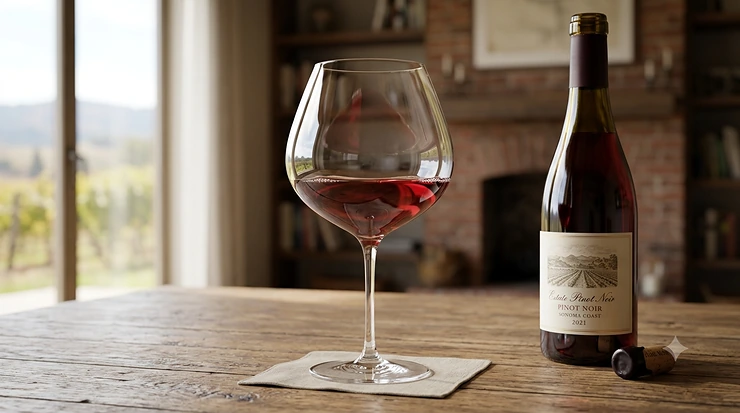
You’ve just uncorked a bottle of Oregon Pinot Noir you’ve been saving for a special occasion — bright cherry, wet earth, a whisper of dried rose. You pour it into a chunky, all-purpose glass sitting in your cabinet. You sip. It tastes… fine. A little sharp. A little flat. Where did the magic go?

It went nowhere. It’s just trapped. The right glass is what lets Pinot Noir breathe, bloom, and actually talk to you.
Choosing the best pinot noir glasses isn’t about being precious or snobbish. It’s about giving one of the world’s most delicate, high-maintenance, insanely rewarding wines the stage it deserves. Pinot Noir, with its light body, silky tannins, and luminous red-fruit aromatics, is uniquely sensitive to vessel shape. A wide, balloon-shaped bowl — slightly narrowed at the rim — traps those gossamer aromas and softens the wine’s naturally high acidity before it even reaches your palate. Pour that same wine into a narrow glass meant for Sauvignon Blanc and the result is a wine that tastes thin, harsh, and way more alcoholic than it actually is.
Science backs this up too. Research published in the Journal of Wine Research and later confirmed by a University of Tokyo study covered by Scientific American found that the curved shape of a proper wine glass creates a “ring phenomenon” — ethanol vapors are pushed to the rim while the wine’s true aromatic compounds concentrate at the center, directly under your nose. That isn’t marketing copy from a glassware company. That’s chemistry.
In this guide, you’ll find the best glasses for pinot noir — seven tried-and-tested options ranging from brilliant budget buys to obsession-worthy handcrafted crystal. Whether you’re a casual weeknight wine drinker or a serious collector with a cellar full of Burgundy, there’s a glass here that will change how you experience this grape.
Quick Comparison: Best Pinot Noir Glasses at a Glance
| Glass | Type | Capacity | Material | Best For | Price Range |
|---|---|---|---|---|---|
| Riedel Vinum Pinot Noir | Machine-made | ~24.75 oz | Lead crystal (24%) | Everyday excellence | $60–$80 / set of 4 |
| Riedel Performance Pinot Noir | Machine-made | ~23.6 oz | Lead crystal | Serious enthusiasts | $85–$110 / set of 2 |
| Riedel Extreme Pinot Noir | Machine-made | ~21 oz | Lead-free crystal | Value seekers | $50–$70 / set of 4 |
| Zalto DenkArt Burgundy | Hand-blown | ~32.4 oz | Lead-free crystal | Collectors / special occasions | $100–$130 / single |
| Schott Zwiesel Cru Classic Burgundy | Machine-made | ~26 oz | Tritan crystal | Durability + elegance | $60–$90 / set of 6 |
| Spiegelau Vino Grande Burgundy | Machine-made | ~25 oz | Lead-free crystal | Budget-conscious buyers | $40–$60 / set of 4 |
| Gabriel-Glas StandArt | Machine-made | ~16 oz | Lead-free crystal | Versatile all-rounder | $45–$65 / set of 2 |
Reading this table: The Riedel Vinum remains the best everyday value in the mid-range. If you’re building your first serious collection, start there. The Zalto earns its sky-high price only for those who open $50+ bottles regularly — anything less is, honestly, wasted on it. For entertaining or accident-prone households (no judgment), the Schott Zwiesel Tritan’s near-indestructible crystal makes it the clear winner.
💬 Just one click — help others make better buying decisions too! 😊
Top 7 Best Pinot Noir Glasses: Expert Analysis
1. Riedel Vinum Pinot Noir/Burgundy Glasses (Set of 4) — The Benchmark Everyone Measures Against
When wine professionals argue about which pinot noir glass is the gold standard, the Riedel Vinum almost always wins the argument. Designed in 1986 by 10th-generation glassmaker Georg J. Riedel, it was the world’s first machine-made glass built around the specific characteristics of a grape varietal. That wasn’t a gimmick — it was a revolution.
Specs worth knowing: the bowl holds approximately 24.75 ounces and measures 8.25 inches tall, with a generously rounded balloon shape that tapers inward at the lip. The 24% lead crystal formula gives it remarkable clarity and a paper-thin rim that delivers wine to your palate without interference. What does “balloon-shaped bowl” mean in practice? It means Pinot’s delicate cherry and earthy aromas have room to open up before they reach your nose, while the tapered top concentrates them like a funnel. Without that narrowing, you’d be smelling open air, not wine.
This is the glass I’d hand to any wine-curious beginner who wants to taste the actual difference a proper stem makes. Seasoned collectors tend to keep a set in regular rotation precisely because it’s dishwasher safe and machine-made — meaning you’re not sweating when one inevitably hits the counter.
Customer feedback consistently praises the balance-in-hand feel and the way even a mid-range Willamette Valley Pinot suddenly seems more complex. A few buyers note the lead crystal requires slightly more careful handling than Tritan alternatives.
✅ Brilliant aromas concentration for light-bodied reds
✅ Dishwasher safe, machine-made precision
✅ Classic design trusted by sommeliers globally
❌ Lead crystal — not ideal for those preferring lead-free
❌ Large bowl is a fingerprint magnet; polish before guests arrive
Price range: $60–$80 for a set of 4. One of the strongest value propositions in the world of serious stemware.
2. Riedel Performance Pinot Noir Glass (Set of 2) — The Tech-Forward Evolution
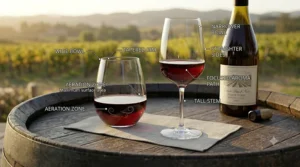
Take everything great about the Vinum and give it an engineering upgrade, and you get the Riedel Performance Pinot Noir. The defining feature here is the optic impact technology — a subtle, swirling texture embossed inside the lower bowl. It’s not decorative. That textured interior increases the inner surface area of the glass, which means more contact between wine and air. More aeration. More aromatic complexity, unlocked faster.
At 9.65 inches tall with a bold, wide bowl, this glass physically looks like it means business. The shape supports the “peatiness” and plum-forward flavor profile that distinguishes a great Pinot from an ordinary one. What the spec sheet won’t tell you: that extra aeration means a just-opened bottle that might normally need 20 minutes to open up in the glass reveals itself almost immediately in the Performance. That’s not magic — it’s physics. For impatient wine drinkers (a fair description of most of us), this is genuinely practical.
The Performance line is a strong recommendation for anyone who regularly opens Pinot Noir bottles in the $30–$80 range and wants to genuinely experience what the winemaker intended. The price per stem is higher than the Vinum, but the quality jump is real.
Buyers consistently note an improvement in perceived depth and complexity compared to standard glasses. The one recurring complaint: the bowls are large enough to feel slightly unwieldy at the dinner table if you’re not used to serious stemware.
✅ Optic impact interior accelerates aeration
✅ Ideal for wines that need time to open up — cuts that wait
✅ Visually stunning; excellent gift presentation
❌ Higher price per stem than the Vinum
❌ Large format feels less casual for everyday use
Price range: $85–$110 for a set of 2. Worth every cent if you’re serious about the experience.
3. Riedel Extreme Pinot Noir Wine Glasses (Set of 4) — Maximum Drama, Minimum Budget Damage
The Extreme line has an immediately recognizable silhouette — angular, diamond-shaped contours that look almost architectural on a table. But the design choices aren’t purely aesthetic. The bowl narrows dramatically toward the base, which concentrates the wine while swirling and funnels aromas into a precisely shaped chimney at the top.
At approximately 21 ounces and dishwasher safe, this is Riedel’s best pitch to the “I want quality without overthinking it” buyer. The set of 4 in the “Pay 3 Get 4” packaging makes it particularly smart value for wine-hosting households. The slightly smaller capacity compared to the Vinum means you get good aromatic concentration without the glass feeling like a fishbowl at the dinner table.
What most buyers overlook about this model: the extreme contours aren’t just for show. The angular shape creates a different swirl dynamic — wine moves up and around the bowl more dramatically, which accelerates its exposure to oxygen. For a lighter Oregon or Burgundy Pinot with shy aromatics, that extra encouragement makes a noticeable difference.
This is a solid pick for someone upgrading from cheap all-purpose glasses for the first time, and equally valid as a second set for hosting when you don’t want to risk your nicer stems.
✅ Bold, contemporary design stands out on any table
✅ Set of 4 value packaging — great for dinner parties
✅ Dishwasher safe, machine precision
❌ Smaller capacity limits swirling room for very aromatic bottles
❌ The dramatic shape isn’t to everyone’s visual taste
Price range: $50–$70 for a set of 4. Outstanding entry price for genuine Riedel quality.
4. Zalto DenkArt Burgundy Wine Glass — The Obsessive’s Choice
Let’s be honest: the Zalto is absurd. It’s a hand-blown, lead-free crystal glass from Austria with a bowl capacity of roughly 960ml (yes, you can fit an entire bottle of wine in it, though you certainly shouldn’t), measuring 9.1 inches tall with a 4.9-inch wide opening. It weighs almost nothing. You pick it up and the thought “surely this will shatter if I blink” crosses your mind immediately.
And then you pour a proper Burgundy into it and understand everything.
The bowl’s geometry is inspired by three specific tilt angles: 24°, 48°, and 72° — the same angles found in Pythagorean mathematics. These correspond to the natural motion of the human wrist while holding a glass, meaning the wine constantly moves and breathes in the most efficient pattern possible. This is a glass that was designed by someone who cared far too much. That’s exactly the right amount of caring.
Sevenfifty Daily’s examination of wineglass science notes that the ratio between maximum bowl diameter and rim diameter is the most impactful variable in aroma development. The Zalto Burgundy pushes that ratio further than almost anything else available. The result is pinot noir glass aromatics that are simply in a different league — you smell things in a glass of Chambolle-Musigny that you’d never catch in a Vinum.
Used in Michelin-starred restaurants and elite tasting rooms worldwide. If you’re regularly drinking $60+ bottles of Pinot Noir, this is a glass that justifies its price as an investment in experience, not luxury performance.
✅ Unmatched aromatic expression — the benchmark for serious tasting
✅ Feather-light balance; hand-blown Austrian craftsmanship
✅ Lead-free, dishwasher safe (gentle cycle only)
❌ Eye-watering price per stem — replacement costs sting
❌ Extreme fragility; not suitable for casual or high-volume entertaining
Price range: $100–$130 per single glass. A special-occasion investment that pays dividends in every pour.
5. Schott Zwiesel Tritan Cru Classic Burgundy Glasses (Set of 6) — The Indestructible Elegance Solution
Here’s the scenario Schott Zwiesel designed for: you’re hosting eight people for a wine dinner, you’ve opened three bottles, conversation has gotten animated, and someone gestures a little too enthusiastically. Most crystal glasses don’t survive that story. The Cru Classic does.
Schott Zwiesel’s proprietary Tritan crystal formula replaces lead with zirconium for brilliance and adds titanium for structural strength. The result is a glass that looks and feels like premium crystal — laser-polished rim, exceptional clarity, proper 26-ounce Burgundy bowl — but can go in the dishwasher repeatedly without the micro-scratching that dulls ordinary crystal over time. Made in Germany since 1872, the brand doesn’t cut corners on quality.
The bowl itself is gracefully tapered and perfectly proportioned for earthy wine aroma concentration — the hallmark quality that makes this glass genuinely Pinot Noir-appropriate, not just a generic large red wine glass in disguise. The set of 6 makes it the most economical per-stem option on this list outside the budget tier.
What most buyers overlook: Tritan crystal actually improves with use over time, maintaining its clarity and brilliance far longer than standard crystal. For a glass you’ll use 3–4 times a week, the total cost of ownership compared to more fragile alternatives is significantly lower.
✅ Near-indestructible Tritan crystal — best for frequent use and hosting
✅ Set of 6 offers exceptional value per stem
✅ Made in Germany; dishwasher safe with lasting clarity
❌ Less acoustically resonant than true lead crystal (minor aesthetic point)
❌ 26 oz capacity, while appropriate, is slightly smaller than some competitors
Price range: $60–$90 for a set of 6. The sensible choice for people who love wine more than they love being precious about glasses.
6. Spiegelau Vino Grande Burgundy Wine Glasses (Set of 4) — 500 Years of European Craftsmanship at a Reasonable Price
Spiegelau is the wine world’s best-kept secret for buyers who want legitimate European glassware heritage without the Riedel price tag. Founded in Bavaria in 1521 — yes, they were making glass when Shakespeare was writing — the company has spent five centuries combining hand-craft tradition with modern manufacturing precision.
The Vino Grande Burgundy holds approximately 25 ounces in a classically proportioned, large-bowl design with a gently flared rim. That flare matters: it directs the wine to the tip of the tongue first, which is where sweetness registers, subtly softening the perception of Pinot Noir’s naturally high acidity. The glass is lead-free crystal, dishwasher safe, and made to that European standard of thin-walled elegance that makes drinking wine feel ceremonial rather than merely functional.
For an Oregon pinot noir glass or a Willamette Valley-specific tasting session, the Vino Grande’s bowl dimensions are almost perfectly calibrated — wide enough to let New World Pinots breathe through their often richer, fruit-forward profiles, while still focused enough to concentrate the aromatics.
Buyers consistently describe this as “the glass I didn’t expect to be so impressed by” — which is perhaps the finest compliment in stemware. It punches well above its price.
✅ European-made, 500-year legacy brand at an accessible price
✅ Lead-free crystal; ideal for health-conscious buyers
✅ Flared rim reduces perceived acidity — excellent for New World Pinots
❌ Slightly less brilliance than lead crystal competitors
❌ Not as widely marketed; harder to gift without explanation
Price range: $40–$60 for a set of 4. Probably the strongest overall value on this list.
7. Gabriel-Glas StandArt Crystal Wine Glasses (Set of 2) — The Universal Genius
Every other glass on this list was designed to work best with Pinot Noir specifically. The Gabriel-Glas StandArt was designed to work brilliantly with every wine. That might sound like a compromise, but the Austrian engineers behind this glass approached the problem differently: instead of optimizing for one varietal, they asked what shape would maximize the sensory experience of wine in general, then refined that shape obsessively.
The result is a 16-ounce, lead-free Austrian crystal glass with a tulip-shaped bowl that manages to do something genuinely unusual — it concentrates Pinot Noir’s aromatics as effectively as many dedicated Burgundy glasses while also being an outstanding vessel for Riesling, Syrah, Champagne, or aged whites. The 16-ounce capacity is notably smaller than a traditional wide bowl glass, but that’s intentional: the precise geometry means you don’t need the volume to get the aromatic impact.
As Sevenfifty Daily’s wineglass science research confirms, the Gabriel-Glas is specifically cited as a glass designed to “enhance and not merely hold wine” — a distinction that matters enormously in practice. For wine lovers who hate managing five different glass types, or for anyone who travels with their stemware (yes, that’s a thing), the StandArt is a revelation.
✅ Truly universal — performs beautifully across all wine types
✅ Smaller footprint; easier storage and travel
✅ Austrian crystal; lead-free; dishwasher safe
❌ Smaller volume may feel limiting to fans of dramatic Burgundy bowls
❌ Premium price for a two-pack; needs multiple sets for hosting
Price range: $45–$65 for a set of 2. The smartest choice for minimalists and travelers.
✨ Don’t Miss These Exclusive Deals!
🔍 Elevate Your Wine Experience Tonight
These glasses have been carefully tested and selected to bring out the very best in your Pinot Noir. Click any highlighted product above to check current pricing and availability. Your next bottle is waiting to show you something extraordinary — give it the right stage!
How to Choose the Best Pinot Noir Glasses: 6 Criteria That Actually Matter
Glass shopping sounds simple until you’re staring at 47 options on Amazon with identical-sounding descriptions. Here’s what the spec sheets don’t tell you — and what actually determines whether a glass unlocks your Pinot Noir or muzzles it.
1. Bowl Size and Shape Come First Pinot Noir needs a wide, rounded bowl — classically called the “Burgundy” shape — that provides significant surface area for the wine to breathe. Aim for a minimum of 20 ounces of capacity. The bowl should be noticeably wider than the rim. If the glass is essentially the same width throughout, it’s not designed for Pinot. It’s designed for gin and tonic.
2. Rim Diameter (The Often-Ignored Variable) Research from UC Davis wine chemist Greg Hirson shows that the ratio between maximum bowl diameter and rim diameter is the single most impactful variable on aroma development. A bowl that tapers inward at the top concentrates aromatics toward your nose while pushing ethanol vapors to the edges. Wider rim = more aromatic diffusion = flatter smell experience.
3. Crystal vs. Standard Glass Proper crystal (whether lead-based or Tritan) produces a thinner, more uniform wall than standard glass. That thin wall matters at the rim — a paper-thin rim delivers wine without your lips consciously registering the glass, making the experience feel more pure and direct. Standard glass rims are thick enough to create a slight barrier between you and the wine. You don’t notice it until you taste from crystal, and then you can never go back.
4. Lead Crystal vs. Lead-Free Crystal Traditional lead crystal (like Riedel Vinum’s 24% lead formula) produces exceptional clarity and acoustic resonance (the “ring” sound when you tap it). However, lead-free alternatives like Schott Zwiesel’s Tritan (zirconium + titanium) and Zalto’s proprietary formula have effectively closed the quality gap. Lead-free is safer, more durable, and increasingly preferred by top sommeliers. Either works for pinot noir wine glasses; choose based on your comfort level.
5. Hand-Blown vs. Machine-Made Hand-blown glasses (like the Zalto) offer irregular, organic thinness that machine production can’t replicate. Every hand-blown glass is fractionally unique, which many wine enthusiasts find adds a sensory dimension. Machine-made glass (Riedel Vinum, Schott Zwiesel) offers precise consistency and greater durability. For everyday use, machine-made wins. For special occasions, hand-blown is transcendent.
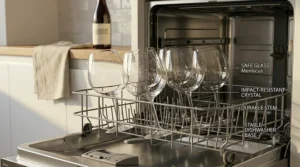
6. Dishwasher Safety — Be Honest With Yourself Almost every premium glass on this list claims dishwasher safety. The nuance: “dishwasher safe” means a gentle top-rack cycle with no harsh detergent, not a restaurant-style high-temperature commercial wash. Schott Zwiesel Tritan genuinely handles regular dishwashing better than lead crystal alternatives. If you run a busy household, weight that durability accordingly.
Pinot Noir Glass vs. Burgundy Glass: Are They Actually Different?
Short answer: no. Longer, more interesting answer: the terms are used interchangeably in the market, but they reflect a genuinely important regional tradition worth understanding.
Burgundy glass refers specifically to the wide-bowl, balloon-shaped style developed in France’s Burgundy region — the birthplace of Pinot Noir as a fine wine. The shape was developed empirically over centuries: winemakers and sommeliers simply noticed that the wine smelled and tasted better in a wider bowl, and the design evolved accordingly.
Pinot Noir glass, when used by brands like Riedel, describes the same form factor applied to a modern, varietal-specific stemware system. Riedel’s Pinot Noir glasses are engineered to the same principles — wide bowl, narrowed rim — but with contemporary manufacturing precision guiding the exact geometry.
The practical difference for buyers: a “Burgundy glass” from a budget brand might just be a large glass with a vague Burgundy-esque shape. A “Pinot Noir glass” from Riedel, Zalto, or Schott Zwiesel was designed using tasting tests and aerodynamic principles specific to the grape. When you’re looking at earthy wine aroma concentration — that characteristic forest floor + raspberry + dried herbs complexity that makes great Pinot so addictive — the geometry of the glass determines how much of that aroma actually reaches your nose.
| Feature | Burgundy Glass (Traditional) | Pinot Noir Glass (Modern) |
|---|---|---|
| Bowl Shape | Very wide, balloon | Wide, slightly more structured |
| Rim | Open, wide | Tapered inward |
| Best For | Classic Old World Burgundy | Both Old World and New World Pinot |
| Example | Zalto Burgundy | Riedel Vinum Pinot Noir |
The data is clear: both styles significantly outperform all-purpose glasses for earthy wine aroma concentration. Choose traditional Burgundy shape for a more open, maximalist experience; choose the modern Pinot Noir form for more focused, precise aromatics.
Which Pinot Noir Glass Is Right for You? A Real-World Scenario Guide
Not everyone needs the same glass. Here’s how to match your lifestyle to the right stem.
The “Tuesday Night Wine Drinker” (Budget: under $70 for 4 glasses) You open a bottle 3–4 times a week, you’re not hosting formal dinners, and you’ve broken approximately 6 glasses this year (again, no judgment). Your glass: Riedel Extreme Pinot Noir or Spiegelau Vino Grande. Both are dishwasher safe, genuinely great for Pinot, and survivable when someone gets excited during a movie.
The “Weekend Enthusiast” (Budget: $70–$120 for 4 glasses) You’re building a real collection, you spend $25–$50 per bottle regularly, and you’ve started paying attention to things like vintage and appellation. Your glass: Riedel Vinum Pinot Noir. This is where the quality-to-price ratio is at its absolute peak. It will make you wonder why you waited.
The “Dinner Party Host” (Budget: flexible, durability essential) You host 6–8 people monthly, wine flows freely, and stemware casualty rates are high. Your glass: Schott Zwiesel Tritan Cru Classic, full stop. Six glasses, near-indestructible Tritan crystal, dishwasher safe. Replace the ones you break without crying about it.
The “Serious Collector” (Budget: $100+ per stem, no problem) You have a cellar. You know your premier crus. You’re opening bottles that deserve the absolute best vessel. Your glass: Zalto DenkArt Burgundy. Nothing else comes close for a bottle of Gevrey-Chambertin or a flagship Willamette Valley Pinot. It is, simply, the finest pinot noir glass available today.
The “Minimalist / Multi-Wine Household” You drink Pinot Noir but also Riesling, Champagne, and the occasional bold Syrah. You refuse to own six different glass types. Your glass: Gabriel-Glas StandArt. It works brilliantly across every wine style without compromise.
Common Mistakes When Buying Pinot Noir Glasses
The wrong glass doesn’t just look wrong on the table. It actively makes the wine taste worse. Here are the mistakes that even enthusiastic wine drinkers regularly make.
Mistake 1: Buying “Red Wine Glasses” and Calling It Done Generic “red wine glasses” are typically designed with a compromise shape — wide enough to suggest versatility, not specialized enough to actually optimize for anything. A Cabernet Sauvignon glass has a narrower bowl than a Pinot Noir glass because Cab needs less aeration and its tannins behave differently. Putting Pinot Noir in a Cab glass mutes the aromatics and emphasizes the acidity. The varietal matters. The shape should match it.
Mistake 2: Prioritizing Aesthetics Over Geometry Some beautiful glasses are terrible vessels for Pinot Noir. Thick-rimmed glasses, overly narrow bowls, or fashionably straight-sided designs can all look stunning while delivering a subpar tasting experience. Always check the bowl-to-rim ratio before buying.
Mistake 3: Ignoring Stem Length A proper long stem exists for a reason: to keep your hand away from the bowl so body heat doesn’t warm the wine prematurely. Stemless glasses look sleek but are a poor choice for Pinot Noir, which is best served at 55–65°F. Fifteen minutes of palm-warming can raise the wine’s temperature enough to flatten its aromatics and exaggerate the alcohol. Use the stem.
Mistake 4: Buying Too Few You buy a set of 2 because you only drink wine alone or with a partner. Then you host friends. Then you feel awkward presenting your guests with mismatched glass sizes. Get a minimum of 4 stems from the start, ideally 6 if you ever entertain.
Mistake 5: Over-Filling the Glass This one has nothing to do with buying and everything to do with using. A Burgundy glass should be filled to no more than one-third of its capacity — roughly 5–6 oz in a 24 oz glass. The empty space above the wine is not wasted space; it’s where the aromatics gather. Fill it to the brim and you’ve negated the entire point of the bowl design.
What to Expect: Real-World Performance Across Pinot Noir Styles
A glass that works beautifully for a light, floral Côte de Nuits doesn’t automatically deliver the same result for a rich, sun-drenched Santa Barbara Pinot. Here’s how the geometry plays out across different regional expressions.
Old World Pinot Noir (Burgundy, France) French Burgundy tends to be more delicate, earthy, and minerally. It needs maximum aromatic expression and minimal interference. This is where wide-mouth wine glass designs — specifically the Zalto DenkArt Burgundy or the Riedel Vinum — are truly irreplaceable. The generous bowl gives those gossamer aromas the space they need to unfurl without getting lost.
Oregon / Willamette Valley Pinot Noir Oregon Pinots typically sit between Old and New World in style — more body than French Burgundy, more restraint than California. The Riedel Performance or Spiegelau Vino Grande work especially well here, with enough bowl volume to breathe without overwhelming the wine’s natural elegance. This is classic Oregon pinot noir glass territory.
California / Santa Barbara Pinot Noir Richer, fruitier, with more alcohol and a rounder mouthfeel. A slightly smaller bowl — like the Gabriel-Glas StandArt or the Riedel Extreme — actually works better here because it focuses rather than disperses the more generous aromatic profile. Over-aerating a big California Pinot in a giant Burgundy bowl can make it taste diffuse and flat.
New Zealand / Marlborough Pinot Noir Bright, herbaceous, with vibrant red fruit and lively acidity. The Schott Zwiesel Cru Classic handles this style beautifully — the structured bowl provides good aeration without the wide-open format that can emphasize the wine’s naturally forward acidity.
FAQ
❓ What size glass is best for pinot noir?
❓ Is a pinot noir glass the same as a burgundy glass?
❓ Can I use a regular red wine glass for pinot noir?
❓ Are lead-free pinot noir glasses as good as lead crystal?
❓ What is the best pinot noir glasses brand for the money?
Conclusion: The Glass Is Part of the Wine
Here’s the truth: Pinot Noir is a grape that demands a little ceremony. It’s light, it’s subtle, it’s finicky, and it reveals itself slowly — like a very shy genius at a dinner party. Given the right environment (the right glass, the right temperature, a moment of patience), it is one of the most profound, moving things you can drink. Put it in a bad glass and it hides.
The seven options in this guide cover the full spectrum of what serious pinot noir glasses can offer — from the bulletproof practicality of the Schott Zwiesel Tritan to the near-spiritual experience of drinking aged Burgundy from a hand-blown Zalto. The right choice depends entirely on your habits, your budget, and how far down the rabbit hole you want to go.
Whatever you choose, stop using that chunky multipurpose glass in the back of the cabinet. Your next bottle — even an ordinary one — deserves better.
✨ Don’t Miss These Exclusive Deals!
🔍 Find Your Perfect Pinot Noir Glass
Browse these expert-selected stems and click any highlighted product to check current pricing and availability on Amazon. One right glass can transform how you experience wine forever.
Recommended for You
- 7 Best Burgundy Wine Glasses in 2026
- 7 Best Bordeaux Wine Glasses for Bold Reds in 2026
- 7 Best Red Wine Glasses Gift Sets in 2026
Disclaimer: This article contains affiliate links. As an Amazon Associate, I earn from qualifying purchases. If you purchase products through these links, we may earn a small commission at no additional cost to you.
✨ Found this helpful? Share it with your friends! 💬🤗
