
In This Article
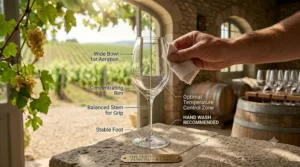
The best chardonnay glasses share three things in common: a wide, U-shaped bowl that lets the wine breathe, a tapered rim that funnels aroma toward your nose, and a stem long enough to keep your hand heat away from the bowl. That combination matters more with chardonnay than with almost any other white, because the wine’s buttery, oaky, or mineral character only shows up fully when it gets room to open up in the glass.

I didn’t just read spec sheets for this guide. I cross-referenced current Amazon listings, dug through verified buyer feedback, and leaned on a decade of hosting too many dinner parties where the wrong glass flattened a perfectly good bottle of Sonoma chardonnay. What follows is a no-fluff breakdown of seven real, currently available glasses — from $15 everyday pours to splurge-worthy crystal — so you can stop guessing and start sipping.
Quick disclosure before we dive in: this article is reader-supported, and prices below are approximate ranges since Amazon pricing shifts constantly. Now, let’s get into it.
Quick Comparison Table
| Glass | Best For | Capacity | Material | Price Range |
|---|---|---|---|---|
| Riedel Vinum Chardonnay/Viognier | Purists who want a varietal-specific shape | 12.4 oz | 24% lead crystal | $50–$70 (set of 8) |
| Schott Zwiesel Cru Classic Chardonnay | Daily use that still feels special | 13.8 oz | Tritan crystal | $45–$65 (set of 6) |
| Spiegelau Wine Lovers White Wine | Gifting and casual entertaining | 13.4 oz | Lead-free crystal | $30–$45 (set of 4) |
| Gabriel-Glas StandArt | One glass for every wine you own | 16 oz | Lead-free crystal | $40–$55 (set of 2) |
| Zwiesel Glas Vervino Chardonnay | Budget-conscious sets with room to swirl | 16.5 oz | Tritan crystal | $35–$50 (set of 6) |
| JoyJolt Claire | Modern aesthetics on a tight budget | 11.4 oz | European crystal | $20–$30 (set of 2) |
| Libbey Signature Kentfield Estate | Everyday durability, dishwasher abuse included | 16 oz | ClearFire glass | $20–$35 (set of 4) |
Looking at the spread above, the Riedel and Gabriel-Glas sit at the top for anyone chasing the most varietal-accurate sensory experience, while the Libbey and JoyJolt picks make far more sense if you’re stocking a kitchen for everyday use rather than a tasting room. Buyers who entertain often but don’t want to babysit fragile stemware should look hardest at the Schott Zwiesel or Zwiesel Glas Tritan options, since they split the difference between durability and design.
✨ Just one click — help others make better buying decisions too! 😊
Top 7 Best Chardonnay Glasses: Expert Analysis
1. Riedel Vinum Chardonnay/Viognier Glasses
The Riedel Vinum Chardonnay/Viognier glass is the one most sommeliers reach for first, and it’s the closest thing this category has to an industry standard. The 12.4-ounce bowl tapers sharply at the rim, which is what actually does the work — it concentrates aroma compounds before they reach your nose, instead of letting them dissipate across an open surface like a tumbler would.
What most buyers overlook about this glass is that its thinness changes mouthfeel, not just smell. The rim is cut thin enough that you barely register the glass touching your lip, which lets the wine’s texture take center stage. This is the Riedel to buy if you’re serious about tasting the difference between an oaked Sonoma chardonnay and a steely Chablis side by side.
Buyer feedback is consistently strong on clarity and shape, though some note the glasses are noticeably more fragile than everyday stemware and require hand washing despite a dishwasher-safe label.
✅ Pros:
- Purpose-built shape for chardonnay’s aroma profile
- Set of 8 for the price of 6 improves per-glass value
- Widely regarded as the benchmark for the category
❌ Cons:
- Lead crystal means more careful handling
- Pricier per ounce than Tritan alternatives
In the $50–$70 range for eight glasses, this is a fair price for what’s effectively the reference glass in this category — just don’t expect it to survive a dishwasher cycle indefinitely.

2. Schott Zwiesel Cru Classic Chardonnay Glass
The Schott Zwiesel Cru Classic Chardonnay glass solves the fragility problem Riedel doesn’t. Made from Tritan crystal, it’s genuinely dishwasher-safe for years of regular cycles without clouding, which matters if you’re not the type to hand-wash stemware after a Tuesday-night glass of wine.
At 13.8 ounces, the bowl is noticeably larger than Riedel’s, which buyers consistently describe as more comfortable for a generous pour. The size difference isn’t just about volume — a slightly bigger bowl gives oak-aged chardonnay more surface area to aerate, softening sharp alcohol notes faster than a tighter glass would.
Reviewers who upgraded from smaller stemware report the larger bowl feels less like “drinking from a thimble” and more suited to full-bodied whites that benefit from swirling room.
✅ Pros:
- Genuinely durable for everyday dishwasher use
- Larger bowl aids aeration for oaked styles
- Sturdy stem resists snapping
❌ Cons:
- Less varietal-specific shaping than Riedel
- Bulkier profile takes up more cabinet space
At $45–$65 for a set of six, this is the pick for anyone who wants Riedel-adjacent performance without treating every glass like a museum piece.
3. Spiegelau Wine Lovers White Wine Glasses
Spiegelau has been making glassware since the 16th century, and the Wine Lovers White Wine set reflects that legacy without the legacy price tag. The 13.4-ounce bowl is shaped for general white wine use rather than chardonnay specifically, which actually makes it a smart pick if your household also drinks a lot of sauvignon blanc or riesling.
What’s easy to miss in the spec sheet is the dishwasher testing claim — Spiegelau states these glasses were run through 1,500 cycles in development without losing clarity. In practice, that translates to a glass you can actually use nightly instead of saving for company.
Feedback tends to highlight the lightness of the glass in hand and the gift-box presentation, making it a frequent pick for hostess and wedding gifts rather than personal everyday stemware.
✅ Pros:
- Genuinely lightweight without feeling cheap
- Versatile shape works across white varietals
- Strong gift presentation out of the box
❌ Cons:
- Less aroma concentration than varietal-specific shapes
- 13.4 oz capacity is on the smaller side
Priced around $30–$45 for a set of four, this is the safe gift pick when you’re not sure if the recipient is a chardonnay loyalist or a sauvignon blanc drinker.
4. Gabriel-Glas StandArt Crystal Wine Glasses
The Gabriel-Glas StandArt takes a different philosophy entirely: instead of a chardonnay-specific shape, it’s a single universal glass engineered to work well across reds, whites, and sparkling wine. At 16 ounces, it’s the largest bowl on this list, and the lightweight crystal construction means it doesn’t feel oversized in hand despite the volume.
The real-world upside here is practical, not romantic — if you don’t want seven different glass shapes cluttering your cabinet, one excellent universal glass genuinely simplifies things. Independent sensory comparisons have found the StandArt performs competitively against varietal-specific stemware for both reds and whites, which is part of why sommeliers travel with it.
Buyers frequently mention how comfortable the wide bowl is for swirling, plus the surprisingly low weight given its size.
✅ Pros:
- One glass replaces an entire shelf of varietal-specific stemware
- Comfortable, lightweight despite generous size
- Holds up well in blind comparisons against specialized shapes
❌ Cons:
- Large size needs proper cabinet clearance
- Loses some of the aroma-funneling precision of a true chardonnay-specific taper
At $40–$55 for a set of two, this is the best buy for anyone who entertains a mixed crowd of red and white drinkers and doesn’t want two separate glass collections.
5. Zwiesel Glas Vervino Chardonnay White Wine Glass
The Zwiesel Glas Vervino Chardonnay glass is the practical middle ground — Tritan crystal durability at a price closer to everyday glassware than to crystal stemware. At 16.5 ounces, it has the largest capacity of any dedicated chardonnay-labeled glass on this list, which matters if you tend to pour generously.
The tapered rim still does meaningful work here: it’s narrower than the bowl, which traps aromatics rather than letting them escape straight up and out, the same principle the more expensive Riedel relies on, just executed in tougher material.
Buyers consistently flag the value angle — a full set of six survives regular dishwasher use, which usually isn’t true at this price point for stemware this size.
✅ Pros:
- Largest capacity among dedicated chardonnay shapes here
- Tritan crystal resists chipping and clouding
- Strong value for a full set of six
❌ Cons:
- Less refined rim thinness than premium crystal
- Size may feel large for lighter, unoaked styles
Set around $35–$50 for six glasses, this is the pick if you host often and need a full set that can take a beating.

6. JoyJolt Claire White Wine Glasses
JoyJolt’s Claire glasses lean into design first — a sleek, cylindrical silhouette crafted in the Czech Republic that looks more expensive than its price tag suggests. At 11.4 ounces, it’s the smallest pour on this list, which actually suits lighter, unoaked chardonnay styles that don’t need a huge bowl to develop.
The real-world value here is aesthetic, not just functional: this is the glass that photographs well for a dinner table and works as a genuinely nice gift without the fragility concerns of full crystal. Reviewers consistently mention the elegant look exceeding expectations for the price.
✅ Pros:
- Distinctive modern shape stands out on a table
- Genuine crystal construction at a budget price
- Great gifting presentation
❌ Cons:
- Smaller capacity than most chardonnay-specific glasses
- Set of two means you’ll need multiples for groups
In the $20–$30 range for a set of two, this is the budget design pick for anyone who wants their glassware to look as good as it pours.
7. Libbey Signature Kentfield Estate Wine Glasses
The Libbey Signature Kentfield Estate set is the workhorse on this list, and it earned a callout from Wirecutter as an everyday wine glass pick. Made from Libbey’s ClearFire glass rather than crystal, the 16-ounce bowl is built to survive years of regular dishwasher cycles without the careful handling crystal demands.
What the spec sheet doesn’t capture is how much that durability changes daily behavior — you’ll actually use these on a Tuesday instead of reserving “the good glasses” for company, which means the wine you’re drinking gets a properly shaped vessel more often than not.
Feedback skews heavily toward value and durability rather than aroma nuance, which tracks with what this glass is actually built for.
✅ Pros:
- Genuinely dishwasher-tough for daily rotation
- Comfortable all-purpose shape for reds and whites too
- Strong value at this price point
❌ Cons:
- Less aroma precision than crystal alternatives
- Heavier glass than crystal options of similar size
At $20–$35 for a set of four, this is the easiest recommendation for anyone building a first glassware set on a budget.
Practical Usage Guide: Getting the Most From Your Glasses
Buying the right glass is half the equation — using it correctly is the other half. Fill chardonnay glasses to roughly one-third capacity, never more. That headspace isn’t wasted room; it’s where the aroma actually collects before it reaches your nose, and overfilling defeats the entire purpose of a wide bowl.
For crystal glasses like the Riedel or Gabriel-Glas, hand wash with warm water and a soft cloth rather than dish soap, which can leave a residue that dulls clarity over time. Tritan crystal options like the Schott Zwiesel or Zwiesel Glas Vervino genuinely tolerate the dishwasher, but skip the heat-dry cycle if you want to avoid cloudiness building up over months of use.
A common first-30-days mistake: storing glasses upside down in a cabinet that’s also holding spices or cleaning products. Glass absorbs ambient odor more than people expect, and a faint soap or cardamom note in your next pour usually traces back to storage, not the wine itself.
Real-World Scenarios: Matching the Right Glass to Your Lifestyle
If you’re a weekend host who pours wine for six people every other Saturday, durability beats precision — the Schott Zwiesel Cru Classic or Zwiesel Glas Vervino sets handle repeated dishwasher cycles without complaint, and a chipped $8 glass stings far less than a chipped $25 one.
If you’re a serious home taster who wants to actually notice the difference between an oaked Russian River chardonnay and a lean Chablis, the Riedel Vinum earns its price. The shape isn’t marketing — it’s doing measurable work on where aroma compounds concentrate.
If you’re outfitting a first apartment or buying for a renter who moves often, the Libbey Signature Kentfield or JoyJolt Claire sets make more sense than crystal you’ll be terrified to pack in a moving box.
How to Choose the Best Chardonnay Glasses
- Start with bowl shape, not brand. A wide, tapered bowl is non-negotiable for chardonnay specifically — it’s what separates a true white wine glass for chardonnay from a generic all-purpose tumbler.
- Match capacity to your typical pour. Light, unoaked styles do fine in 11–13 oz glasses; full-bodied oaked chardonnay benefits from 14–16 oz for proper aeration.
- Decide how much babying you’re willing to do. Lead crystal looks and performs best but demands hand washing; Tritan crystal survives the dishwasher with minimal compromise.
- Buy in sets of at least four. Breakage happens, and matched sets look better at the table than mismatched replacements.
- Consider stem length. A longer stem keeps hand warmth away from the bowl, which matters more for chardonnay than reds since whites are served chilled.
- Check the rim thickness if you can. Thinner rims generally deliver a more refined sipping experience, though they’re also more fragile.
- Don’t overspend on a glass you won’t hand wash. If you know you’ll run it through the dishwasher daily, a $45 Tritan set will outlast a $90 lead crystal one in practice.
Common Mistakes When Buying Chardonnay Glasses
A surprisingly common mistake is buying based on bowl size alone, assuming bigger always means better aeration. Past a certain point, an oversized bowl just means more wine warms up before you finish the pour — the Gabriel-Glas works at 16 oz because the shape is engineered for it, not because bigger is inherently superior.
Another frequent misstep: choosing all-purpose stemware for a wine that specifically benefits from a tapered design, then wondering why a $90 bottle tastes flat. As wine critic Jancis Robinson explains, much of what people love about chardonnay is really the oak itself — vanilla, toast, and spice picked up in barrel — which is exactly the character a wide, tapered bowl is built to showcase. The glass for oaked chardonnay specifically needs that funnel shape to corral buttery, vanilla-forward aromas instead of letting them scatter.
Buyers also tend to underestimate stem fragility when ordering crystal online. Reading the material specs (Tritan versus lead crystal) before buying saves a lot of disappointment when the first glass survives shipping but cracks during the first hand wash.

Chardonnay Glass vs. Sauvignon Blanc Glass: What’s the Real Difference
The chardonnay vs sauvignon blanc glass question comes up constantly, and the answer comes down to bowl width and rim taper. Chardonnay glasses, especially those built for oaked styles, have a noticeably wider bowl and a more dramatic taper at the rim — that combination is built to handle and soften richer, buttery aromatics.
Sauvignon blanc glasses tend to be narrower and more elongated, since that wine’s character leans on bright acidity and herbal, citrusy notes that don’t need as much aeration to express themselves. Using a chardonnay glass for sauvignon blanc generally over-aerates it, while using a sauvignon blanc glass for a buttery wine glass shape situation can make oaked chardonnay taste flatter and more closed than it should.
| Feature | Chardonnay Glass | Sauvignon Blanc Glass |
|---|---|---|
| Bowl shape | Wide, U-shaped | Narrower, elongated |
| Best for | Buttery, oaked whites | Crisp, herbal whites |
| Aeration level | Higher | Lower |
| Typical capacity | 13–17 oz | 11–14 oz |
The table makes the contrast clear: a wide-mouth white wine glass built for chardonnay is functionally the opposite tool from a sauvignon blanc glass, not just a stylistic variation. If your household drinks both regularly, a universal glass like the Gabriel-Glas is the more practical single purchase than owning two specialized shapes.
Features That Actually Matter (And Those That Don’t)
Bowl shape and rim taper matter enormously — they’re doing real, measurable work on where aroma compounds concentrate before reaching your nose. Stem length matters moderately; it’s mostly about keeping hand heat off the bowl rather than anything dramatic.
What doesn’t matter nearly as much as marketing suggests: etched logos, colored stems, and “hand-blown” claims on glasses priced under $50. Hand-blown glass can be genuinely beautiful, but machine-made Tritan crystal from brands like Schott Zwiesel performs comparably in actual sensory terms while surviving far more abuse.
Lead content is another area where marketing oversells the difference. Lead-free crystal from Spiegelau or Gabriel-Glas achieves comparable clarity and brilliance to traditional lead crystal for most home use, without the handling caution lead crystal demands.
What to Expect: Real-World Performance
In daily use, the difference between a $20 all-purpose glass and a $60 varietal-specific one is real but subtle on the first pour — and far more obvious by the third sip, once the wine has had a few minutes to open in the glass. The tapered designs noticeably soften harsh alcohol notes on younger, more aggressively oaked bottles.
Where buyers consistently notice the biggest gap is temperature retention. Glasses with longer stems and thinner walls, like the Riedel or JoyJolt Claire, keep chardonnay cooler longer during a meal compared to thicker, stemless or short-stemmed alternatives.
✨ Don’t Miss These Exclusive Deals!
🔍 Take your home bar to the next level with these carefully selected glasses. Click on any highlighted item above to check current pricing and availability. These picks will help you build a glassware collection your guests will genuinely compliment!
Long-Term Cost & Maintenance
Crystal glasses generally cost more upfront and more over time, since breakage from hand washing or storage mishaps is more common than with Tritan crystal. A $60 set of Riedel that loses one glass a year to breakage effectively costs more annually than a $45 Tritan set that survives daily dishwasher cycles for years.
For most households, the Tritan crystal options on this list — Schott Zwiesel and Zwiesel Glas Vervino — offer the better total cost of ownership: similar sensory performance to crystal, dramatically lower breakage rates, and no hand-washing labor added to your week.
FAQ
❓ What is the best glass for chardonnay?
❓ Do you need different glasses for oaked vs unoaked chardonnay?
❓ What's the difference between a chardonnay glass and a sauvignon blanc glass?
❓ How many ounces should a chardonnay wine glass hold?
❓ Can you use a chardonnay glass for other white wines?
Conclusion
If you only take one thing from this guide, let it be this: the shape of the glass genuinely changes how chardonnay tastes, and it’s one of the cheapest upgrades available to anyone who actually enjoys wine. For most households, the Schott Zwiesel Cru Classic hits the sweet spot of performance and durability, while serious tasters will get more out of the Riedel Vinum, and anyone on a tight budget will be perfectly happy with the Libbey Signature Kentfield.
Whichever you choose, the underlying point holds true at every price point on this list: as Scientific American reported on a University of Tokyo study, glass geometry controls where and how aroma vapor rises from wine, directly shaping what you taste. Pick the glass that fits your lifestyle, not just the one with the prettiest box.
Recommended for You
- 7 Best White Wine Glasses Gift Sets That Actually Earn Their Shelf Space (2026)
- Best White Wine Glasses 2026: 7 Picks That Actually Work
- Oversized Red Wine Glasses: 7 Best Picks That Actually Improve Flavor (2026)
Disclaimer: This article contains affiliate links. As an Amazon Associate, I earn from qualifying purchases. If you purchase products through these links, we may earn a small commission at no additional cost to you.
✨ Found this helpful? Share it with your friends! 💬🤗
