
In This Article
If you’ve ever poured a crisp, grassy Marlborough sauvignon blanc into a wide-bowled red wine glass and wondered why it tasted flat, the glass is probably the culprit. A glass built for sauvignon blanc has a narrower, tapered bowl that funnels citrus, gooseberry, and herbal aromas straight to your nose while keeping the wine cool longer — exactly what this zippy, acid-driven varietal needs to shine.
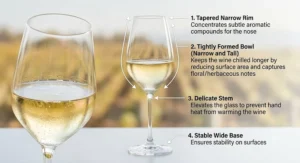
Sauvignon blanc, a green-skinned grape variety that originated in France’s Loire Valley and Bordeaux before becoming a global favorite, owes much of its appeal to that bright acidity and herbaceous aroma — exactly what a good glass is supposed to showcase, not mute.
A true sauvignon blanc glass typically holds 12–16 ounces, has a slim stem to keep body heat off the bowl, and tapers inward at the rim to concentrate aroma rather than let it dissipate. That’s the short definition. The longer answer — which bottles deserve which glass, and which sets are actually worth your money — takes a bit more digging, which is exactly what we did.
I spent time comparing real, currently available sauvignon blanc glasses on Amazon — from sub-$30 everyday sets to splurge-worthy hand-blown crystal — so you don’t have to sift through hundreds of near-identical listings yourself. Below you’ll find seven verified picks, what actually separates them, and how to match a glass to the way you really drink.
✅ Quick take: if you only buy one set, go with a Riedel or Schott Zwiesel varietal-specific glass in the $30–60 range. If you’re outfitting a first apartment, Libbey or Spiegelau covers you for under $40. If you want to taste the difference for yourself, the Zalto pick at the bottom is worth the splurge.
Quick Comparison Table
| Product | Style | Set Size | Capacity | Price Range | Best For |
|---|---|---|---|---|---|
| Riedel Vinum Sauvignon Blanc | Stemmed, varietal-specific | 2 | ~12.4 oz | $30–45 | Classic everyday upgrade |
| ZWIESEL GLAS Pure Sauvignon Blanc | Stemmed, Tritan crystal | 6 | 14 oz | $55–85 | Durability & dinner parties |
| Spiegelau Wine Lovers White Wine | Stemmed, all-white-wine | 4 | 12 oz | $25–40 | Budget all-rounder |
| Libbey Signature Kentfield Estate | Stemmed, all-purpose | 4 | 16 oz | $20–32 | Tightest budget |
| Riedel Veritas Sauvignon Blanc | Stemmed, ultra-light | 2 | ~12.9 oz | $45–65 | Lightweight upgrade |
| Riedel O Wine Tumbler | Stemless | 2 | ~12.9 oz | $25–38 | Casual / travel use |
| Zalto Denk’Art White Wine Glass | Hand-blown stemmed | 2 | 13.5 oz | $140–180 | Splurge / connoisseurs |
Looking at the spread above, the gap between the cheapest and priciest option isn’t really about quality control — every glass here comes from a reputable glassmaker — it’s about wall thickness and how the wine “opens up” in the bowl. Budget picks like Libbey and Spiegelau get the shape right but use slightly thicker glass, which is honestly unnoticeable for casual sipping. The Riedel and Zwiesel sets in the middle are where most serious home drinkers should focus their budget, since the thinner rims meaningfully change how the wine hits your palate. The Zalto only makes sense if you already know you love sauvignon blanc and want the closest experience to what a sommelier pours tableside.
💬 Just one click — help others make better buying decisions too!😊
✨ Don’t Miss These Exclusive Deals!
🔍 Take your wine nights to the next level with these carefully selected glasses. Click on any highlighted item to check current pricing and availability — these picks will help you bring out flavors your guests will actually notice. 💬 Just one click — help others make better buying decisions too! 😊
Top 7 Sauvignon Blanc Glasses: Expert Analysis
1. Riedel Vinum Sauvignon Blanc/Dessertwine Glass, Set of 2
Riedel Vinum Sauvignon Blanc/Dessertwine Glass is the glass most sommeliers picture when someone says “sauvignon blanc glass” — it’s been the varietal-specific benchmark since Riedel’s Vinum line launched in the 1980s.
The bowl’s elongated taper and slightly longer stem aren’t just for looks: that shape narrows the surface area at the rim, which concentrates citrus and herbal aromatics instead of letting them scatter the way they would in a wider, more open glass. At roughly 12.4 ounces, it’s sized for a proper pour without encouraging you to overfill — something stemless tumblers don’t discourage nearly as well. 🍷
Who it’s for: anyone who wants the “textbook” sauvignon blanc experience without jumping to ultra-premium hand-blown glass. It’s the glass to buy if you’re upgrading from generic stemware for the first time. Buyers consistently mention the elegant, traditional silhouette and note it handles both crisp New World styles and oakier Bordeaux blends well, though a few mention the stems require careful handling since Riedel Vinum is machine-made rather than reinforced for heavy-duty restaurant use.
✅ Pros: classic varietal-specific shape, dishwasher safe, widely available, proven track record
❌ Cons: machine-made stems are thinner than restaurant glassware and chip if mishandled; only comes in sets of 2
Price-wise, this set typically falls in the $30–45 range — solid value for a glass that’s become the industry reference point. If you only buy one upgrade this year, this is the safe, well-reasoned choice.

2. ZWIESEL GLAS Pure Sauvignon Blanc White Wine Glass, Set of 6
ZWIESEL GLAS Pure Sauvignon Blanc White Wine Glass (made by Schott Zwiesel in Germany) solves the problem most varietal-specific glasses create: you only get two, and one breaks within a year.
This set ships six 14-ounce glasses built from Tritan crystal, a glass-strengthening technology that makes the rim noticeably more chip-resistant than standard lead-free crystal. In practice, that means you can actually run these through the dishwasher repeatedly without the rim clouding or thinning — a real advantage if you host often. The distinctive tapered contour is engineered specifically to showcase sauvignon blanc’s freshness, so you’re not sacrificing shape for durability. 🔋
Who it’s for: hosts and anyone who’s tired of buying replacement glasses every few months. The six-glass count also means you can actually seat a full dinner party without mixing mismatched stemware. Zwiesel owners frequently mention how much sturdier these feel compared to typical crystal, with the trade-off being a slightly heavier glass in hand than ultra-thin premium options.
✅ Pros: exceptional chip resistance, generous set size, dishwasher-safe without degrading, made in Germany
❌ Cons: heavier in hand than hand-blown crystal; six-glass sets cost more upfront than a basic two-pack
Expect to pay around $55–85 for the set of six — when you divide that per glass, it’s actually one of the better value plays here if you need enough stemware for entertaining.
3. Spiegelau Wine Lovers White Wine Glasses, Set of 4
Spiegelau Wine Lovers White Wine Glasses are the glass to buy if you want something that looks intentional on the table without committing to a single-varietal collection.
These are sold as general white wine glasses rather than sauvignon blanc-specific, but the 12-ounce bowl shape still tapers enough to support sauvignon blanc, chardonnay, and riesling without major compromise. What that means practically: if your household drinks a rotating mix of whites, you don’t need three separate glass collections cluttering your cabinet — this set covers the range reasonably well. Spiegelau has made crystal in Germany since the 16th century, and the lead-free crystal here catches light nicely without the lead-crystal price tag. 🥂
Who it’s for: people who want one all-purpose white wine glass rather than varietal-specific stemware, and anyone furnishing a kitchen on a budget that still wants something nicer than basic glassware. Reviewers tend to highlight the modern, sleek silhouette and call out that it transitions easily from casual weeknights to dinner parties — the main trade-off being that a dedicated sauvignon blanc glass from Riedel will still out-perform it for aroma concentration specifically.
✅ Pros: versatile across white wine styles, dishwasher safe, attractive modern shape, set of 4 instead of 2
❌ Cons: not varietal-specific, so it won’t concentrate aroma quite as precisely as a dedicated sauvignon blanc shape
This set generally runs in the $25–40 range, making it one of the easiest “good enough for everything” picks on this list.
4. Libbey Signature Kentfield Estate All-Purpose Wine Glasses, Set of 4
Libbey Signature Kentfield Estate All-Purpose Wine Glasses are the most budget-friendly entry here, and they’re made in the USA rather than imported — which matters if domestic manufacturing is a priority for you.
At 16 ounces, the bowl is larger than the dedicated sauvignon blanc glasses on this list, which actually works in its favor for all-purpose use: it handles both light whites and medium reds without feeling undersized for either. The ClearFire glass formula Libbey uses is designed to resist the slight haziness that cheaper glass develops after repeated dishwasher cycles — a common complaint with bargain stemware that fogs up within a year. 🚴♂️
Who it’s for: first apartments, college grads building their first glassware set, or anyone who wants a single all-purpose glass instead of juggling separate red and white stemware. Wirecutter previously praised an earlier version of this everyday glass for striking a good balance of stability and elegance for the price. The honest trade-off: because it’s all-purpose rather than sauvignon blanc-specific, you’re not getting the same aroma-concentrating taper as the Riedel or Zwiesel picks.
✅ Pros: lowest price point on this list, made in USA, resists clouding, doubles as a red wine glass
❌ Cons: not varietal-specific; bowl shape is more generic than dedicated white wine glasses
This set typically lands under $30, which makes it the easiest recommendation if you’re stocking a kitchen from scratch and need stemware that does double duty.
5. Riedel Veritas Sauvignon Blanc Glass
Riedel Veritas Sauvignon Blanc Glass takes the Vinum shape and makes it noticeably lighter and thinner — Riedel’s marketing calls this “machine-made precision with handmade delicacy,” and in this case the claim mostly holds up.
What that thinner wall actually changes in practice: the rim is delicate enough that the wine touches your lip almost imperceptibly, which sommeliers argue lets you focus on the wine itself rather than feeling the glass. It’s a genuine upgrade in tactile experience over the standard Vinum line, though the increase in fragility is real, not marketing fluff — these need gentler handling than a thicker glass. ⚡
Who it’s for: someone who’s already comfortable with sauvignon blanc-specific stemware and wants to feel the difference a lighter glass makes, without jumping all the way to $150+ hand-blown crystal. It sits in a sensible middle tier between the Vinum and the Zalto pick below. Buyers who’ve upgraded from Vinum to Veritas often comment on how much thinner the rim feels, with a smaller number noting the glasses require more careful hand-washing despite being technically dishwasher-safe.
✅ Pros: noticeably thinner rim and lighter feel, still dishwasher-safe, retains Riedel’s varietal-specific shape research
❌ Cons: more delicate than Vinum, priced higher for what is essentially the same shape in a thinner build
Expect $45–65 for a set of two — a reasonable middle ground if you want a tactile upgrade without the premium hand-blown price tag.

6. Riedel O Wine Tumbler Riesling/Sauvignon Blanc, Set of 2
Riedel O Wine Tumbler Riesling/Sauvignon Blanc strips the stem entirely, which sounds like a downgrade until you actually think through how most people drink wine on a Tuesday night.
Riedel still shapes the bowl to the same Riesling/Sauvignon Blanc proportions as its stemmed Vinum line — what’s gone is the stem, not the aroma-focused engineering. The real-world benefit: stemless glasses are dramatically less likely to tip over, survive the dishwasher’s top rack better, and fit into smaller cabinets, picnic baskets, or carry-on luggage without the stem snapping in transit.
✅ For renters with small kitchens or anyone who entertains outdoors, that’s a legitimate practical upgrade, not just a budget compromise.
Who it’s for: casual drinkers, picnics and patio nights, small kitchens with limited glass storage, or anyone who’s broken one too many stemmed glasses. The trade-off worth knowing: holding the bowl directly (since there’s no stem to grip) does transfer some hand warmth to the wine faster than a stemmed glass — a minor issue for sauvignon blanc, which is best served well-chilled anyway and finished before it has time to warm much.
✅ Pros: much harder to tip or break, easier storage, still varietal-shaped, great for outdoor use
❌ Cons: holding the bowl warms the wine slightly faster than a stemmed glass
This set generally runs $25–38, putting it right alongside the Spiegelau pick in terms of value, but with added durability for casual settings.
7. Zalto Denk’Art White Wine Glass
Zalto Denk’Art White Wine Glass is the glass to buy once you already know sauvignon blanc is your wine, and you want to taste exactly what a Michelin-starred restaurant pours.
Each glass is mouth-blown by Austrian artisans rather than machine-made, and the difference shows up in wall thickness most directly: the rim is thin enough that it genuinely disappears between your lip and the wine, removing a layer of tactile distraction that thicker glass introduces without you fully realizing it. At 13.5 ounces with a 9.1-inch height, the proportions favor aroma development over sheer volume. 🔋 The catch most buyers don’t expect: hand-blown crystal flexes slightly differently than machine-made glass, so it’s genuinely more fragile, and Zalto explicitly recommends top-rack dishwasher placement with care rather than hand-washing, which feels counterintuitive for something this delicate.
Who it’s for: serious sauvignon blanc drinkers, gift-givers shopping for a wine enthusiast, or anyone who’s tasted the same wine in a cheap glass and a Zalto side-by-side and noticed the difference. It’s not a starter purchase — it’s the upgrade you make after you’ve already fallen for the varietal.
✅ Pros: hand-blown Austrian crystal, used in Michelin-starred restaurants, exceptionally thin rim, genuinely changes the tasting experience
❌ Cons: premium price, more fragile than machine-made alternatives, easy to chip if hand-washed incorrectly
Sets of two typically run $140–180, by far the highest price here — but for a dedicated sauvignon blanc drinker, it’s the one glass on this list that delivers a tasting experience the budget options simply can’t replicate.
Real-World Scenarios: Which Glass Matches Your Lifestyle
Rather than guessing from specs alone, it helps to match a glass to how you actually live and drink:
The casual weeknight sipper who pours a glass after work two or three times a week is better served by the Libbey Signature Kentfield Estate or Riedel O Wine Tumbler — both prioritize durability and easy cleanup over aroma-maximizing precision, and neither will leave you devastated if one slips out of your hand.
The regular host who runs through six-plus glasses at dinner parties should lean toward the ZWIESEL GLAS Pure Sauvignon Blanc set. Six matching glasses means no scrambling for mismatched stemware, and Tritan crystal’s chip resistance matters far more when glasses are getting washed, stacked, and refilled all evening.
The dedicated enthusiast who already has a wine fridge and a favorite Marlborough producer should skip straight to the Zalto Denk’Art White Wine Glass or step up from Vinum to the Riedel Veritas. At this point, the glass itself becomes part of the ritual, not just a vessel.
🔍 Take your white wine nights to the next level
✨ Don’t Miss These Exclusive Deals! Click on any highlighted glass above to check current pricing and availability — the right set really does change how your favorite bottle tastes. 🍷

Common Problems (and How the Right Glass Solves Them)
Problem: Your sauvignon blanc tastes “flat” or one-note. This is almost always a glass-shape issue, not a wine-quality issue. A wide-bowled red wine glass disperses the aromatic compounds before they reach your nose. Switching to any of the tapered, varietal-shaped options above — Riedel Vinum, Veritas, or the Zalto — concentrates those same aromas instead of losing them.
Problem: You keep breaking stemmed glasses. If this has happened more than once, stop fighting it — the Riedel O Wine Tumbler gives you the same shape science without the stem to snap. It’s a practical fix, not a downgrade.
Problem: Cloudy, hazy glasses after months of dishwasher use. This usually comes from hard water mineral buildup combined with thinner, lower-grade glass. The Tritan crystal in the ZWIESEL GLAS Pure set and the ClearFire formula in the Libbey Signature Kentfield are both specifically engineered to resist this kind of etching better than basic glass.
Problem: You don’t have enough matching glasses for a dinner party. Sets of two look elegant on a date night but fall apart fast once you’re hosting six guests. The ZWIESEL GLAS Pure (set of 6) or doubling up on Spiegelau Wine Lovers (set of 4) solves this without forcing you to mix patterns.
How to Choose Sauvignon Blanc Glasses
- Start with bowl shape, not brand. Look for a tapered bowl that’s narrower at the rim than at its widest point — that taper is what concentrates aroma, regardless of which glassmaker produced it.
- Decide stemmed vs. stemless honestly. Stemmed glasses look more formal and keep your hand off the bowl (helping the wine stay cool), but stemless options survive real life — kids, pets, small kitchens — far better.
- Match capacity to your pour size. Most sauvignon blanc glasses run 12–16 ounces; you’re not meant to fill them more than a third full, so bigger isn’t automatically better.
- Buy enough glasses for how you actually entertain, not just for two. If you host regularly, a set of 4–6 beats a romantic set of 2 you’ll need to supplement later anyway.
- Consider wall thickness if you’re serious about the wine. Thinner, hand-blown crystal (Zalto) genuinely changes mouthfeel; thicker, durable crystal (Zwiesel, Libbey) trades a small amount of that nuance for everyday practicality.
- Check dishwasher safety claims carefully. “Dishwasher safe” and “recommended top rack with care” aren’t the same promise — premium hand-blown glass like Zalto still wants gentler handling than mass-produced sets.
- Set a real budget range before you shop, since the gap between a $25 set and a $150 set is real but proportional to how seriously you take the hobby — neither end is objectively wrong.
Common Mistakes When Buying Wine Glasses for Sauvignon Blanc
A surprising number of buyers reach for a generic “all-purpose” wine glass and assume any clear glass will do — but as covered above, bowl shape genuinely affects perceived aroma intensity, a finding supported by published sensory research showing glass shape has a measurable impact on how wine aromas are perceived. Buying the cheapest available set without checking bowl taper is the single most common misstep.
A second mistake is overbuying capacity — a 22-ounce “big bowl” glass looks impressive but encourages overpouring and faster warming of a wine that’s meant to stay cool and fresh. Third, many shoppers ignore set size and buy a beautiful set of two, then scramble to find matching glasses the first time they host more than one guest. Finally, people often hand-wash premium crystal “to be safe” when manufacturers like Zalto specifically recommend the dishwasher — hand-washing with a towel is actually how most stems get snapped.

Sauvignon Blanc Glasses vs. Chardonnay Glasses
It’s tempting to assume any white wine glass works for any white wine, but sauvignon blanc and chardonnay glasses are shaped for genuinely different goals. Chardonnay — especially oaked styles — benefits from a wider, rounder bowl that gives the wine more surface area to breathe, softening its richer, creamier notes. Sauvignon blanc’s appeal is the opposite: bright acidity and herbaceous, citrus-driven aromatics that a wider bowl tends to dilute rather than enhance.
That’s why true varietal-specific sets, like the Riedel Vinum line, ship sauvignon blanc and chardonnay glasses with visibly different bowl proportions even though both are “white wine glasses.” If you only own all-purpose white wine stemware like the Spiegelau Wine Lovers set, you’re not doing anything wrong — you’re just trading a small amount of varietal-specific precision for versatility across your whole white wine collection.
Long-Term Care & Cost of Ownership
Crystal wine glasses aren’t a one-time purchase the way a coffee mug is — breakage is part of the ownership cost, and it’s worth budgeting for it rather than being surprised by it. Machine-made sets like Riedel Vinum or Libbey Signature typically survive years of regular dishwasher use with proper rack placement, making their effective cost-per-year quite low even at a $30–40 entry price. Hand-blown crystal like Zalto carries a steeper upfront cost and a real risk of occasional breakage, but a single glass can usually be replaced individually rather than forcing you to rebuy a whole set — worth checking before you buy if budget matters to you long-term.
A simple rule of thumb: load stemware on the top rack only, away from other items that can knock against the bowl during the wash cycle, and avoid stacking glasses inside one another when storing them, since that’s how rims chip most often.
What to Expect: Real-World Performance
In practice, the difference between a $25 glass and a $150 glass isn’t whether the wine tastes “good” or “bad” — every glass on this list will let you enjoy a well-made sauvignon blanc. The difference shows up in nuance: whether you notice the gooseberry note fading into a longer citrus finish, or whether the wine’s acidity feels sharp versus refreshing on the first sip. Industry research into glass shape backs this up — a wine chemist’s UC Davis thesis specifically studied how aroma evolves differently across five distinct glass shapes, reinforcing that the shape question is a real, measurable variable and not just marketing.
For context on the wine itself: sauvignon blanc is the signature grape of New Zealand’s Marlborough region, which now produces the large majority of the country’s sauvignon blanc exports. Knowing the wine’s origin and style can help you decide how aggressively aroma-focused a glass you actually need — an unoaked, high-acid Marlborough style benefits more dramatically from a tight, tapered bowl than a softer, oak-aged white Bordeaux blend does.
❓ Frequently Asked Questions
❓ What makes a glass good for sauvignon blanc?
❓ Can I use a regular wine glass for sauvignon blanc?
❓ Are stemless glasses bad for sauvignon blanc?
❓ How many sauvignon blanc glasses do I need for a dinner party?
❓ What's the difference between a sauvignon blanc glass and a chardonnay glass?
Conclusion
The right sauvignon blanc glass isn’t about status or showing off a fancy crystal collection — it’s about not wasting a good bottle on stemware that mutes everything that makes the wine interesting in the first place. If you’re starting from scratch, the Riedel Vinum Sauvignon Blanc set is the safest, most proven upgrade you can make. If durability for regular entertaining matters more, the ZWIESEL GLAS Pure six-pack earns its slightly higher price. And if you already know sauvignon blanc is your wine, the Zalto Denk’Art White Wine Glass will show you what the fuss over glass shape is actually about.
Whatever you choose, the upgrade from generic stemware to a properly shaped glass is one of the cheapest, most immediate improvements you can make to how a $15 bottle of wine actually tastes.
✨ Don’t Miss These Exclusive Deals!
🔍 Take your sauvignon blanc nights to the next level with these carefully selected glasses — click on any item above to check current pricing and availability. 💬🤗
Recommended for You
- Best Chardonnay Glasses 2026: 7 Top Picks
- 7 Best White Wine Glasses Gift Sets That Actually Earn Their Shelf Space (2026)
- Best White Wine Glasses 2026: 7 Picks That Actually Work
Disclaimer: This article contains affiliate links. As an Amazon Associate, I earn from qualifying purchases. If you purchase products through these links, we may earn a small commission at no additional cost to you.
✨ Found this helpful? Share it with your friends! 💬🤗
