

In This Article
A tulip champagne glass is a stemmed glass with a bowl that swells outward before tapering back in at the rim, a shape borrowed from the flower it’s named after, built to hold sparkling wine’s aroma in place while still letting the bubbles breathe. If you’ve only ever poured bubbly into a skinny flute, you’ve been missing half the show — literally, since a narrow rim traps the wine’s nose right at the bottom of the glass where you can’t smell it. I started paying attention to tulip champagne glasses a few New Year’s Eves ago, when a friend who works wine retail handed me a glass of the same $18 Crémant I’d been drinking out of a flute for years, except this time in a tulip, and it tasted like a completely different bottle. Same wine. Different vessel. That’s the trick nobody tells you about at the store.
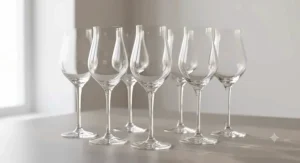
This guide rounds up seven real, currently available tulip champagne glasses spanning every budget, from workhorse everyday sets to the kind of hand-blown crystal you save for anniversaries. Along the way we’ll dig into why the shape actually matters (it’s not just marketing — the physics of carbonation and aroma are well documented, as the Wikipedia entry on champagne glass history lays out), how tulip glasses stack up against flutes and coupes, what the professional ISO tasting glass standard is all about, and how to pick a set that fits your kitchen cabinet and your budget without overthinking it. Whether you’re outfitting a first apartment or finally justifying a proper crystal upgrade, there’s a real answer here.
Quick Comparison Table
| Glass Style | Best For | Aroma Concentration | Bubble Retention | Price Range |
|---|---|---|---|---|
| Riedel Performance Tulip Champagne Glasses | Vintage & prestige cuvées | Excellent | Very Good | $50-$65 range |
| Schott Zwiesel Tulip Champagne Glass | Everyday durability | Very Good | Very Good | $45-$60 range |
| Luigi Bormioli ISO Tasting Glasses | Blind tasting & comparison | Excellent | Good | $30-$45 range |
| Classic flute | Casual toasting & parties | Fair | Excellent | Varies |
| Coupe | Cocktails & retro styling | Poor | Poor | Varies |
Looking at this table, the pattern is pretty clear: if aroma is your priority, tulip and ISO-style glasses win by a wide margin, but if you’re pouring for forty people at a wedding and just need the bubbles to look pretty for two hours, a flute still earns its keep. The Riedel Performance Tulip Champagne Glasses and Luigi Bormioli ISO Tasting Glasses sit at opposite price points but solve a similar problem — getting more of the wine’s actual character into your nose. Notice that bubble retention and aroma concentration aren’t the same axis; a glass that’s great at one isn’t automatically great at the other, which is exactly why the tulip shape exists as a compromise built for people who want both.
💬 Not sure which shape fits your next celebration? Scroll down to the full product breakdown — your perfect pour is a few paragraphs away.
💬 Just one click — help others make better buying decisions too!😊
Top 7 Tulip Champagne Glasses: Expert Analysis
1. Riedel Performance Tulip Champagne Glasses — best for concentrating vintage aromas
The Riedel Performance Tulip Champagne Glasses have an unusually deep, egg-shaped bowl with subtle interior ribbing, a design choice that isn’t just decorative — it’s meant to agitate the wine slightly as you swirl, coaxing more aroma out of it. Each glass in the set holds around 13.2 ounces, which sounds enormous for champagne until you realize you’re only ever filling it a third of the way, leaving plenty of headspace for the bouquet to collect. Riedel machine-manufactures these rather than hand-blowing them, so you get crystal clarity and a large rim diameter without the fragility (or the price tag) of the company’s hand-blown lines. Based on the spec comparison with Riedel’s own flute options, the wider bowl here is squarely aimed at Blanc de Blancs, aged grower Champagnes, and anything with real complexity to show off — not your average Tuesday-night Prosecco. Reviewers consistently report that the size feels intimidating at first pour but “disappears” once you’re actually drinking, and the ribbed bowl gets specific praise for making cheaper sparkling wines taste more expensive than they are. If you’ve got one nice bottle of vintage Champagne a year, this is the glass that makes it count.
Pros:
- ✅ Deep ribbed bowl draws out more aroma than flat-sided tulips
- ✅ Machine-made construction keeps cost below hand-blown competitors
- ✅ Large 13.2 oz capacity works for both vintage and NV Champagne
Cons:
- ❌ Bowl size can feel oversized for casual, quick pours
- ❌ Not dishwasher-tested as aggressively as Schott Zwiesel’s Tritan line
Price sits in the $50-$65 range for a set of two, and given how much more nuance you pull out of a $40 bottle, that’s a fair trade for anyone who actually tastes their Champagne rather than just drinking it.
2. Riedel Vinum Champagne Wine Glass — most iconic all-rounder tulip hybrid
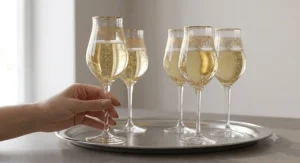
The Riedel Vinum Champagne Wine Glass is technically a straighter-sided cousin of the true tulip, but it’s become the reference point most people mean when they say “Riedel champagne glass,” so it earns its spot here. Standing 8-7/8 inches tall with a 5-5/8 ounce capacity, it’s made from over 24 percent lead crystal in Bavaria, giving it real brilliance and a lighter-than-expected feel in the hand. What most buyers overlook about this model is the built-in “sparkling point” etched at the base of the bowl — a tiny imperfection that gives rising bubbles something to cling to, which keeps your Champagne fizzing longer instead of going flat in the first five minutes. Because the sides are straighter than the Performance line above, it splits the difference between flute and tulip: you get some aroma lift without sacrificing as much visual bubble column. Aggregated review sentiment on this model is overwhelmingly positive for gifting and everyday upscale use, though a recurring theme in feedback is that the stems are thin and need careful handling around toddlers or enthusiastic dinner guests. It’s the glass most people reach for when they want “the good glasses” without going full sommelier.
Pros:
- ✅ Built-in sparkling point extends bubble life noticeably
- ✅ Lead crystal clarity at a more accessible price than premium lines
- ✅ Recognizable, gift-worthy design from a 300-year-old glassmaker
Cons:
- ❌ Thin stems are more breakage-prone than Tritan alternatives
- ❌ Hand-wash recommended despite being dishwasher-rated
Expect to pay in the $40-$55 range for a set of two — reasonable for genuine European lead crystal with a recognizable name behind it.
3. Schott Zwiesel Tulip Champagne Glass — toughest everyday crystal for daily use
The Schott Zwiesel Tulip Champagne Glass set of four is built from Tritan crystal, a proprietary material that swaps out lead entirely while adding titanium and zirconium oxide for strength — the kind of engineering detail that matters more than it sounds. Each glass stands 9.1 inches tall with roughly a 10-ounce capacity and 2.8-inch diameter, and it includes a moussing point at the base of the bowl to keep bubbles streaming steadily. Here’s what the spec sheet won’t tell you, but reviewers note repeatedly: these survive real dishwashers, real cycles, real years, in a way that lead crystal simply doesn’t. Schott Zwiesel backs that up by testing to over 2,000 dishwasher cycles without fogging or scratching, which is a genuinely different proposition from hand-wash-only stemware. This is the set for people who actually use their good glasses on a random Wednesday rather than saving them for one dinner party a year. Reviewers consistently mention the satisfying ring the glass makes when tapped and describe the Tritan finish as feeling closer to hand-blown crystal than its price would suggest, though a few note the moussing point is subtler than Riedel’s more aggressive ribbing.
Pros:
- ✅ Tritan crystal survives 2,000+ dishwasher cycles without dulling
- ✅ Moussing point keeps bubble streams consistent pour after pour
- ✅ Set of four covers a small dinner party without restocking
Cons:
- ❌ Less dramatic aroma lift than deeper Riedel bowls
- ❌ Made-in-Germany import can mean longer restock windows
Priced around the $45-$60 range for four glasses, this is arguably the best cost-per-use option on this whole list if you’re pouring bubbly more than a few times a month.
4. Zalto Denk’Art Universal Glass — lightest hand-blown splurge glass
The Zalto Denk’Art Universal Glass isn’t marketed as champagne-specific, but sommeliers have quietly adopted it as a one-glass-does-everything solution, including for Champagne, and it’s worth including here for exactly that reason. Hand-blown in Austria with a roughly 530 ml capacity, it’s dramatically lighter than machine-made crystal of similar size, so thin at the rim that first-time users often describe the sensation as “drinking directly from the wine” with nothing in the way. Based on the spec comparison, the tulip-adjacent bowl shape and long, delicate stem trade some bubble-column drama for a genuinely wider aromatic spread — this is a glass built for slow, contemplative sipping rather than quick celebratory toasts. What most buyers overlook is that hand-blown glass has natural variation, so no two glasses in a set are perfectly identical, which is part of the appeal for people who dislike mass production but a dealbreaker for anyone who wants matched symmetry. Reviewers who’ve compared it directly against machine-made tulips consistently describe a noticeably different mouthfeel, crediting the almost imperceptible rim thickness for making even mid-tier sparkling wine taste rounder.
Pros:
- ✅ Hand-blown Austrian crystal is dramatically lighter than machine-made glass
- ✅ Ultra-thin rim changes mouthfeel in a way tasters can identify blind
- ✅ Doubles as an everyday wine glass, not just for Champagne
Cons:
- ❌ Premium price puts it out of reach for casual buyers
- ❌ Fragility makes it a poor fit for households with kids or pets
At around $130-$160 for a set of two, this is the splurge pick — the one you buy once you already own a Schott Zwiesel set and want to see what all the sommelier fuss is about.
5. Luigi Bormioli ISO Tasting Glasses — professional ISO standard for blind tastings
The Luigi Bormioli ISO Tasting Glasses follow the International Organization for Standardization’s official wine-tasting glass specification, ISO 3591:1977, which defines an elongated egg-shaped bowl on a stem, about 6.1 inches tall with a 7.25-ounce capacity. This isn’t a champagne-specific glass by name, but it’s exactly what professional tasters, sommeliers, and Master of Wine candidates use to evaluate sparkling wine alongside everything else, precisely because the standardized shape removes glassware as a variable when comparing bottles side by side. Crafted by master glassmaker Luigi Bormioli, the set is machine-made rather than hand-blown, which keeps the price sane for buyers who want six or twelve identical glasses for a real tasting flight. Here’s what most buyers overlook: because this shape is genuinely neutral rather than optimized purely for aroma display, it’s less flattering for casual sipping than the Riedel Performance model, but it’s the honest, apples-to-apples choice if you’re actually comparing multiple Champagnes or sparkling wines in one sitting. Aggregated feedback on ISO-style glassware in this category consistently highlights the narrow bowl’s usefulness for swirling small pours without spillage, a detail that matters more than it seems once you’ve tried to swirl a full-size wine glass with only an ounce in it.
Pros:
- ✅ Meets official ISO 3591:1977 tasting-glass specification
- ✅ Narrow bowl makes swirling small pours easy without spills
- ✅ Set of six suits real side-by-side tasting flights
Cons:
- ❌ Less visually dramatic than dedicated tulip champagne stemware
- ❌ Smaller capacity than most tulip designs on this list
Expect the $30-$45 range for a set of six, which, per glass, is one of the better values here if your goal is serious comparison tasting rather than a single celebratory pour.
6. Final Touch ISO/INAO Wine Tasting Glasses — best budget ISO-style tasting set
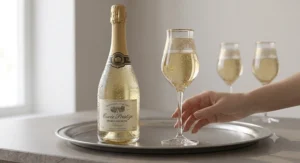
The Final Touch ISO/INAO Wine Tasting Glasses set of six offers the same 7.25-ounce ISO-standard capacity as the Luigi Bormioli option above, but at a noticeably friendlier price, which makes it the natural budget alternative for anyone building out a home tasting kit. Constructed from lead-free crystal, each glass is designed to conform to ISO 3591:1977 specifications for optimal swirling, aroma concentration, and evaluation across red, white, sparkling, and rosé styles — meaning this same set pulls double duty well beyond Champagne night. On paper this means you’re not buying a single-purpose glass; you’re buying a flexible tasting tool that happens to work beautifully for sparkling wine too. Reviewers consistently note that the lead-free construction feels lighter than expected for the price point, and a common theme in feedback is surprise at how “professional” a home tasting setup feels once poured into these rather than mismatched everyday stemware. The tradeoff, honestly, is brand recognition — Final Touch doesn’t carry the same centuries-old pedigree as Riedel or Luigi Bormioli, so don’t expect heirloom status, but the functional performance holds up.
Pros:
- ✅ ISO 3591:1977-conforming shape at a genuinely budget price
- ✅ Lead-free crystal construction feels lighter than expected
- ✅ Versatile across red, white, sparkling, and rosé tastings
Cons:
- ❌ Less brand prestige than Riedel or Luigi Bormioli
- ❌ Six glasses per box means less flexibility buying smaller sets
Priced around the $25-$35 range for six glasses, this is the pick for anyone starting a home tasting habit without committing serious money upfront.
7. JoyJolt Layla Collection Champagne Glasses — best budget stylish tulip-inspired set
The JoyJolt Layla Collection Champagne Glasses round out this list as the budget-friendly, style-forward option, sold in a set of four at roughly 6.7 ounces per glass. These lean into a more decorative stemmed silhouette than the strictly functional ISO glasses above, aimed at buyers who want their bar cart to look intentional without spending Riedel money to get there. What most buyers overlook about entry-level crystal sets like this one is that the aroma benefits of a tulip-adjacent shape still apply even at a lower price point — you don’t need a $70 glass to get a meaningfully better nose on your Prosecco than a straight flute delivers. Reviewers consistently frame these as ideal gift-set material for weddings, anniversaries, and housewarmings, praising the clarity and weight for the price, while noting the bowl shape leans slightly narrower than true tulip designs like the Schott Zwiesel or Riedel Performance glasses. If you’re setting up a first apartment bar or need a backup set for guests so your good glasses don’t take a beating, this is a sensible, low-risk purchase that still photographs well for a celebration.
Pros:
- ✅ Attractive stemmed design at genuinely accessible pricing
- ✅ Set of four suits small gatherings without overspending
- ✅ Popular gift-set choice for weddings and housewarmings
Cons:
- ❌ Bowl is narrower than dedicated tulip designs on this list
- ❌ Less brand heritage than legacy European glassmakers
Priced in the $25-$35 range for a set of four, it’s a smart entry point before deciding whether to invest in a premium upgrade later.
✨ Don’t Miss These Exclusive Deals!
🔍 Ready to upgrade your bar cart? Click on any highlighted glass above to check current pricing and availability on Amazon. Whether you’re outfitting a first apartment or finally treating yourself to real crystal, the right tulip champagne glass makes every pour feel like an occasion.
Practical Usage Guide: Setting Up and Caring for Tulip Champagne Glasses
Getting a new set of tulip champagne glasses home is only half the job — how you handle them in the first month determines whether they last five years or five parties. Start by hand-washing crystal pieces like the Riedel Vinum Champagne Wine Glass or Zalto Denk’Art Universal Glass at least the first few times, even if the box says dishwasher-safe, since detergent residue can dull crystal’s shine and subtly affect the wine’s taste. For Tritan crystal like the Schott Zwiesel Tulip Champagne Glass, the dishwasher genuinely is fine — that’s the whole point of the material — but skip the rinse-aid setting, which can leave a filmy residue on any glassware over time. A common first-30-days mistake is stacking glasses by the bowl for storage; always store stemware upright or hang it from a stemware rack, since bowl-to-bowl contact is where chips start. When polishing, use a lint-free microfiber cloth held by the base while you buff the bowl with the other hand — grabbing the bowl directly with a towel is how stems snap. If you own both an ISO-style set like the Luigi Bormioli ISO Tasting Glasses and a dedicated tulip set, keep them in separate racks; the narrower ISO bowls are easy to mistake for something sturdier and get crushed when packed next to wider glasses. Finally, chill glasses in the refrigerator for fifteen minutes before pouring rather than the freezer, which can introduce condensation stress that shortens crystal’s lifespan over repeated use.
Real-World Scenarios: Which Tulip Glass Fits Your Life
Picture three different people shopping for the same keyword and landing on very different answers. First, a college grad hosting her first proper dinner party in a studio apartment, working with a tight budget and zero storage space — the JoyJolt Layla Collection Champagne Glasses or Final Touch ISO/INAO Wine Tasting Glasses make more sense here than anything premium, since she needs four to six glasses that look good and survive the occasional dishwasher run without heartbreak if one breaks. Second, a couple in their late thirties who host wine tastings with friends every couple of months and actually want to compare bottles side by side — for them, the Luigi Bormioli ISO Tasting Glasses solve a specific problem, letting six people pour identical small samples and genuinely compare without the glass itself skewing the result. Third, a retired sommelier-adjacent uncle who buys one serious bottle of vintage Champagne every December and wants to do it justice — he’s the exact customer for the Riedel Performance Tulip Champagne Glasses or, if budget allows, the Zalto Denk’Art Universal Glass, since he’s optimizing for a handful of special pours rather than everyday durability. None of these people are wrong; they’re just solving different problems, which is exactly why “best tulip champagne glass” doesn’t have one universal answer.
Problem → Solution: Common Champagne Glass Frustrations
A handful of frustrations come up again and again once people start paying attention to glassware, and most have a straightforward fix. Problem one: Champagne goes flat within minutes. Solution: switch from a wide coupe to a tulip like the Schott Zwiesel Tulip Champagne Glass, whose moussing point at the base keeps a steady bubble stream going far longer than an unetched bowl. Problem two: you can’t smell anything beyond “generic fizzy wine.” Solution: a deeper bowl with real taper, such as the Riedel Performance Tulip Champagne Glasses, gives aromatics room to collect before they hit your nose. Problem three: glasses keep chipping in storage. Solution: switch to Tritan crystal or store stemware upright on a hanging rack rather than stacked in a cabinet. Problem four: you want to compare two bottles fairly but keep second-guessing yourself. Solution: pour both into identical ISO-standard glasses like the Final Touch ISO/INAO Wine Tasting Glasses so the vessel isn’t secretly influencing your opinion. Problem five: your everyday glasses look cheap next to your food. Solution: a modestly priced but attractive set like the JoyJolt Layla Collection Champagne Glasses closes that visual gap without requiring a Riedel-level budget.
Champagne Tulip vs Flute vs Coupe
The three shapes exist because Champagne’s relationship with glassware has genuinely evolved over roughly three centuries, and each one optimizes for a different priority rather than one simply being “better” in every context. The coupe, popularized in England and later a fixture of Old Hollywood glamour, prioritizes visual flair and rapid drinking over preservation — its wide, shallow bowl loses both bubbles and aroma fast, which is why it’s mostly reserved today for cocktails and themed parties rather than serious tasting. The flute, which really took hold in the 1930s alongside advances in machine glassmaking, narrows the surface area dramatically to keep that dramatic vertical bubble column intact for as long as possible, making it the default choice for weddings and toasts where visual spectacle matters more than nuance. The tulip splits the difference: its wider midsection gives aromatics room to develop while the narrowed rim still slows carbonation loss relative to a coupe, which is why sommeliers and Champagne houses increasingly favor it for anything meant to be tasted rather than just clinked. If you’re serving forty people at a reception, flutes still make sense logistically. If you’re actually paying attention to what’s in the glass, the tulip — or its close ISO-standard cousin — is the more honest choice.
Why Use a Tulip Champagne Glass
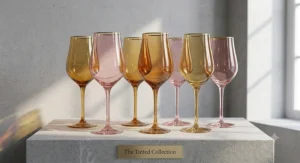
The short answer is that a tulip glass gives you meaningfully more of what you paid for in the bottle. Here’s what the spec sheet won’t tell you: two people drinking the exact same Champagne, one from a flute and one from a tulip, are having measurably different sensory experiences, because the wider bowl of a tulip increases the surface area available for volatile aroma compounds to escape into, while the tapered rim still funnels those aromas toward the nose rather than letting them scatter. Reviewers and sommeliers alike consistently note that older, more complex Champagnes — vintage bottlings, Blanc de Blancs, anything with real bottle age — benefit the most, since there’s simply more going on aromatically for the shape to reveal. Younger, brut non-vintage bottles are more forgiving; you can drink them happily from a flute and lose relatively little. But once you’re spending real money on a bottle with some age or pedigree, serving it in a flute is a bit like listening to a good record through a phone speaker — technically functional, but leaving real detail on the table.
Champagne Aroma Concentration: The Science of Glass Shape
Aroma concentration in a wine glass comes down to a fairly simple relationship between bowl width, rim diameter, and headspace. A wider bowl exposes more surface area of the wine to air, encouraging volatile compounds to evaporate and collect in the space above the liquid; a narrower rim then acts like a funnel, concentrating those compounds into a smaller exit point aimed roughly at your nose when you tilt the glass to drink. This is precisely the mechanical logic behind every glass on this list with a pronounced taper, from the Riedel Performance Tulip Champagne Glasses to the Zalto Denk’Art Universal Glass. Bubbles play a supporting role here too — as carbon dioxide rises and bursts at the surface, it carries aromatic compounds upward with it in a fine mist, which is part of why a moussing or sparkling point etched into the bottom of a glass (present in both the Schott Zwiesel Tulip Champagne Glass and Riedel Vinum Champagne Wine Glass) genuinely affects how much you smell, not just how the bubbles look. None of this requires expensive glassware specifically — it’s the shape doing the work, which is exactly why even the budget-friendly JoyJolt Layla Collection Champagne Glasses deliver a real aromatic improvement over a straight flute.
Best Champagne Glass Shape for Tasting
For genuine tasting purposes — meaning you’re evaluating a wine’s character rather than just enjoying it socially — the tulip shape and its close cousin the ISO-standard tasting glass are the professional consensus, and for good reason. A tulip’s wider bowl gives you room to swirl and release aroma, while its narrower rim still concentrates that aroma into a useful stream rather than letting it dissipate into the room, which is why the Riedel Performance Tulip Champagne Glasses and Luigi Bormioli ISO Tasting Glasses both show up repeatedly in sommelier recommendations despite serving slightly different purposes. If you’re comparing multiple bottles side by side, the ISO-standard shape has a specific edge: because it’s a fixed, internationally recognized reference, it removes glass shape as a variable, so any differences you taste are actually coming from the wine. If you’re focused on a single special bottle rather than comparative tasting, a dedicated tulip champagne glass with a deeper bowl edges it out for sheer aromatic drama. Either way, a flute or coupe is the wrong tool for serious evaluation — reserve those for celebration, not analysis.
ISO Tasting Glass Explained: The Professional Standard
The ISO tasting glass refers to a specific, internationally codified shape defined by ISO 3591:1977, the International Organization for Standardization’s specification for a wine-tasting glass. The standard describes an elongated, egg-shaped bowl supported by a stem and base, roughly 6.1 inches tall with a 7.25-ounce capacity, with an opening narrower than the bowl’s widest point specifically to concentrate aroma. It was developed decades ago by wine professionals seeking a consistent, neutral vessel for blind tastings and competitions, and it remains the glass of choice for institutions like the Wine & Spirit Education Trust and Master of Wine evaluations precisely because it removes glassware as a variable. Both the Luigi Bormioli ISO Tasting Glasses and Final Touch ISO/INAO Wine Tasting Glasses on this list conform to that spec, which is why they show up in serious home tasting kits rather than just at wedding receptions. What most buyers overlook is that this isn’t a Champagne-specific glass at all — it’s a general wine-tasting standard that happens to work exceptionally well for sparkling wine too, because the same aroma-concentrating logic applies regardless of what’s fizzing in the bowl.
Riedel Tulip Champagne Glasses: What Sets Them Apart
Riedel occupies a unique spot in this category because the company essentially pioneered the idea that glass shape should be engineered around a specific beverage rather than treated as interchangeable stemware. Founded nearly three centuries ago in Austria, Riedel’s Vinum line launched in 1986 as the first machine-made, varietal-specific glass collection in history, and the Champagne-focused shapes within it — including the Riedel Vinum Champagne Wine Glass and the more aggressively tapered Riedel Performance Tulip Champagne Glasses — carry that engineering pedigree forward. What separates Riedel’s tulip designs from generic alternatives is the attention paid to bowl geometry relative to rim diameter; the company’s own design language emphasizes that “the content commands the shape,” meaning every curve is theoretically justified by how it affects the wine rather than chosen for looks alone. Reviewers consistently credit Riedel glasses with making noticeable differences in side-by-side comparisons against generic stemware, particularly for wines with real aromatic complexity. The tradeoff is price and, in the Vinum line’s case, fragility from thinner lead crystal — but for buyers specifically searching out Riedel tulip champagne glasses, that pedigree and demonstrated performance is exactly what they’re paying for.
How to Choose a Tulip Shaped Champagne Glasses Set
Picking the right tulip shaped champagne glasses set comes down to seven practical criteria, roughly in order of importance for most buyers:
- Decide your primary use case first. Everyday sipping favors durable Tritan crystal like the Schott Zwiesel Tulip Champagne Glass; serious tasting favors ISO-standard shapes like the Luigi Bormioli ISO Tasting Glasses.
- Match capacity to your pour habits. A 10-13 ounce bowl gives more room for aroma to develop, while smaller 6-7 ounce glasses suit quick, frequent pours without waste.
- Consider dishwasher compatibility honestly. If you won’t hand-wash consistently, prioritize Tritan or tempered crystal over delicate lead crystal.
- Check set size against your actual gatherings. A set of four suits most households; sets of six work better for tasting groups or larger dinner parties.
- Weigh hand-blown against machine-made. Hand-blown glass like the Zalto Denk’Art Universal Glass offers a lighter feel and unique character, but at a real premium and with more fragility.
- Budget for breakage. Crystal stemware breaks eventually; buying a set with easily available replacements matters more than most buyers realize upfront.
- Factor in storage space. Taller tulip designs need more vertical cabinet clearance than squat coupes, so measure before you buy.
Common Mistakes When Buying Tulip Champagne Glasses
The most frequent mistake is buying based on looks alone and ending up with a narrow, flute-adjacent shape marketed loosely as “tulip” without the actual aroma-concentrating taper that defines the category — always check the bowl width relative to the rim before purchasing, not just the product photo. A second common error is assuming all crystal is created equal; lead crystal, lead-free crystal, and Tritan crystal all behave differently in terms of fragility, dishwasher safety, and long-term clarity, and buyers frequently discover this only after their “crystal” set clouds over in the dishwasher within months. Third, people often buy a single glass style for every occasion, when in reality a mixed approach — an everyday Tritan set plus one nicer glass for special bottles — serves most households better than committing entirely to one price tier. Fourth, buyers frequently skip checking capacity, ending up with glasses too small for how they actually pour, or too large for their cabinet space. Finally, a subtler mistake is ignoring stem length and thickness; thin, tall stems look elegant in photos but are genuinely more breakage-prone in households with kids, pets, or frequent guests, so match the design to your actual living situation rather than an idealized dinner party.
Long-Term Cost & Maintenance
| Glass Type | Typical Lifespan | Dishwasher Safe? | Replacement Cost Impact |
|---|---|---|---|
| Schott Zwiesel Tulip Champagne Glass (Tritan) | Years of regular use | Yes, tested to 2,000+ cycles | Low — set replacements affordable |
| Riedel Vinum Champagne Wine Glass (lead crystal) | Moderate, breakage-prone | Rated yes, hand-wash advised | Moderate — individual glasses replaceable |
| Zalto Denk’Art Universal Glass (hand-blown) | Fragile, careful handling required | Hand-wash strongly preferred | Higher — premium per-glass replacement cost |
The clear long-term value winner here is Tritan crystal — the Schott Zwiesel Tulip Champagne Glass costs more upfront per glass than basic soda-lime stemware, but its resistance to chipping, clouding, and dishwasher wear means you’re not repurchasing a full set every couple of years. Lead crystal options like the Riedel Vinum Champagne Wine Glass split the difference: gorgeous clarity and a lower price than hand-blown alternatives, but genuine fragility that adds up in replacement costs if your household is rough on stemware. Hand-blown glass, meanwhile, is a value proposition built on experience rather than durability — you’re paying for how it feels in the hand and on the lip, not for how many years it’ll survive, and that’s a fair trade only if you handle it with real care; Health Canada’s guidance on lead crystalware is also worth a quick read if you’re weighing lead crystal against lead-free alternatives for daily use versus special occasions.

FAQ
❓ What is a tulip champagne glass used for?
❓ Is a tulip glass better than a flute for champagne?
❓ How much do riedel tulip champagne glasses cost?
❓ What is an ISO tasting glass?
❓ Are tulip champagne glasses dishwasher safe?
Conclusion
Choosing between these seven tulip champagne glasses really comes down to being honest about how you actually drink Champagne, not how you imagine you might someday. If you’re pouring bubbly most weekends and want something that survives real life, the Schott Zwiesel Tulip Champagne Glass is the practical answer. If you’re building a home tasting habit and want to compare bottles fairly, the Luigi Bormioli ISO Tasting Glasses or the more affordable Final Touch ISO/INAO Wine Tasting Glasses give you a genuinely professional-grade tool without the professional price. For special-occasion drinking, the Riedel Performance Tulip Champagne Glasses and the Riedel Vinum Champagne Wine Glass both deliver that noticeable step up in aroma and presentation, while the Zalto Denk’Art Universal Glass is there for anyone ready to splurge on hand-blown Austrian crystal. And if budget is the deciding factor right now, the JoyJolt Layla Collection Champagne Glasses proves you don’t need to spend big to get a real improvement over a basic flute. Whatever you choose, the underlying lesson holds: the shape of the glass genuinely changes what you taste, and that’s a cheap upgrade compared to the cost of the Champagne itself.
✨ Ready to toast smarter? Check current prices on any of these seven picks above and pick the glass that actually matches how you drink — your next bottle deserves it.
Recommended for You
- 7 Best Coupe Glasses for Cocktails in 2026: Ultimate Buying Guide
- Champagne Coupe Glasses: 7 Stunning Picks for 2026
- Champagne Flutes Gift Set: 7 Stunning Picks for 2026
Disclaimer: This article contains affiliate links. As an Amazon Associate, I earn from qualifying purchases. If you purchase products through these links, we may earn a small commission at no additional cost to you.
✨ Found this helpful? Share it with your friends! 💬🤗
