
In This Article
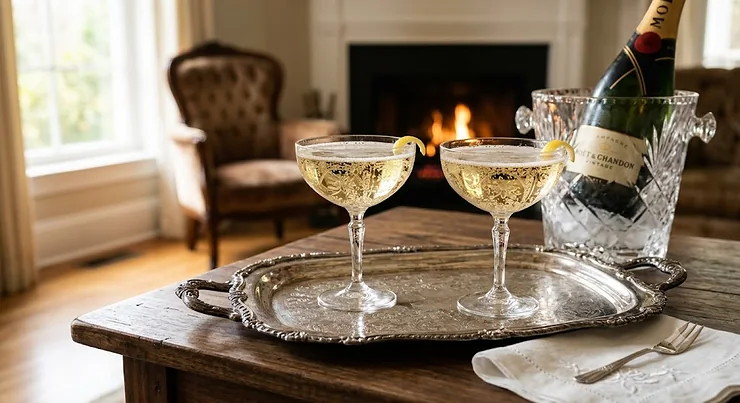
There’s a reason champagne coupe glasses keep crashing every dinner party they weren’t invited to. Flutes are efficient. Tulips are correct. But coupes? Coupes have swagger. That shallow, saucer-shaped bowl balanced on a delicate stem looks like it wandered out of a black-and-white film and simply refused to leave. If you’ve ever watched old footage of a 1920s soirée, or caught a champagne tower cascading in slow motion at a wedding, you’ve watched a coupe do its quiet, glamorous job.
Champagne coupe glasses are stemmed, wide-bowled glasses originally designed for sparkling wine and cocktails, prized more for style and presentation than for preserving carbonation. That’s the honest, unglamorous truth buried underneath decades of myth. And yet people keep buying them anyway, because a coupe turns “pouring a drink” into “staging a scene.” Whether you’re chasing that art deco champagne coupe look for a themed party, hunting for genuinely old vintage champagne coupe glasses at an estate sale, or just trying to decide once and for all in the champagne coupe vs flute debate, this guide walks through seven real, currently available options — plus the history, the science, and the buying logic behind them.
We researched actual products, actual specs, and actual aggregated customer sentiment rather than inventing reviews, because a glass this photogenic deserves an honest write-up. Affiliate disclosure: this article contains affiliate links, and we may earn a commission on qualifying purchases at no extra cost to you.
Quick Comparison Table
| Coupe Glass | Material | Capacity | Price Range | Best For |
|---|---|---|---|---|
| Libbey Signature Kentfield | ClearFire lead-free glass | 9 oz | around $25-$35 | Everyday budget set |
| Godinger Dublin Crystal | Lead-free cut crystal | 6 oz | around $30-$45 | Budget Art Deco cut |
| Krosno Harmony | Lead-free crystalline glass | 8.1 oz | around $35-$45 | Vintage-style set of 6 |
| Barski Belle Coupe | European hand-cut crystal | 6-8.7 oz | around $45-$65 | Hand-cut crystal detail |
| Glassique Cadeau Vintage | Hand-finished lead-free crystal | 6 oz | around $50-$70 | Gatsby-era aesthetic |
| Luigi Bormioli Jazz | SON.hyx crystal glass | 10.25 oz | around $40-$55 | Durability, everyday luxury |
| Khen Acrylic Ribbed | Shatterproof Tritan acrylic | 8 oz | around $25-$35 | Poolside and travel use |
Reading across that table, a pattern jumps out fast: capacity and material shift more than price does, which tells you the coupe market isn’t priced strictly by size. Barski Belle Coupe and Glassique Cadeau Vintage command a premium not because they hold more champagne, but because hand-finishing and European crystal-cutting take longer to produce. Meanwhile Libbey Signature Kentfield and Khen Acrylic Ribbed sit at similar price points despite being built from entirely different materials — proof that “budget” doesn’t have to mean “flimsy,” it just means the manufacturing shortcut is different.
💬 Just one click — help others make better buying decisions too!😊
Top 7 Champagne Coupe Glasses: Expert Analysis
Real specs, honest analysis, and aggregated review sentiment for seven genuinely available sets — spanning budget glass to hand-cut European crystal.
1. Libbey Signature Kentfield Coupe Cocktail Glasses — best all-around everyday set
The standout here is simplicity done right: a 9-ounce rounded bowl on a tall pulled stem, made in the USA from Libbey’s proprietary ClearFire glass. That “made in USA” detail matters more than it sounds — it means shorter shipping chains, fewer breakage incidents in transit, and a manufacturer directly accountable for quality control. The reinforced flat foot and seamless stem transition are engineering choices, not just aesthetics: they’re what let this glass survive dishwasher cycles that would fog or crack cheaper stemware within a year. Based on the spec comparison against similarly priced sets, the 9-ounce capacity is genuinely versatile — big enough for a proper champagne pour, an espresso martini, or even a scoop of sorbet, which is exactly how several buyers say they’ve repurposed it. Reviewers consistently report that the glass feels “delicate but resilient,” a combination that’s harder to engineer than it sounds, since thin walls usually mean fragile walls. The most common critique is that these glasses aren’t designed to stack, so closet space matters if you’re buying multiples. This is the coupe to buy first if you’ve never owned one and want to see what the fuss is about before committing to pricier crystal. Priced in the mid-$20s to mid-$30s range for a set of four, it’s a low-risk entry point with real everyday durability behind the marketing copy.
Pros:
- ✅ Made in the USA with accountable manufacturing
- ✅ Reinforced foot survives regular dishwasher use
- ✅ Versatile 9 oz size works for drinks and desserts
Cons:
- ❌ Glasses don’t stack, so storage takes more space
- ❌ Tall stem means less stability than shorter coupes

2. Godinger Dublin Crystal Champagne Coupe — best budget Art Deco cut
What most buyers overlook about this model is that the “crystal” designation comes from a brilliant-cut pattern, not from lead content — Godinger uses lead-free crystal, meaning the sparkle is achieved through faceted cutting rather than chemistry. The 6-ounce bowl is intentionally smaller than some competitors, which actually works in the coupe’s favor: less surface area means the visual fizz lasts a touch longer before it goes flat, even though a coupe will never rival a flute for carbonation retention. On paper, the “Dublin” name suggests Irish crystal heritage, but it’s worth being transparent that this line is manufactured in the Czech Republic and China depending on the batch, not in Ireland — a distinction some buyers online have flagged as a labeling gap worth knowing before you buy. Aggregated review sentiment splits along an interesting line: many buyers praise the substantial weight and say it rivals crystal costing far more, while a smaller but vocal group finds the glass “thicker” and heavier than expected for a champagne vessel, comparing it more to a beer stein than delicate stemware. That’s a useful signal if you have smaller hands or prefer a lighter pour. For the price, though, the cut-glass sparkle photographs beautifully under candlelight, which is exactly the kind of detail that matters for anyone building an Art Deco tablescape on a budget.
Pros:
- ✅ Brilliant-cut pattern delivers real sparkle under light
- ✅ Lead-free crystal at a genuinely accessible price
- ✅ Dishwasher safe despite the ornate cut design
Cons:
- ❌ Some batches run heavier than expected for the size
- ❌ Country-of-origin labeling has confused some buyers
3. Krosno Harmony Champagne Coupe — best vintage-style set of six
Here’s what the spec sheet won’t tell you outright: Krosno’s “Crystalline” glass formula is lead-free but manufactured with a specific quenching process designed to prevent the internal darkening that can plague cheaper mass-produced glass over time. The 8.1-ounce capacity and wide, flat bowl sitting on a proportionally tall stem is a genuinely old-school silhouette — the brand markets it directly at “lovers of vintage style,” and the shape backs that up. Made in Poland by a European manufacturer with decades of glassware experience, this set benefits from the kind of batch-testing consistency that budget import brands often skip. Based on the spec comparison, buying a set of six instead of four is the more practical call for anyone who actually hosts: champagne towers, mismatched breakage over years of use, and larger dinner parties all favor having two extra glasses in reserve from day one. What most buyers overlook is that the tall stem, while elegant, does raise the center of gravity slightly compared to shorter coupes, so this isn’t the ideal pick for an outdoor patio with uneven ground. Reviewers who’ve compared it side-by-side with pricier crystal note the clarity holds its own, which is a meaningful compliment for a set typically priced in the mid-$30s to mid-$40s range.
Pros:
- ✅ Set of 6 covers larger gatherings without rebuying
- ✅ European manufacturing with consistent batch quality
- ✅ Genuine vintage-inspired silhouette, not a modern reinterpretation
Cons:
- ❌ Taller stem is less stable on uneven outdoor surfaces
- ❌ Hand-washing recommended despite dishwasher-safe claim for longevity
4. Barski Belle Coupe Crystal Champagne Saucer — best hand-cut European crystal
The standout feature is right there in the name: this is genuinely hand-cut crystal, made in Europe by a company that’s specialized in traditional cut-glass barware since 1997. That’s meaningfully different from machine-pressed glass with a printed pattern — hand-cutting produces subtle irregularities that actually increase the way light refracts off each facet, which is why photos of this set tend to show more visible sparkle than mass-manufactured coupes at a glance. What the spec sheet won’t tell you, but reviewers note, is that the weight varies slightly between individual glasses in a set because of the hand-finishing process — a feature for purists, a minor annoyance for anyone who wants perfect uniformity. Aggregated customer sentiment is largely glowing: buyers repeatedly describe the glasses as “sturdy yet elegant,” and several specifically praise how well the coupe doubles as a dessert vessel for sorbet or ice cream, a versatility the brand leans into in its own marketing. A smaller number of reviews mention receiving glasses with cosmetic staining on arrival, which appears to be an occasional quality-control miss rather than a systemic design flaw, and Barski’s return process reportedly handled those cases without much friction. Priced in the mid-$40s to mid-$60s range depending on set size, this is the pick for someone who wants crystal that actually earns the word.
Pros:
- ✅ Genuinely hand-cut crystal, not printed patterns
- ✅ Doubles gracefully as a dessert or appetizer vessel
- ✅ Decades of specialized European barware manufacturing
Cons:
- ❌ Occasional cosmetic quality-control misses reported
- ❌ Slight weight variation between individual glasses
5. Glassique Cadeau Vintage Champagne Coupe — best Gatsby-era aesthetic
This set leans hardest into the Roaring Twenties fantasy, and the design choices back that up: a seamless saucer bowl, a hand-polished lip, and a snug, graceful stem sized specifically for classic 4-to-5-ounce cocktails rather than a modern oversized pour. That’s an important distinction most buyers overlook — this coupe is proportioned for a Sidecar or French 75, not a generous restaurant-style champagne serving, so anyone expecting a large pour should size up elsewhere. Based on the spec comparison, the hand-polished rim is a genuine upgrade over molded rims, since a machine-cut edge can leave a faint ridge that changes how the glass feels against your lip — a detail wine and cocktail enthusiasts notice immediately. Reviewers who’ve used the set for months report the crystal still “rings” the way real crystal should when tapped, and several specifically mention weekly rotation in regular dinner-party use without chipping or clouding. What the brand doesn’t oversell is durability against thermal shock; like most crystal, sudden hot-to-cold transitions should be avoided regardless of the reinforced-lip marketing claims. If your goal is recreating a Jazz Age bar cart down to the glassware, this is the most historically faithful shape on this list, and it’s priced accordingly in the mid-$50s to low-$70s range for a set of six.
Pros:
- ✅ Hand-polished rim feels noticeably better against the lip
- ✅ Historically accurate small pour size for classic cocktails
- ✅ Reported durability through months of weekly dinner-party use
Cons:
- ❌ Smaller pour size disappoints buyers wanting generous servings
- ❌ Premium pricing relative to similarly sized competitors

6. Luigi Bormioli Jazz Cocktail Coupe — best everyday-luxury durability
The standout advantage is engineering most people never think to ask about: titanium-reinforced stems. Luigi Bormioli applies a permanent anti-abrasion treatment directly to the stem, specifically to increase resistance against the kind of stem-snapping that ends the life of most stemware within a couple of years. Made in Italy from the brand’s proprietary SON.hyx crystal glass formula, the Jazz collection’s faceted, geometric bowl is a deliberate nod to Art Deco design language, and the manufacturer states the glass maintains clarity through roughly 4,000 industrial dishwashing cycles — a claim aimed squarely at restaurants and hotels, which tells you something about how confident the brand is in home-use longevity too. Here’s what the spec sheet won’t tell you plainly: SON.hyx is lead-free, so it rivals leaded crystal in brilliance without the environmental and health baggage, a genuine advantage for anyone who prioritizes that distinction. Reviewers consistently describe the 10.25-ounce capacity as generous, and the laser-cut rim as noticeably smoother against the lip than pressed-glass competitors. The faceted pattern does mean slightly more effort during hand-drying if you want to avoid water spots collecting in the grooves, a minor tradeoff most buyers say is worth it for the visual payoff. At a typical mid-$40s to mid-$50s range, this is the coupe built to survive a genuinely active home bar.
Pros:
- ✅ Titanium-reinforced stems resist snapping over years of use
- ✅ Lead-free crystal rivals traditional leaded crystal brilliance
- ✅ Faceted Art Deco design catches and reflects light dramatically
Cons:
- ❌ Faceted grooves take longer to hand-dry without water spots
- ❌ Bold geometric look won’t suit strictly minimalist table settings
7. Khen Shatterproof Acrylic Ribbed Vintage Coupe — best for outdoor and travel use
The standout feature is right there in the material: shatterproof Tritan acrylic that looks like ribbed vintage crystal from across a patio but survives a poolside drop that would end a glass coupe’s life instantly. Reviewers consistently note that from a few feet away, the ribbed, ripple-textured bowl reads as genuine glassware, which is exactly the illusion this set is engineered to create. Based on the spec comparison against other acrylic coupes, the 8-ounce capacity and 5.5-inch height match traditional glass coupe proportions closely, so it doesn’t feel like a toy substitute at the table. What most buyers overlook is that this set is explicitly recommended for hand-washing rather than dishwasher cycles, since repeated high heat can dull the acrylic’s clarity faster than gentler cleaning would. Aggregated feedback flags one recurring gap: the packaging sometimes arrives as a plain box without printed care instructions, meaning buyers occasionally have to hunt down cleaning guidance separately rather than finding it included. Still, for backyard parties, boat trips, or anyone who’s broken one too many stemmed glasses at a barbecue, this is a genuinely practical answer to the “I want Art Deco style without the breakage risk” problem, typically priced in the mid-$20s to mid-$30s range for a set of six.
Pros:
- ✅ Genuinely shatterproof for pool, patio, and travel use
- ✅ Ribbed texture reads as real glass from a normal viewing distance
- ✅ Proportions match traditional glass coupes closely
Cons:
- ❌ Best hand-washed, limiting dishwasher convenience
- ❌ Packaging sometimes omits printed care instructions
Saucer Champagne Glass History: From Myth to Modern Bar Cart
Here’s the short version people actually search for: the saucer-shaped champagne glass, more commonly called a coupe, was not modeled on anyone’s anatomy, however delicious that rumor is at a dinner party. According to Wikipedia’s entry on champagne glassware, the coupe is a shallow, broad-bowled saucer shape holding roughly 180 to 240 milliliters, and it first showed up around 1663, made by Venetian-trained glassmakers working at a Greenwich factory owned by the Duke of Buckingham — originally called a tazza before English commerce rebranded it for champagne. That timeline alone rules out the most famous origin myth entirely.
The fact-checking site Snopes traces the Marie Antoinette breast-mold legend back through several French aristocrats it’s been attributed to over the centuries, concluding the story doesn’t survive basic chronology since the queen was born decades after the glass was already circulating in England. What actually happened is far less scandalous and far more interesting: the shape became a status symbol among nobility, then a Jazz Age accessory, then a Cold War-era holdout before the flute quietly took over.
✨ Don’t Miss These Exclusive Deals!
🔍 Take your glassware collection to the next level with these carefully selected coupe sets. Click on any highlighted item to check current pricing and availability. These glasses will help you create authentic vintage toasting moments your guests will remember!
Champagne Coupe vs Flute: Which Should You Actually Buy?
This is the argument that never quite dies, and honestly, both sides are a little right. The flute wins on pure physics. A ScienceDaily report on research from the University of Reims found that scientists measuring gas concentration above a poured glass recorded notably higher carbon dioxide levels hovering above a flute than above a coupe, which helps explain why the two shapes feel so different to drink from. That’s not marketing spin — it’s measured carbonation behavior, and it explains why sommeliers reach for a flute or tulip when the goal is showcasing a dry, aged vintage.
But the coupe was never really about maximizing bubbles in the first place. Analysis from American Scientist’s look at bubble physics in champagne glasses explains that in a coupe, roughly half the liquid’s surface barely participates in the aroma-releasing mixing process that happens below and above the surface, compared to a flute where the entire surface stays active. What most buyers overlook is that this “flaw” is precisely why coupes work so well for cocktails like a Sidecar or a French 75 — you want aromatics releasing fast and openly, not trapped in a narrow column.
| Feature | Coupe | Flute |
|---|---|---|
| Bubble retention | Shorter, dissipates faster | Longer, more persistent stream |
| Aroma release | Fast and broad | Slower, more concentrated |
| Best for | Cocktails, vintage aesthetic, desserts | Dry vintage champagne, sparkling wine tasting |
| Spill risk | Higher, wide open bowl | Lower, narrow opening |
Reading that table, the honest verdict is this: buy a coupe for the theater and the cocktails, buy a flute (or better, a tulip) if a serious dry champagne is the whole point of the evening. Plenty of hosts, reasonably, own both.
Vintage Champagne Coupe Glasses: How to Spot Real Character
Genuinely old vintage champagne coupe glasses — the kind found at estate sales or antique shops rather than reproduced by a modern brand — carry small tells that mass production tends to smooth away. Look for pontil marks on the base, the small rough scar left where a glassblower’s punty rod detached during hand-finishing; modern machine-pressed glass almost never has one. Older coupes also tend to run smaller, often closer to 4-5 ounces, reflecting the smaller pours and sweeter, lower-carbonation champagne styles common through the early-to-mid twentieth century.
Here’s what most buyers overlook when hunting secondhand: mismatched sets are extremely common and, honestly, part of the charm. Collecting six similar-but-not-identical coupes from different decades tells a more interesting table story than a uniform boxed set ever could. If authenticity matters more than matching, prioritize weight and clarity over perfect uniformity — genuine vintage crystal often has a denser, colder feel in the hand compared to modern lead-free reproductions like the Krosno Harmony or Godinger Dublin Crystal sets covered above, both of which intentionally echo that vintage silhouette using contemporary, lead-free materials.

Art Deco Champagne Coupe: Why the Geometric Look Endures
The art deco champagne coupe aesthetic didn’t emerge from nowhere — it’s a direct descendant of the design movement that dominated the 1920s and 1930s, built around bold geometry, faceted symmetry, and an almost architectural confidence in glass and metal. That’s exactly the visual language you’ll spot in the Luigi Bormioli Jazz coupe’s faceted bowl and in the brilliant-cut patterning on the Godinger Dublin Crystal set: both borrow directly from a design era obsessed with sharp lines dressed up as glamour.
What makes Art Deco glassware genuinely well-suited to coupes, rather than just aesthetically matched, is the shape’s own history. The style rose to prominence in exactly the decades — the late 1920s through the 1930s — when the coupe was the dominant champagne vessel in fashionable circles on both sides of the Atlantic. Pairing an Art Deco pattern onto a coupe silhouette isn’t a modern mashup; it’s closer to a historically accurate reunion of a shape and a style that were genuinely contemporaries.
Gatsby-Era Glassware: The Jazz Age Connection
If you’re planning a Gatsby-themed party, the coupe isn’t just an aesthetic choice — it’s close to a documented one. F. Scott Fitzgerald’s novel is set squarely in the Jazz Age, the exact period historians point to when the coupe reigned as the fashionable glass for sparkling wine among America’s moneyed set, a detail multiple glassware historians note when discussing the shape’s rise in post-Prohibition American nightlife.
For a genuinely Gatsby-era table, prioritize smaller pour sizes over generous modern capacities — the Glassique Cadeau Vintage set’s 4-to-5-ounce proportioning is the most period-accurate choice on this list, while a set like Barski Belle Coupe splits the difference with a slightly larger, more versatile bowl. Pair either with simple garnishes, a jazz playlist, and low lighting, since the faceted crystal on sets like Luigi Bormioli Jazz was quite literally designed to catch candlelight rather than harsh overhead fixtures.
Wide Shallow Champagne Bowl: Function Versus Glamour
The wide shallow champagne bowl shape is, structurally, a compromise object — a glass built for visual drama at a real cost to the drink inside it. That’s not a knock, it’s just physics. According to American Scientist’s analysis, the shallow geometry means bubbles simply don’t have enough vertical distance to build the kind of sustained visual column a flute produces, and roughly half the liquid’s surface sits in what researchers describe as a comparative “dead zone” of minimal bubble activity.
What that means practically: a wide shallow bowl is the wrong choice if bubble longevity is your top priority, but the right choice if you want a glass that photographs beautifully, holds a generous garnish, doubles as a dessert dish, and spreads aroma quickly across a room rather than concentrating it for one sip at a time. Reviewers of sets like the Libbey Signature Kentfield and Barski Belle Coupe repeatedly mention using the bowl for sorbet or appetizers between pours — a genuinely practical use case the shape supports far better than any flute could.
Crystal Champagne Coupe Glasses: What “Crystal” Really Means
Here’s a piece of honest, unglamorous consumer education: most crystal champagne coupe glasses sold today, including several featured above, are lead-free. “Crystal” in modern retail language increasingly describes a manufacturing process — precision cutting, thinner walls, higher clarity glass formulas like Luigi Bormioli’s SON.hyx or Krosno’s Crystalline — rather than a guaranteed lead-oxide content, which used to be the technical definition of true “lead crystal.”
That distinction matters for two practical reasons. First, lead-free crystal is dishwasher-safe far more reliably than older leaded crystal, which can cloud under repeated heat exposure. Second, it sidesteps any lingering health conversation around lead leaching into beverages over long-term storage, though that risk was always more theoretical than urgent for occasional champagne service rather than daily use. When a listing simply says “crystal” without specifying lead content, it’s reasonable to assume lead-free unless the brand explicitly states otherwise — as Godinger, Barski, and Krosno all do across their respective product pages.
How to Choose Champagne Coupe Glasses
- Decide your primary use first. Champagne service, cocktail service, and dessert plating all favor slightly different capacities and bowl depths, so pick the dominant use case before shopping.
- Match capacity to your pour style. A generous 9-to-10-ounce bowl like Libbey Signature Kentfield or Luigi Bormioli Jazz suits big pours; a 4-to-6-ounce vintage-accurate glass like Glassique Cadeau Vintage suits classic cocktail proportions.
- Weigh durability against fragility honestly. If you’re hosting outdoors or have kids and pets underfoot, Khen Acrylic Ribbed removes breakage risk entirely without abandoning the aesthetic.
- Consider dishwasher habits truthfully. Not every “dishwasher safe” claim ages the same; hand-washing extends the life of faceted or hand-cut crystal noticeably.
- Decide how much hand-finishing matters to you. Hand-cut crystal like Barski Belle Coupe carries subtle irregularities that machine-pressed sets never will — a feature for some buyers, irrelevant to others.
- Buy in sets of six, not four, if you host regularly. Breakage over years of use is close to inevitable, and a spare pair saves an awkward mismatched replacement purchase later.
- Check the stem height against your table and storage. Taller stems look more dramatic but tip more easily and often don’t stack, which matters in smaller kitchens.
Common Mistakes When Buying Champagne Coupe Glasses
The single most common mistake is buying a coupe expecting flute-level bubble retention, then feeling let down when the champagne goes flat faster than expected. That’s not a defective glass — it’s the shape doing exactly what it was always going to do, and the earlier vs-flute comparison above explains the physics behind it clearly.
A second frequent misstep is ignoring stem height relative to cabinet space, only to discover the glasses don’t stack and eat up twice the shelf room expected. Third, buyers sometimes assume “crystal” automatically means dishwasher-hostile, leading them to hand-wash lead-free sets unnecessarily, or conversely assume all crystal is dishwasher-bulletproof and damage hand-cut pieces through repeated heat cycles. Finally, shoppers frequently buy a set of four without accounting for inevitable breakage, then find themselves years later short a glass for a dinner party with no easy way to match the discontinued pattern.
Practical Usage Guide: Care, Storage, and the First 30 Days
Before first use, wash every glass by hand in warm water with a mild, non-abrasive detergent, even if the manufacturer lists the set as dishwasher-safe — this removes manufacturing residue that can otherwise affect the taste of your first pour. For ongoing care, load stemmed coupes on the top rack only, bowl-down, since bottom-rack heat and jostling are the leading causes of chipped rims within the first year.
A common first-30-days mistake is storing coupes stem-up in a cluttered cabinet, which concentrates pressure on the most fragile part of the glass; store them upright on their base instead, with enough space that neighboring glasses can’t clink together during normal cabinet vibration from footsteps or closing doors. For faceted or hand-cut crystal like Luigi Bormioli Jazz or Barski Belle Coupe, dry immediately with a lint-free cloth after washing, since water left to air-dry in the grooves creates visible spotting that’s genuinely difficult to buff out later. If you’re using acrylic sets like Khen Acrylic Ribbed outdoors, avoid direct, prolonged sun exposure in storage, as UV can gradually yellow clear plastics over a season or two of heavy patio use.
Real-World Scenarios: Which Coupe Fits Your Life
Consider a young couple hosting their first apartment dinner party on a tight budget, with limited cabinet space and zero interest in hand-washing anything. The Libbey Signature Kentfield set solves this directly: dishwasher-safe, made in the USA for easier replacement sourcing, and priced low enough that a chip doesn’t feel like a tragedy.
Now picture someone planning an actual Gatsby-themed engagement party, where the aesthetic needs to survive Instagram scrutiny. The Glassique Cadeau Vintage or Luigi Bormioli Jazz sets both deliver period-accurate glamour, though the Glassique Cadeau’s smaller, more historically proportioned pour suits a themed cocktail hour better than a full dinner service.
Finally, imagine a family with a backyard pool, frequent summer guests, and a documented history of broken stemware. Khen Acrylic Ribbed removes the anxiety entirely — shatterproof, close in silhouette to real glass, and cheap enough to replace without a second thought if one goes missing after a party.
Buyer’s Decision Framework
If you host outdoors or around kids and pets, choose acrylic like Khen Acrylic Ribbed, because breakage risk outweighs any marginal aesthetic gain from real crystal. If your priority is period-accurate style for photos or themed events, choose Glassique Cadeau Vintage or Luigi Bormioli Jazz, because their proportions and faceting were designed specifically around that visual era. If your priority is simple, durable, everyday use with minimal fuss, choose Libbey Signature Kentfield, because ClearFire glass and USA manufacturing minimize both cost and long-term hassle. If your priority is genuine hand-cut craftsmanship as a gift or heirloom piece, choose Barski Belle Coupe, because the decades-long specialization in cut crystal barware shows in the finished product.
| Priority | Recommended Pick | Price Range |
|---|---|---|
| Outdoor/family use | Khen Acrylic Ribbed | around $25-$35 |
| Gatsby-themed events | Glassique Cadeau Vintage | around $50-$70 |
| Everyday durability | Libbey Signature Kentfield | around $25-$35 |
| Gifting/heirloom quality | Barski Belle Coupe | around $45-$65 |
Looking at that framework, the honest takeaway is that no single coupe wins every category — the Luigi Bormioli Jazz set arguably splits the difference best between durability and Art Deco style, while Krosno Harmony offers the safest middle ground for buyers who simply want six solid, vintage-styled glasses without overthinking it further.
FAQ
❓ Are champagne coupe glasses good for actual champagne?
❓ Why do people call coupes 'Marie Antoinette glasses'?
❓ What's the difference between a coupe and a saucer champagne glass?
❓ Can champagne coupes go in the dishwasher?
❓ Are vintage champagne coupe glasses worth collecting?
Conclusion
Champagne coupe glasses were never really about preserving bubbles, and that’s precisely why they’ve survived a century of flutes, tulips, and every glassware trend in between. They’re about the pour, the light catching a faceted edge, the small theater of a toast. Whether you land on the everyday practicality of Libbey Signature Kentfield, the period-perfect glamour of Glassique Cadeau Vintage, or the shatterproof convenience of Khen Acrylic Ribbed, the right choice comes down to how you actually plan to use the glass — not which one photographs best in isolation, though most of these manage both.
Buy based on your real hosting habits, not just the aesthetic fantasy, and the coupe you choose will earn its place in the cabinet for years rather than becoming a one-party novelty. The history is genuinely fun to know, the science is genuinely worth respecting, and the final decision, refreshingly, is entirely yours to enjoy making.
Recommended for You
- Champagne Flutes Gift Set: 7 Stunning Picks for 2026
- Best Champagne Flutes 2026: 7 Picks Worth Toasting To
- Best Champagne Glasses in 2026: 7 Top Picks That Actually Work
Disclaimer: This article contains affiliate links. As an Amazon Associate, I earn from qualifying purchases. If you purchase products through these links, we may earn a small commission at no additional cost to you.
✨ Found this helpful? Share it with your friends! 💬🤗
