
In This Article
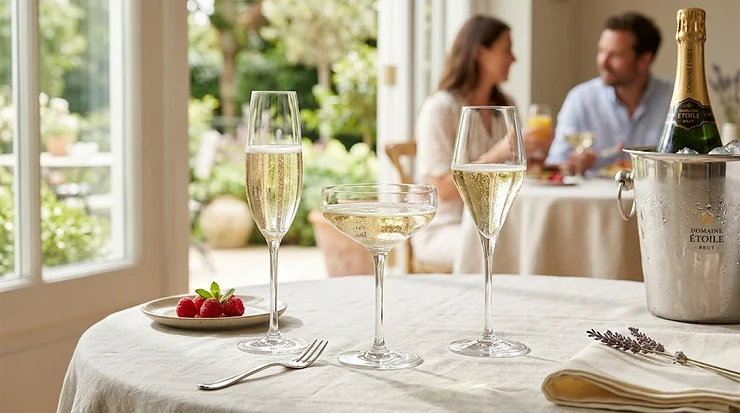
Here’s a confession: for years I poured good champagne into whatever glass was closest to the dish rack, and I genuinely thought that was fine. It isn’t. The best champagne glasses are simply the vessels that hold enough sparkling wine, at the right shape, to keep bubbles rising and aromas concentrated for more than the first sixty seconds — a tulip or flute with a narrow rim, a sturdy stem, and (ideally) a nucleation point etched into the base does this job far better than a random kitchen tumbler. Shape isn’t a marketing gimmick here; it changes how fast your wine goes flat, how the bouquet reaches your nose, and honestly, how good you look holding it at a party. This guide breaks down seven real, currently available options across every budget, plus the actual science of why your glassware choice matters more than you’d think.
We’ll cover flutes, tulips, and even a couple of stemless options, compare them head-to-head, and walk through exactly how to pick the right set for your kitchen cabinet, your wedding registry, or your New Year’s Eve party. A research team that has spent decades studying champagne bubbles has documented just how much glass shape changes fizz behavior — this isn’t just marketing talk. No fluff, no invented five-star reviews — just real products, honest trade-offs, and enough detail that you won’t need to read another glassware article this year.
Quick Comparison Table
| Glass | Style | Set Size | Price Range | Best For |
|---|---|---|---|---|
| Libbey Stemless Champagne Flute | Stemless flute | 12 | Under $40 | Big parties, everyday casual use |
| JoyJolt Milo Champagne Flutes | Stemless crystal flute | 8 | $30–$45 | Budget-friendly daily drinking |
| Spiegelau Style Champagne Flutes | Stemmed flute | 4 | $30–$40 | Best value German crystal |
| Luigi Bormioli Crescendo Flute | Stemmed flute | 4 | $35–$50 range | Elegant gifting and dinner parties |
| Riedel Ouverture Champagne | Stemmed flute | 4 | $40–$55 range | Entry-level Riedel quality |
| Zwiesel Glas Pure Champagne | Stemmed flute, effervescence point | 4 | $50–$65 range | Maximum bubble retention |
| Riedel Extreme Rosé/Champagne | Tulip | 2 | $60–$80 range | Serious tasting and premium gifting |
Looking at this lineup, you’ll notice the price climbs alongside two things: crystal quality and engineered bubble science, not just brand prestige. If you’re hosting a big New Year’s bash, the Libbey and JoyJolt sets win on sheer glass-per-dollar value, while anyone chasing the fullest aromatic experience should skip straight to the Zwiesel or Riedel tulip further down. Budget-conscious buyers can stop worrying about “which is objectively best” and instead match the glass to the occasion — a lesson that applies to basically every purchase in this guide.
💬 Just one click — help others make better buying decisions too!😊
💬 Found a favorite already? One click on any glass above helps you compare current pricing before you commit!😊
Top 7 Champagne Glasses: Expert Analysis
1. Libbey Stemless Champagne Flute Glasses, Set of 12 — best bulk set for big gatherings
If you’ve ever hosted a wedding shower and watched guests casually set down stemmed glasses on a hardwood table (cringe), you’ll understand why stemless flutes exist. This Libbey set skips the stem entirely, trading a bit of formality for serious stability and dishwasher durability. Each glass holds roughly 8.5 ounces, tall and narrow enough to keep a respectable bubble column running, and the tempered soda-lime glass shrugs off the kind of accidental knocks that would chip pricier crystal. Based on the spec comparison with other stemless sets, twelve glasses at this price point makes it the strongest per-glass value in this entire roundup — you’re essentially buying insurance against breakage along with your glassware. Reviewers consistently report that these hold up well through repeated dishwasher cycles without clouding, though a few mention the glass is noticeably heavier than European crystal, which some see as reassuring heft and others see as a minor ding on elegance. This is the pick for anyone who entertains often and doesn’t want a shattered glass to ruin the night.
Pros:
- ✅ Twelve glasses cover large parties without rebuying
- ✅ Stemless design resists tipping and stem snaps
- ✅ Dishwasher-safe and budget-friendly for frequent use
Cons:
- ❌ Heavier feel compared to crystal alternatives
- ❌ Less formal look for upscale table settings
Priced under $40, this set delivers the best cost-per-glass in the lineup — if you need volume more than prestige, this is your winner.
2. JoyJolt Milo Stemless Champagne Flutes, Set of 8 — most crystal clarity for the price
JoyJolt built a reputation on crystal-clear glassware at non-crystal prices, and the Milo line follows that formula closely. The eight-glass set uses a lead-free crystal blend that catches light noticeably better than standard soda-lime glass, which matters more than people expect — clarity affects how the color and bubble stream actually look in the glass, not just the taste. What most buyers overlook about stemless crystal is that it still narrows toward the rim like a traditional flute, so you’re not sacrificing bubble retention just because there’s no stem; the shape does the real work. Aggregated customer feedback on this line frequently mentions the glasses look and feel more expensive than their price suggests, alongside occasional notes that a couple of glasses in the box arrived with minor imperfections — a common risk with mass-produced crystal that a quick inspection on delivery usually resolves. For anyone who wants that stemmed-glass sparkle without babysitting a fragile stem through the dishwasher, Milo is a smart middle ground between the Libbey set and pricier German crystal further down this list.
Pros:
- ✅ Lead-free crystal clarity at a budget price
- ✅ Stemless shape still narrows to preserve bubbles
- ✅ Set of 8 works well for medium-sized gatherings
Cons:
- ❌ Occasional quality-control inconsistency reported
- ❌ Less classic silhouette than stemmed flutes
In the $30–$45 range, this is where crystal clarity and everyday practicality meet without breaking a budget.
3. Spiegelau Style Champagne Flutes, Set of 4 — best value German crystal flute
Spiegelau has been making glass since the 16th century, and the Style collection is where that manufacturing pedigree meets modern affordability. Made in Germany from non-leaded crystal, each 8.5-ounce flute has a slender stem and tapered bowl designed specifically to funnel aroma while slowing carbonation loss — the kind of engineering that used to be reserved for glassware twice this price. Here’s what to weigh: because Spiegelau glasses are machine-made rather than hand-blown, you get consistent wall thickness across all four glasses, which honestly matters more for bubble longevity than most people realize, since uneven glass thickness creates uneven nucleation. Reviewers frequently praise the durability and dishwasher-safe convenience, noting that these have survived years of regular use without clouding or chipping, which is a real point in Spiegelau’s favor against more delicate hand-blown competitors. If your goal is genuinely good champagne glasses set of 4 without stepping into luxury pricing, this is the one to add to cart first.
Pros:
- ✅ German-made crystal at a mid-tier price point
- ✅ Slender stem and tapered bowl aid bubble retention
- ✅ Dishwasher-safe despite the elegant crystal look
Cons:
- ❌ Simpler design than hand-cut premium sets
- ❌ Only available in a set of 4, no larger bundle
At around $30–$40, this set is the benchmark other mid-range flutes get compared against.
4. Luigi Bormioli Crescendo Champagne Flute, Set of 4 — most elegant Italian flute
Luigi Bormioli brings an Italian design sensibility to this set, and it shows the moment you pick one up — the bowl has a subtle, graceful curve that reads as more sculptural than the average flute. Each glass holds about 8.25 ounces and uses the brand’s SON.hyx glass technology, which is engineered to resist scratching and clouding far longer than standard glass formulations, something that becomes noticeable after a couple years of regular dishwasher cycles when lesser glasses start looking dull. On paper this means you’re paying a bit more upfront for a glass that photographs beautifully on a table setting and ages more gracefully than budget alternatives — a genuinely fair trade for anyone building a gift registry or hosting dinner parties where presentation matters. User reviews commonly single out the sparkle and weight-in-hand as standout qualities, with a smaller number of buyers noting the stems feel delicate enough that hand-washing is worth the extra ten minutes. If you’re shopping specifically for elegant champagne glasses to use as a wedding gift, this set punches well above its price bracket.
Pros:
- ✅ Distinctive Italian silhouette elevates table presentation
- ✅ SON.hyx glass resists clouding and scratching over time
- ✅ Strong gift-giving appeal for weddings and showers
Cons:
- ❌ Delicate stems benefit from hand-washing
- ❌ Premium look comes with a higher price than basic flutes
Sitting in the $35–$50 range, this set earns its place through longevity and looks rather than raw bubble science.
5. Riedel Ouverture Champagne Glasses, Set of 4 — best entry point into Riedel
Riedel is the family-owned Austrian glassmaker credited with proving, decades ago, that the shape of a glass genuinely changes how a beverage tastes, and the Ouverture line is their answer to “I want real Riedel without the crystal price tag.” Each machine-blown glass in this entry-level series holds a generous pour and stands tall on a slender stem, with a wider bowl than the German flutes above it in this list — this isn’t a traditional flute shape so much as a compact tulip, which changes the calculus a bit. Based on the spec comparison, the wider bowl trades a small amount of bubble retention for noticeably better aroma release, which honestly makes more sense if you’re drinking vintage or prestige cuvée champagne rather than basic sparkling wine at a toast. Reviewers frequently describe these as “the glass that got them into Riedel,” citing the thin, polished rim as a small but real upgrade over thicker budget glassware. The trade-off is that these are less specialized for pure bubble-column theatrics than a true flute — so if vertical bubble streams matter more to you than aroma, look at the Spiegelau or Zwiesel picks instead.
Pros:
- ✅ Real Riedel engineering at an accessible price
- ✅ Wider bowl improves aroma release for complex cuvées
- ✅ Thin, polished rim improves wine flow onto the tongue
Cons:
- ❌ Less pure bubble retention than a narrow flute
- ❌ Machine-made, not the hand-blown premium tier
Landing around $40–$55, this is the smart move for anyone curious about Riedel’s reputation without committing to hand-blown pricing.
6. Zwiesel Glas Pure Champagne Glass, Set of 4 — best engineered bubble retention
This is the glass built specifically to answer the question “champagne bubble retention: does the glass actually matter?” — and the answer is written right into the base. Zwiesel’s Pure Champagne glasses use Tritan crystal (a break-resistant, dishwasher-safe formulation out of Germany) combined with an effervescence point etched into the bottom of the bowl, which acts as a deliberate nucleation site so CO2 has somewhere consistent to escape from, rather than randomly along scratches and dust particles. What most buyers overlook about laser-etched nucleation points is that they don’t just look pretty in photos — peer-reviewed sparkling wine research explains that glassmakers began etching glasses this way specifically to give tasters consistent, reproducible effervescence, rather than the unpredictable fizz you get from an ordinary glass. Reviewers note the visual effect is genuinely striking, describing a steady, thin column of bubbles rising in one continuous stream rather than sputtering out within a minute — which lines up with published research on how nucleation sites behave. For anyone who wants their sparkling wine to look and stay lively for the length of a toast, this is the most technically engineered pick on this list.
Pros:
- ✅ Laser-etched effervescence point for consistent bubble streams
- ✅ Tritan crystal is dishwasher-safe and break-resistant
- ✅ Noticeably longer visual fizz than standard flutes
Cons:
- ❌ Higher price than basic flutes without the tech
- ❌ Effervescence point can dull slightly after years of dishwasher use
In the $50–$65 range, this set justifies its price with genuine, measurable bubble-retention engineering rather than marketing language.
7. Riedel Extreme Rosé/Champagne Wine Glass, Set of 2 — best tulip for serious tasting
This is the glass sommeliers actually reach for, and it looks almost nothing like the flutes above it on this list. The Riedel Extreme is tulip-shaped — wider through the middle, tapering back in at the rim — a design that releases aroma and lets flavor develop in the wider bowl while still holding onto bubbles better than a coupe ever could. Based on the spec comparison, this shape sacrifices a bit of the dramatic vertical bubble show you get from a narrow flute in exchange for a meaningfully more complex aromatic experience, which is exactly the trade professional tasters are willing to make. Reviewers who’ve upgraded from standard flutes consistently note they can smell more of the wine’s character — brioche, citrus, or mineral notes that got lost in a narrower glass — though a couple mention the optic-textured bowl makes hand-washing slightly trickier than a plain surface. Sold as a set of just two, this isn’t meant for party service; it’s meant for the nights you’ve opened something worth actually tasting rather than just toasting.
Pros:
- ✅ Tulip shape balances aroma and bubble retention
- ✅ Sommelier-preferred design for serious tasting
- ✅ Excellent for vintage or prestige cuvée champagne
Cons:
- ❌ Only comes as a pair, not a full party set
- ❌ Optic bowl texture takes slightly more care to clean
At around $60–$80 for the pair, this is a splurge for people who care more about what’s in the glass than how many glasses are in the cupboard.
Practical Usage Guide: Setup, Care & First Pours
New glasses aren’t quite ready straight out of the box. Rinse each one with hot water and a small amount of unscented dish soap before first use — factory residue and cardboard dust can dull both clarity and bubble formation on the very first pour, which is a frustrating way to break in a new set. When you actually pour, tilt the glass at roughly a 45-degree angle, just like pouring a beer, then straighten as it fills; this single habit preserves more dissolved CO2 than almost anything else you can do. Chill glasses in the fridge for 15–20 minutes before a party rather than relying on ice, since ice can leave water spots on crystal. For the first thirty days, hand-wash whenever possible even if the label says dishwasher-safe, just to build a feel for how fragile the stems really are before you trust them to a machine cycle. A common mistake is stacking flutes rim-to-rim in a cabinet — the thin glass chips more easily than you’d expect, so store them upright with a bit of space between each one.
✨ Ready to Build Your Bar Cart?
🥂 Grab a set from this list and start pouring like you mean it — check current pricing on any glass above before your next celebration!
Real-World Scenarios: Which Champagne Glass Fits Your Life
Picture a college grad hosting her first apartment holiday party on a tight budget, expecting a dozen friends and at least a couple of broken dishes by midnight — the Libbey stemless twelve-pack is built exactly for this, cheap enough to replace without guilt and stable enough to survive a crowded coffee table. Now picture a couple registering for wedding gifts who want something that photographs well in every toast picture for the next decade — the Luigi Bormioli Crescendo or Riedel Ouverture both deliver that elegant champagne glasses look guests will actually remember, without needing a sommelier’s budget. Finally, picture someone hosting an intimate New Year’s Eve dinner for four, pouring a genuinely nice bottle they’ve been saving, wanting every sip to actually taste like something — that’s the Zwiesel Pure or Riedel Extreme tulip, chosen specifically because the shape does real, measurable work on aroma and bubble life rather than just looking nice on a shelf. Matching the glass to the actual occasion, rather than buying whatever looks fanciest online, is the single best upgrade most people never make.
Problem → Solution: Fixing Common Champagne Glass Complaints
Flat bubbles within a minute of pouring almost always trace back to two things: a dirty glass (invisible detergent residue kills nucleation) or the wrong shape entirely, so switch to a narrow flute or an etched-nucleation glass like the Zwiesel Pure before blaming the wine. Cloudy glasses after repeated dishwasher cycles usually come from hard water mineral buildup — a quick soak in equal parts vinegar and water for ten minutes restores most of the sparkle without scrubbing. Broken stems during storage are almost always a cabinet-crowding problem, solved permanently by a hanging stemware rack instead of shelf storage. If you’re drinking rosé or off-dry sparkling wine and the flute feels too narrow to smell anything, that’s a genuine mismatch — a tulip like the Riedel Extreme solves this instantly by widening the aromatic surface area. And if you’re nervous about lead content in older or gifted crystal, a quick weight test (lead crystal feels notably heavier for its size) combined with checking the manufacturer’s “lead-free” labeling settles the question fast.
What Is the Best Champagne Glass?
The best champagne glass is a tall, narrow-rimmed flute or tulip with a smooth or laser-etched interior surface that supports steady bubble nucleation while a tapered rim concentrates aroma toward the nose. There isn’t a single universal winner — flutes maximize the visual bubble show, tulips maximize aroma and flavor complexity, and coupes maximize vintage style at the cost of both. Your best pick depends on whether you’re toasting or actually tasting.
Types of Champagne Glasses: Flute vs Tulip vs Coupe
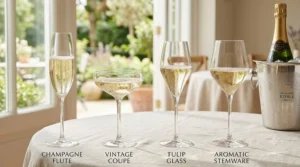
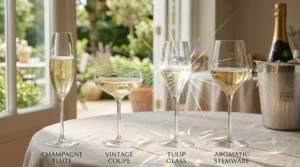
Understanding the types of champagne glasses on the market makes every other buying decision easier, so let’s break down what each shape actually does instead of just how it looks. Flutes are tall and narrow with a slender bowl that tapers inward toward a tall stem, and their small surface area is precisely why bubbles and chill both last longer in them than in any other shape — that’s not folklore, it’s basic surface-area physics applied to a carbonated liquid. Tulip glasses split the difference: a wider midsection tapers back in at the rim to concentrate aromas while still preserving bubbles longer than a coupe would, which is why most working sommeliers reach for tulips when they’re actually evaluating a wine rather than just serving it. Coupes are the outlier here — wide, shallow, and undeniably glamorous, they were the original champagne vessel centuries before flutes existed, but that wide open bowl lets both bubbles and aroma escape fast, which is exactly why modern tastings have largely moved away from them despite their vintage charm. If you only remember one thing: flutes for spectacle, tulips for flavor, coupes for nostalgia.
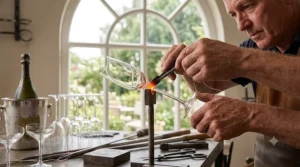
How to Choose Champagne Glasses
- Decide your primary use first — party service calls for stemless durability, while serious tasting calls for a tulip shape.
- Check the rim shape, not just the overall silhouette — a narrower rim retains bubbles and aroma better than a flared one regardless of bowl width.
- Look for a nucleation point at the base if bubble longevity matters to you; laser-etched glasses genuinely outperform smooth-bottomed ones.
- Match material to your maintenance tolerance — lead-free crystal looks best but often needs hand-washing, while tempered glass survives the dishwasher.
- Buy in sets that match your actual guest count, not an arbitrary number — a set of 4 suits most households, while sets of 8–12 suit regular entertainers.
- Factor in storage space before buying tall stemmed glasses, since cabinet height is a common regret after the fact.
- Set a realistic budget band and stick to it; the jump from $40 to $80 buys real engineering, but the jump from $80 to $200 mostly buys brand prestige.
Champagne Bubble Retention & Effervescence: What Actually Matters
Champagne bubble retention comes down to three real variables, and glass shape is only one of them. Physicists who study champagne effervescence have found that CO2 bubbles mostly form from tiny air pockets trapped inside microscopic fibers stuck to the glass wall, rather than from the glass material itself — which is why a perfectly clean glass sometimes produces surprisingly weak effervescence, and why manufacturers now laser-etch nucleation points to make bubble formation consistent and controllable. Temperature is the second variable that most buyers ignore entirely: colder champagne holds more dissolved CO2, so a properly chilled pour will always outlast a lukewarm one regardless of glassware. The third variable, rim width, is where an effervescence wine glass earns its name — the narrower the opening relative to the bowl, the slower CO2 escapes into open air, which is the entire reason flutes were invented in the first place. If you want to actually test this yourself, pour the same bottle into a flute and a wide coupe side by side; the difference in how long the fizz lasts is dramatic enough to settle any argument about whether glass shape “really” matters.
Elegant Champagne Glasses for Celebrations
Elegant champagne glasses earn their keep at the exact moments photos get taken — engagements, anniversaries, milestone birthdays — so appearance genuinely matters here in a way it doesn’t for a casual Tuesday pour. A celebratory sparkling wine glass with a well-proportioned bowl, a clean stem, and good clarity photographs dramatically better under both natural light and flash than a stemless everyday glass, which is worth considering if you’re planning a toast that’s going to end up on someone’s Instagram. The Luigi Bormioli Crescendo and Riedel Ouverture both hit this brief well, offering genuine sparkle and shape without crossing into fragile, special-occasion-only territory. A small tip that professional event planners use: rinse and dry glasses with a lint-free cloth right before guests arrive, since even dishwasher-clean glasses often pick up faint water spots that show up badly in photos.
Best Champagne Glasses Under $50: Budget Buying Guide
If your ceiling is genuinely best champagne glasses under $50, three sets in this roundup clear that bar comfortably: the Libbey stemless twelve-pack, the JoyJolt Milo crystal set, and the Spiegelau Style flutes, all of which land well under that threshold at the time of research (prices may vary, so check current pricing before buying). Here’s what to weigh: at this price tier, you’re generally choosing between raw quantity (Libbey), crystal clarity (JoyJolt), or brand-name European engineering (Spiegelau), rather than getting all three in one set — that trade-off is simply the economics of glassware manufacturing. Buyers on a tight budget who entertain often should lean toward the Libbey set for its resilience, while anyone buying primarily for themselves and a partner will likely get more day-to-day satisfaction out of the Spiegelau or JoyJolt’s added polish.
Long-Term Cost, Care & Lead-Crystal Safety
Cost-per-use tells a more honest story than sticker price alone. A $35 set of four flutes used weekly for two years works out to roughly 17 cents per pour, assuming zero breakage — which is a genuinely reasonable case for buying a nicer set instead of replacing cheap glasses every year. On safety: older or vintage crystal sometimes contains lead oxide for added sparkle and weight, and the FDA’s guidance on lead in foodware advises against storing food or beverages in lead crystal for extended periods, though occasional short-term use for a toast is generally considered low-risk. Every product in this guide is explicitly marketed as lead-free crystal or lead-free glass, which sidesteps this concern entirely — worth confirming on any older or secondhand glassware you might already own before regularly serving drinks in it. Maintenance-wise, hand-washing extends the life of etched or optic-textured glasses significantly longer than repeated dishwasher cycles, which slowly dull fine detailing over years of use.
FAQ
❓ What is the best type of glass for champagne?
❓ Do champagne flutes really keep bubbles longer than other glasses?
❓ Are stemless champagne glasses any good?
❓ How many champagne glasses should I own?
❓ Is crystal champagne glassware safe to drink from?
Conclusion
Choosing among the best champagne glasses really comes down to answering one honest question: are you toasting, or are you tasting? For pure celebration and party durability, the Libbey and JoyJolt sets deliver real value without asking you to babysit fragile stemware. For everyday elegance that still feels special, the Spiegelau, Luigi Bormioli, and Riedel Ouverture all strike a genuinely good balance of price and polish. And if you’re pouring something worth savoring slowly, the Zwiesel Pure’s engineered bubble retention or the Riedel Extreme’s aromatic tulip shape will show you what a good glass actually contributes to good champagne. None of these are wrong choices — they’re just built for different nights.
🥂 Ready to Upgrade Your Glassware?
✨ Pick the set that matches your next celebration and check current pricing before you toast. A better glass really does make the same bottle taste better — it’s one of the easiest upgrades on this whole list!
Recommended for You
- Tulip White Wine Glasses: 7 Picks That Fix Flat-Tasting Wine (2026)
- 7 Best Pinot Grigio Glasses in 2026: Sip Smarter Tonight
- 7 Best Riesling Wine Glasses in 2026: Tested & Ranked
Disclaimer: This article contains affiliate links. As an Amazon Associate, I earn from qualifying purchases. If you purchase products through these links, we may earn a small commission at no additional cost to you.
✨ Found this helpful? Share it with your friends! 💬🤗
