

In This Article
Pour the same bottle of Sauvignon Blanc into a juice glass and a proper stem, and you’ll swear someone swapped the wine. That’s not your imagination — it’s geometry. Tulip white wine glasses are stemmed glasses with a bowl that flares outward at its widest point, then curves back in toward a narrower rim, corralling aroma molecules before they escape into the room. What is a tulip wine glass, in one sentence? It’s a wine glass shaped like an unopened flower bud — wide in the belly, narrow at the mouth — engineered to concentrate a white wine’s bouquet at the point where your nose meets the glass.
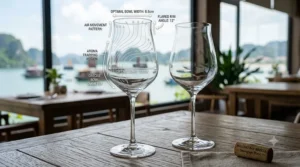
If you’ve ever noticed a $12 Chardonnay taste noticeably better at a wine bar than at your kitchen table, the glass is often doing more work than you’d expect. Wine chemist Greg Hirson, who studied the sensory impact of glass shape for his UC Davis thesis, found that the ratio between a glass’s widest point and its opening diameter has a measurable effect on how aroma develops after pouring. Tulip white wine glasses lean hard into that ratio — a wide bowl, a pulled-in lip, and just enough room to swirl without soaking your knuckles.
This guide breaks down seven real, currently available tulip white wine glasses spanning budget, mid-range, and genuinely splurge-worthy territory, plus the honest comparative analysis, decision frameworks, and maintenance advice that no Amazon listing will give you. Prices shift constantly, so every figure below is a range based on research at the time of writing — always check current pricing before buying.
Quick Comparison Table
Before the deep dive, here’s the fast version for anyone who just wants a decision in the next 90 seconds. This table ranks our seven picks by where they land on the budget-to-premium spectrum and what each one is genuinely best suited for — not just “good for everyone,” which is marketing-speak for “good for no one in particular.”
| Glass | Price Range | Material | Best For |
|---|---|---|---|
| Libbey Signature Kentfield Estate | Under $50 | ClearFire glass | Everyday budget replacement |
| JoyJolt Geo Crystal | Under $50 | Lead-free crystal | Gifting on a budget |
| Schott Zwiesel Forté | $40–$60 range | Tritan crystal | First “real” stemware upgrade |
| Zwiesel Glas Pure Sauvignon Blanc | $60–$90 range | Tritan crystal | Durable daily-driver set |
| Riedel Vinum Sauvignon Blanc | $50–$80 range | Lead crystal | Classic varietal-specific shape |
| Gabriel-Glas StandArt | $60–$100 range | Lead-free crystal | One glass for everything |
| Zalto Universal | $250–$350 range | Hand-blown lead-free crystal | Serious collectors and sommeliers |
Looking at the spread, there’s a clean logic to it: the Libbey and JoyJolt sets solve the “I need glasses that won’t embarrass me at dinner” problem cheaply, the Zwiesel and Riedel options sit in the sweet spot where machine-made precision meets varietal-specific design, and the Gabriel-Glas and Zalto glasses are for people who’ve decided that glassware is where they want to spend their wine budget instead of on another bottle. None of these are objectively “better” in a vacuum — they’re better for different drinkers, which is exactly what the rest of this guide unpacks.
💬 Just one click — help other cruising parents make better packing decisions too!😊
💬 Found a favorite already? Bookmark this page and come back before you check out — the comparison below might change your mind.
Top 7 Tulip White Wine Glasses: Expert Analysis
Coverage here spans genuine budget options, dependable mid-range Tritan crystal, and hand-blown luxury glass — plus one true all-purpose universal shape that blurs the line between “white wine glass” and “the only glass you’ll ever need.”
1. Libbey Signature Kentfield Estate All-Purpose — best budget entry point
The Kentfield Estate glass proves you don’t need to spend big to get a genuine tulip profile. Made from Libbey’s ClearFire glass composition rather than traditional lead crystal, it holds 16 ounces with a slender bowl that still narrows convincingly at the rim — enough to matter for a $15 bottle of Pinot Grigio, even if it won’t replace hand-blown crystal for a serious tasting session. The laser-cut rim is a genuinely nice touch at this price point; it means no bead of extra glass at the lip catching on your mouth mid-sip, which cheaper pressed-glass stems almost always have.
Based on the spec comparison against other budget sets, the appeal here is durability over delicacy: this is glassware built for a household that runs the dishwasher every night, not a cabinet reserved for special occasions. It’s the right call for renters, first apartments, or anyone who’s tired of losing $6 grocery-store wine glasses to chips and cracks every few months. Reviewers across retail platforms consistently note the brightness and clarity of the ClearFire formula, with some describing it as noticeably clearer than typical soda-lime glass at this price. A recurring theme in aggregated feedback is that buyers are surprised how “upscale” the set looks in photos versus how affordably it’s priced.
Pros:
- ✅ Genuinely dishwasher-safe without clouding over time
- ✅ Laser-cut rim avoids the seam feel of cheap pressed glass
- ✅ Made in the USA with lead-free, BPA-free construction
Cons:
- ❌ Thicker walls dull some aromatic nuance versus crystal
- ❌ Less dramatic tulip taper than premium varietal-specific shapes
Priced under $50 for a set, this is the pragmatic pick when you need reliable glassware now and don’t want to think about breakage anxiety — solid value for anyone building a first real glassware drawer.

2. JoyJolt Geo Crystal White Wine Glasses — most giftable at a low price
JoyJolt built its Geo Crystal line around a subtle standout feature: hand-engraved geometric patterns (square, triangle, circle, hexagon) etched near the base of each glass, which doubles as a built-in “wine charm” so guests can find their own glass at a party. Underneath the decoration, it’s a 14.9-ounce lead-free crystal tulip bowl with a reinforced, thin stem — light enough to feel special without venturing into true hand-blown fragility.
What most buyers overlook about a set like this is that the decorative etching isn’t just cosmetic — it also gives your fingers a slight grip point on an otherwise smooth crystal stem, which matters more than people expect once a glass gets slippery with condensation. This is a glass built for entertaining rather than solitary weeknight pours; it’s the kind of set you buy specifically because it photographs well and sparks a “wait, these are different?” conversation at a dinner party. Aggregated reviewer sentiment is largely positive on the visual appeal and gifting angle, though a recurring complaint across buyer feedback is that the crystal walls feel notably thin, with a handful of reviewers saying they’re hesitant to put real pressure on the bowl while washing.
Pros:
- ✅ Etched patterns double as built-in glass markers at parties
- ✅ Genuinely elegant crystal look for the price bracket
- ✅ Arrives in a presentation-ready gift box
Cons:
- ❌ Thin walls make some owners nervous about handwashing
- ❌ Not the most durable option for daily rough-and-tumble use
At under $50 for a set of four, this is less about long-term durability and more about occasion — birthdays, hostess gifts, or a cheerful upgrade for someone’s first “grown-up” glassware.
3. Schott Zwiesel Forté White Wine Glass — best first upgrade from basic glass
The Forté line is where Tritan crystal technology starts to feel like a genuine step up rather than a marketing label. At 9.5 ounces, it’s smaller than most tulip whites on this list, which is intentional — this is a compact, narrow tulip white wine glass shape designed to concentrate aroma in a smaller pour, ideal for wines you want to drink slightly cooler and finish before they warm up too much. The narrower bowl-to-rim taper than Libbey’s Kentfield means more aromatic focus per sip, even though the two glasses occupy a similar price bracket.
Here’s what the spec sheet won’t tell you, but the design implies: a smaller bowl means less swirling headroom, so this glass rewards lighter, more aromatic whites — Riesling, Albariño, Grüner Veltliner — over big, oaky Chardonnays that want room to breathe. Based on the durability claims, Tritan crystal’s titanium-oxide-reinforced structure genuinely does resist chipping better than standard glass, which matters if this is destined for a household with a dishwasher running most nights. Reviewers consistently describe the Forté as a natural bridge for people moving up from big-box store glassware without committing to hand-blown crystal prices.
Pros:
- ✅ Tritan crystal resists chipping better than standard glass
- ✅ Compact narrow tulip shape concentrates aroma efficiently
- ✅ German engineering with strong dishwasher-safety track record
Cons:
- ❌ Smaller 9.5oz capacity limits generous pours
- ❌ Less dramatic bowl width than full-size varietal glasses
In the $40–$60 range for a set of six, the Forté earns its keep as the glass you buy once you’ve decided wine deserves better than whatever came free with a set of tumblers.
4. Zwiesel Glas Pure Sauvignon Blanc — best durable daily-driver set
Zwiesel Glas’s Pure collection takes the same Tritan crystal technology as the Forté line and scales it up to a fuller 14-ounce bowl purpose-built around Sauvignon Blanc’s grassy, mineral-driven profile. The angled bowl design — slightly more architectural than a classic rounded tulip — still narrows at the rim enough to qualify as a genuine tulip shape, just with sharper visual lines than the softer curves of Riedel’s Vinum series.
Based on the spec comparison, the extra four ounces of capacity versus the Forté matters more than it sounds: it gives Sauvignon Blanc’s aromatics room to open up after swirling, rather than concentrating a small volume of wine into an equally small headspace. Reviewers consistently note the durability of the Tritan construction as the standout, with aggregated feedback often mentioning years of regular dishwasher use without visible etching or clouding — a genuine sore point with cheaper soda-lime glassware over time. What most buyers overlook is that this durability doesn’t come at the cost of clarity; Tritan crystal is engineered specifically to avoid the slight cloudiness that afflicts lower-grade dishwasher-safe glass after repeated cycles.
Pros:
- ✅ Purpose-built bowl shape for Sauvignon Blanc’s aromatics
- ✅ Tritan crystal holds clarity after years of dishwasher cycles
- ✅ Set of six covers dinner parties without mismatched extras
Cons:
- ❌ Angled bowl shape is less classic than rounded tulip silhouettes
- ❌ Higher price than Forté for a similar durability profile
At $60–$90 for a set of six, this is the glass for someone who wants “nice” stemware that survives a busy household without babying it.
5. Riedel Vinum Sauvignon Blanc — best classic varietal-specific shape
Riedel didn’t invent the idea that glass shape affects taste, but the Vinum line — introduced in 1986 — was the first machine-made series built entirely around the concept, and the Sauvignon Blanc glass remains one of its most recognizable shapes. At 12.375 ounces with a slightly longer stem and more tapered lip than Riedel’s Chablis glass, it’s engineered specifically to direct aromatic Sauvignon Blanc, Pouilly-Fumé, and dry Bordeaux blancs toward the front of the palate rather than letting alcohol dominate the nose.
The honest analytical case for Riedel here isn’t about magic — it’s about consistency and brand trust built over decades. Made with over 24% lead crystal, the glass has real heft and brilliance that lead-free alternatives can’t quite replicate, though that also means slightly more weight in hand than Tritan competitors. What the spec sheet won’t tell you, but long-time owners note, is that Riedel’s thin, hand-finish-style stems (even on this machine-made line) are more breakage-prone than Schott Zwiesel’s Tritan construction — a tradeoff for the thinner, more elegant rim that many wine lovers consider worth it. Aggregated reviewer sentiment across retailers consistently praises the taste difference reported when switching from generic glassware, while a common complaint centers on stem fragility during hand washing.
Pros:
- ✅ Purpose-designed tulip shape backed by decades of use
- ✅ Genuine 24%+ lead crystal brilliance and clarity
- ✅ Recognized industry-standard varietal-specific design
Cons:
- ❌ Thin stems are more breakage-prone than Tritan alternatives
- ❌ Hand-wash recommended despite dishwasher-safe rating
In the $50–$80 range for a set of four, this is the glass for anyone who wants the “textbook” tulip white wine glass experience with a brand name that needs no introduction at a dinner table.

6. Gabriel-Glas StandArt — best inward-curving universal glass
The StandArt takes a different bet than every other glass on this list: instead of a varietal-specific shape, it’s a single universal design meant to handle white, red, sparkling, and even spirits equally well. Designed by Swiss wine critic René Gabriel and modeled after the shape of an unfurling rose, it’s machine-blown in Austria from one seamless piece of lead-free crystal — no joint between bowl and stem, which eliminates a common structural weak point. The defining feature is its pronounced inward-curving wine glass profile: a broad 95mm bowl that narrows dramatically toward a laser-cut, diamond-polished rim.
Based on the spec comparison, that inward curve is doing real aromatic work — the wide base allows aeration comparable to a quick decant, while the narrowed mouth traps the resulting bouquet before it escapes. This is precisely the mechanism behind why tasters describe universal glasses like this as “punching above their price” for white wine specifically, since white wines often benefit more from concentrated aroma than from the extra oxygen exposure reds need. Real-world testimonials carry weight here too: Ferry Plaza Wine Merchant owner Debbie Zachareas has publicly called it her go-to all-purpose glassware, and comparative tastings by wine writers have found the StandArt performs on par with far pricier hand-blown alternatives. Aggregated buyer sentiment consistently highlights the “one glass for everything” simplification as the biggest draw, with the main criticism being that dedicated varietal-glass purists feel a universal shape can’t fully replace specialty stems for serious tasting sessions.
Pros:
- ✅ Seamless single-piece construction removes a common break point
- ✅ Works for whites, reds, sparkling, and spirits alike
- ✅ Praised by working sommeliers and wine retailers publicly
Cons:
- ❌ Not varietal-optimized like dedicated Sauvignon Blanc glasses
- ❌ Premium pricing versus mass-market Tritan alternatives
At $60–$100 range depending on set size, the StandArt earns its keep as the “buy once, stop thinking about it” option for anyone who doesn’t want six different glass shapes cluttering a cabinet.
7. Zalto Universal Wine Glass — most collectible hand-blown option
Zalto sits at the very top of this list for a reason: every glass is hand-blown by Austrian master glassmakers, and the Universal shape has become something of a cult object among sommeliers and collectors — the brand markets it as trusted by Michelin-starred restaurants and award-winning wineries, and independent side-by-side tastings back up the reputation. At 9.3 inches tall with a 530ml (roughly 17.9-ounce) capacity, it’s noticeably taller and more delicate in hand than any machine-made glass on this list.
What the spec sheet won’t tell you, but comparative reviews consistently note, is just how dramatic the weight difference feels: independent testing has found the Zalto Universal is lighter in hand than the Gabriel-Glas StandArt, which is itself lighter than a typical Riedel — a difference you notice the moment you pick it up. Based on the spec comparison, that extreme lightness isn’t just a party trick; less glass mass means less thermal transfer from your hand into the wine, keeping a chilled white wine cooler for longer during a slow dinner. Aggregated reviewer sentiment is nearly universally glowing on taste performance and aesthetics, with the recurring and entirely predictable complaint being fragility — several buyers report breakage during normal handwashing, which is the tradeoff for glass this thin.
Pros:
- ✅ Hand-blown Austrian craftsmanship trusted by top sommeliers
- ✅ Exceptionally light, minimizing hand-to-wine heat transfer
- ✅ Widely regarded as a gold-standard tasting glass
Cons:
- ❌ Significant breakage risk even with careful handwashing
- ❌ Price puts it out of reach for casual everyday use
At $250–$350 range for a set of six, Zalto isn’t a rational purchase by spreadsheet logic — it’s a purchase for people who’ve decided that the glass is part of the ritual, not just the delivery mechanism.
Tulip Shaped Wine Glasses vs Standard White Wine Glass: What Actually Changes
“Standard” white wine glass is a slippery term, since most mass-market glassware is really a straight-sided or slightly-flared cylinder rather than a true tulip. The tulip vs standard white wine glass distinction comes down almost entirely to what happens at the rim relative to the bowl’s widest point.
| Feature | Tulip Shaped Glass | Standard/Straight Glass |
|---|---|---|
| Bowl profile | Widens then narrows inward | Roughly consistent diameter top to bottom |
| Aroma concentration | High — narrowed rim traps bouquet | Lower — aromas dissipate into open air |
| Swirl room | Generous, due to wide belly | Limited in narrow cylindrical designs |
| Best for | Aromatic whites (Sauvignon Blanc, Riesling) | Casual, everyday sipping without focus |
The practical difference shows up most with aromatic varietals. A Sauvignon Blanc’s grassy, citrus-forward nose depends on volatile aroma compounds staying close to the surface long enough to reach your nose — a peer-reviewed study on glass shape and wine flavor perception found that untrained tasters’ ratings of wine odor intensity are directly influenced by glass geometry, independent of how attractive the glass itself looks. A straight-sided glass simply gives those compounds a wider, more direct escape route into the room instead of your nose. That’s not to say standard glasses are useless — for a casual Tuesday-night pour of chilled white you’re drinking fast, the difference is genuinely marginal. It matters most when you’re actually slowing down to smell the wine before you drink it.
What Makes the Tulip Shape Aroma-Capturing?
The aroma-capturing wine glass shape isn’t folklore — it’s a fairly simple piece of applied physics that glassmakers have refined for decades. Wine releases volatile aromatic compounds into the empty space above the liquid (the “headspace”), and what happens next depends entirely on the container’s geometry.
According to research from UC Davis’s wine chemistry program, the single biggest factor in how aroma evolves in a glass is the ratio between the glass’s maximum diameter and the diameter of its opening — a bigger gap between those two numbers means more aroma concentration at the rim. A tulip’s wide bowl maximizes surface area for the wine to interact with air (which helps release those aromatic compounds in the first place), while its narrowed rim funnels the resulting bouquet into a smaller column of air right where your nose meets the glass. Here’s what most casual drinkers overlook: swirling matters more in a tulip glass specifically because the wide belly gives the wine room to actually move without sloshing over the rim, which is exactly what agitates more aroma compounds out of the liquid.
This is also where the inward-curving wine glass profile earns its keep on genuinely universal shapes like the Gabriel-Glas StandArt — an aggressive inward curve does the concentrating work of a narrow rim while keeping the actual opening wide enough that your nose isn’t jammed against cold glass to get close to the wine.
✨ Don’t Miss These Exclusive Deals!
🔍 Ready to actually taste the difference? Check current pricing on any of the seven glasses above — the right shape for your favorite bottle might be one click away.

Narrow Tulip White Wine Glasses: Why Bowl Width and Rim Matter More Than You Think
Not all tulip shapes are created equal, and narrow tulip white wine glasses in particular occupy a specific niche worth understanding before you buy. A narrower bowl (like the Schott Zwiesel Forté on this list) does two things simultaneously: it reduces total wine volume per pour, and it shortens the distance aroma compounds have to travel before hitting your nose.
For lighter, more delicate white wines — Pinot Grigio, Vinho Verde, unoaked Chablis — that shorter travel distance is a genuine advantage, since these wines have more subtle aromatics that can get “lost” in a larger bowl’s bigger headspace. Based on the spec comparison across this list, narrower glasses also tend to keep wine cooler for longer simply because there’s less surface area exposed to room-temperature air relative to the wine’s volume. The tradeoff, honestly, is swirl room: a narrow bowl gives you less physical space to agitate the wine without spilling, which matters more for bigger, more complex whites like an oaked Chardonnay that benefit from vigorous aeration. If you’re mostly drinking crisp, chilled whites you want to finish quickly, narrow tulip glasses are the better everyday choice; if you’re regularly opening bottles that need to open up over 20 minutes in the glass, a wider bowl like Zwiesel Glas’s Pure Sauvignon Blanc earns its extra capacity.
Sommelier-Preferred Wine Glass Shapes: What the Pros Actually Use
Ask five sommeliers what their sommelier preferred wine glass looks like and you’ll often get a variation on the same answer: fewer glasses, not more. The trend among working wine professionals over the past decade has moved away from having a different glass for every single varietal and toward a small handful of high-quality universal shapes that perform well across categories — which is exactly the philosophy behind both Gabriel-Glas and Zalto’s Universal lines on this list.
That doesn’t mean varietal-specific glasses like the Riedel Vinum Sauvignon Blanc are obsolete in professional settings — plenty of formal tasting rooms and wine competitions still use standardized shapes precisely because consistency matters when comparing multiple wines side by side. What most home buyers overlook is that sommeliers prioritizing durability and consistency in a high-volume restaurant setting have different needs than a collector building a home glassware library. A restaurant needs a glass that survives dozens of dishwasher cycles a week without breaking the bank on replacements; a home enthusiast can afford to treat a Zalto like a piece of art. If a sommelier’s daily-use recommendation matters more to you than a magazine-cover-worthy glass, the Gabriel-Glas StandArt or Zwiesel Glas Pure line will serve you better than a fragile hand-blown option that demands babying.
How to Choose the Best Tulip Wine Glasses
Finding the best tulip wine glasses for your own habits comes down to matching the glass to how you actually drink, not to what looks impressive in a cabinet. Here’s a practical framework:
- Identify your primary white wine style. Aromatic, lighter whites (Riesling, Sauvignon Blanc) benefit most from a pronounced tulip taper; fuller-bodied oaked whites want a slightly wider bowl for aeration.
- Set a realistic breakage budget. If you have kids, roommates, or a habit of loading the dishwasher carelessly, prioritize Tritan crystal (Schott Zwiesel, Zwiesel Glas) over hand-blown crystal (Zalto).
- Decide between varietal-specific and universal. A dedicated Sauvignon Blanc glass optimizes for one style; a universal shape like Gabriel-Glas sacrifices a little precision for flexibility across your whole wine rack.
- Check actual capacity, not just the marketing photo. A 9.5-ounce narrow tulip and a 14-ounce wider bowl behave differently even if both are technically “tulip shaped.”
- Consider your hand-washing tolerance honestly. Even dishwasher-safe glassware often performs better long-term with hand washing — if that’s not realistic for your household, weight this heavily toward durable Tritan options.
- Match the price to the occasion, not the aspiration. Buying Zalto for a household that mostly drinks $10 grocery-store wine on a Tuesday is a mismatch of intent and use case — save the splurge glass for wine that deserves the attention.
- Buy at least a set of four, ideally six. Breakage happens to everyone eventually, and mismatched replacement glasses at a dinner party are a small but real annoyance worth avoiding upfront.
Common Mistakes When Buying Tulip White Wine Glasses
Even careful shoppers trip over a few recurring mistakes when buying into this category, and most of them are avoidable with a little foresight.
The first is buying based purely on brand recognition without checking actual bowl dimensions — a “Riedel” or “Zalto” label doesn’t automatically mean the specific glass in front of you suits your favorite wine style. The second is underestimating breakage risk with hand-blown crystal; buyers frequently order a single set of Zalto or premium Riedel stems without accounting for the near-certainty that at least one will break within the first year of regular use, leaving an odd-numbered, mismatched set. The third mistake is ignoring dishwasher compatibility claims that come with fine print — many “dishwasher safe” premium glasses technically survive the dishwasher but lose their brilliant clarity faster than hand washing would allow, a tradeoff manufacturers rarely emphasize on the box.
A fourth, subtler mistake: buying a narrow tulip glass for wines that actually need aeration room. If your go-to bottle is an oaked, buttery Chardonnay, a compact narrow tulip designed for Riesling will genuinely mute the wine’s complexity rather than enhance it — matching glass shape to your actual drinking habits matters more than chasing the “best” glass in the abstract.
Practical Usage Guide: Caring for Your Tulip Wine Glasses
Getting the most out of any tulip white wine glass isn’t just about the initial purchase — it’s about handling and maintenance that most buyers skip past in the excitement of a new set.
Start by hand-washing new crystal or Tritan stemware at least for the first few uses, even if the box says dishwasher safe; this lets you gauge how the glass holds up before committing to a daily dishwasher routine. Use a mild, unscented dish soap and avoid stacking glasses inside one another while wet, since suction between wet glass surfaces is one of the most common causes of stem breakage during cleanup. When drying, hold the bowl (not the stem) and use a lint-free cloth in a gentle circular motion rather than twisting, which puts uneven pressure on thin rims. For dishwasher-safe sets like the Zwiesel Glas Pure or Schott Zwiesel Forté, place glasses on the top rack only, angled to prevent water pooling in the bowl, and skip the heated dry cycle — the extra heat accelerates the gradual clouding that eventually dulls crystal clarity. A common first-30-days mistake is storing glasses upside down on a shelf, which can trap moisture and create a musty smell in the bowl over time; store them upright in a cabinet with enough headroom that the rims never touch anything above them. Finally, if you notice a slight vinegar-and-water soak recommended by some crystal manufacturers for stubborn residue, that’s a legitimate maintenance trick — a 24-hour soak in a diluted white vinegar solution can restore clarity to glasses that have picked up hard-water spotting.
Real-World Scenarios: Which Tulip Glass Fits Your Life
The apartment-dwelling casual drinker: A 20-something sharing a small kitchen with two roommates, drinking wine two or three nights a week, budget-conscious and not precious about glassware. The Libbey Signature Kentfield Estate or JoyJolt Geo Crystal set makes the most sense here — durable enough to survive shared-kitchen chaos, cheap enough that breakage isn’t a financial event, and still a genuine step up from mismatched grocery-store glasses.
The weekend wine-club regular: Someone hosting a monthly tasting group of six to eight friends, cycling through different white varietals and wanting glassware that performs consistently without a five-figure investment. The Zwiesel Glas Pure Sauvignon Blanc or Riedel Vinum Sauvignon Blanc sets hit the sweet spot — purpose-built shapes, genuine durability for regular entertaining, and a price point that scales reasonably to a full set of six or eight.
The dedicated collector or aspiring sommelier: Someone who studies wine seriously, attends tastings, and wants glassware that performs at the same level as what they’d encounter at a top restaurant. The Gabriel-Glas StandArt covers daily use with near-professional performance, while a Zalto Universal set becomes the “special occasion” tier reserved for bottles that genuinely warrant the ritual.
Long-Term Cost & Maintenance: Are Pricier Tulip Glasses Worth It?
Total cost of ownership for wine glasses is rarely just the sticker price — it’s the sticker price plus realistic replacement frequency over several years. A $40 set of six budget glasses that breaks two stems a year effectively costs more over three years than a $90 set of six durable Tritan glasses that never breaks, once you factor in reordering shipping and the annoyance of mismatched sets.
| Tier | Typical Price Range | Realistic Lifespan | Cost-Per-Year Estimate |
|---|---|---|---|
| Budget (Libbey, JoyJolt) | Under $50 | 1–3 years with normal breakage | Low upfront, moderate ongoing |
| Mid-range (Schott Zwiesel, Zwiesel Glas, Riedel) | $50–$90 range | 3–7 years with careful use | Best overall value per pour |
| Premium (Gabriel-Glas, Zalto) | $60–$350 range | Highly variable — breakage-dependent | High upfront, unpredictable ongoing |
The mid-range tier consistently comes out ahead on pure cost-per-use math, since Tritan crystal’s chip resistance dramatically reduces the “one glass breaks, now the set is mismatched” problem that plagues both budget and ultra-premium options. Premium hand-blown glass is a different value proposition entirely — you’re not paying for lower cost-per-pour, you’re paying for a tasting experience and craftsmanship story that spreadsheet math will never fully capture. That’s a legitimate reason to buy Zalto; it’s just not a financial one.
Safety & Lead Crystal: What to Know Before You Buy
A handful of glasses on this list — most notably the Riedel Vinum Sauvignon Blanc — contain traditional lead crystal, which is worth understanding before you buy, especially if the glasses will see daily use rather than occasional entertaining. Lead crystal has been used in fine stemware for generations because the added lead oxide increases brilliance, weight, and how easily the glass can be cut and shaped — it’s a real craftsmanship tradeoff, not a defect. General consumer safety guidance around lead crystal recommends avoiding storing beverages in it for extended periods, particularly acidic liquids like wine, since prolonged contact allows more lead to leach into the liquid than a quick pour-and-drink session would. For typical use — pouring wine, drinking it within an hour or two, then washing the glass — the risk profile most safety-conscious sources describe is low for adults, though pregnant women and young children are generally advised to avoid lead crystal drinkware altogether as an extra precaution.
If lead exposure is a genuine concern in your household, every lead-free option on this list — Schott Zwiesel, Zwiesel Glas, Libbey, JoyJolt, Gabriel-Glas, and Zalto — sidesteps the question entirely using modern Tritan or lead-free crystal formulations that achieve similar brilliance through different mineral compositions. Traditional lead crystal differs from standard soda-lime glass specifically because of that lead oxide content, so checking a product listing for “lead-free crystal” language is a reliable way to sidestep the question without sacrificing the tulip shape or clarity you’re shopping for.

Frequently Asked Questions
❓ What's the difference between a tulip glass and a regular wine glass?
❓ Are tulip white wine glasses worth it for casual drinkers?
❓ Can you use a tulip white wine glass for red wine too?
❓ How many tulip wine glasses should I buy for a dinner party?
❓ Is lead crystal dangerous for everyday wine glasses?
Conclusion
The right tulip white wine glass isn’t the most expensive one on the shelf — it’s the one that matches how often you actually drink, how carefully you’re willing to wash up, and which white wines dominate your rack. If you’re building a first real glassware collection, the Zwiesel Glas Pure or Schott Zwiesel Forté deliver the aromatic benefits of a proper tulip shape without hand-blown fragility. If you’ve decided glassware is where your wine budget goes, Zalto and Gabriel-Glas offer genuinely different tasting experiences that sommeliers themselves reach for. And if you just need reliable, good-looking glasses that survive a busy household, Libbey and JoyJolt won’t let you down. Whatever you choose, the underlying physics stays the same: a wider bowl and a narrower rim mean more of what’s actually in the bottle reaches your nose before it reaches your glass.
✨ Ready to upgrade your next pour?
Check current pricing on any of the seven picks above and see which tulip shape fits the wine you’re already drinking.
Recommended for You
- 7 Best Pinot Grigio Glasses in 2026: Sip Smarter Tonight
- 7 Best Riesling Wine Glasses in 2026: Tested & Ranked
- Sauvignon Blanc Glasses: 7 Best Picks for 2026
Disclaimer: This article contains affiliate links. As an Amazon Associate, I earn from qualifying purchases. If you purchase products through these links, we may earn a small commission at no additional cost to you.
✨ Found this helpful? Share it with your friends! 💬🤗
