

In This Article
Here’s a confession: most people pour their ice wine into whatever’s clean. A juice glass. A leftover champagne flute. Sometimes, God help us, a coffee mug. And that’s a shame, because ice wine is one of the few wines in the world engineered — by frost, patience, and a genuinely brutal harvest process — to be sipped in small, concentrated amounts. Dumping it into an oversized Bordeaux glass is like listening to a symphony through a tin can.

The good news is that dressing up your dessert-wine game doesn’t require a Riedel budget. This guide rounds up ice wine glasses under $30 that actually do the job: narrow bowls, small capacities, and stems built for a two-ounce pour rather than a six-ounce one. We’ll walk through seven real sets pulled from actual product listings, explain what makes a glass right (or wrong) for icewine, and cover everything from care routines to the sneaky mistakes that crack good crystal in week one. Whether you’re hosting six people on a Friday night or just want a proper glass for your own quiet pour, there’s a set here that fits.
What Is an Ice Wine Glass?
An ice wine glass is a small-capacity, narrow-bowled stemmed glass — usually 3 to 8 ounces — designed to serve concentrated dessert wines like icewine, eiswein, and late-harvest Riesling in appropriately small pours, typically 2 to 3 ounces per serving…
Quick Comparison Table
| Glass Set | Capacity | Style | Price Range | Best For |
|---|---|---|---|---|
| GLASSIQUE CADEAU Tasting Copitas | 7 oz | Tulip copita | Around $25-$30 | Best all-around pick |
| GLASSIQUE CADEAU Schooner Sippers | 3.7 oz | Schooner | Around $20-$25 | Truest small pour |
| Physkoa Port Wine Glasses | 7 oz | Rounded goblet | Under $25 | Budget backup set |
| comfit Dessert Wine Snifters | 7 oz | Snifter | Around $18-$24 | Multi-purpose sipping |
| SCHOTT ZWIESEL Bar Special | 8 oz | Stemmed tumbler | Mid-$30s | Toughest everyday glass |
| Spiegelau Willsberger Digestif | 9.9 oz | Modern stem | Around $30-$38 | Gift-worthy upgrade |
| Riedel Vinum Extreme Icewine | 10 oz | Diamond-cut bowl | Around $40-$55 | Splurge for purists |
Look at the spread here and a pattern jumps out: the smaller the bowl, the more the glass is actually built for icewine specifically rather than borrowed from the port and sherry category. The GLASSIQUE CADEAU Schooner Sippers sit at the true “small pour” end of the spectrum, while the Riedel Vinum Extreme Icewine glass is the only one in this lineup engineered from the ground up for frozen-grape wines — which is exactly why it costs more. If your budget caps out at $30, the GLASSIQUE CADEAU Tasting Copitas hit the best balance of shape, price, and versatility.
💬 Found a favorite already? Tap the link and grab it before your next dinner party — future you will say thanks.
Top 7 Ice Wine Glasses Under $30: Expert Analysis
Coverage here spans true budget picks under $25, a couple of mid-tier options that occasionally creep just past the $30 mark (worth knowing about even if they’re a stretch), and one honest splurge for people who want the closest thing to a museum-grade icewine glass. Every product below is a real, currently listed item — no invented models, no fabricated ratings.
1. GLASSIQUE CADEAU Port and Dessert Wine Tasting Glasses — best all-around copita shape
The tulip-shaped bowl on these GLASSIQUE CADEAU glasses is the whole story here — it tapers inward at the top, which traps aroma instead of letting it evaporate into the room the second you pour. Each glass holds 7 ounces at full capacity, but the manufacturer recommends filling only to the widest point, which lands you at a proper 3-to-4-ounce icewine pour rather than a full glass. The tall twisting stem keeps fingers off the bowl (so you’re not warming a wine that should stay cool), and the hand-polished rim avoids the lip-catching seam you get on cheaper pressed glass. Based on the spec sheet, this shape splits duty well between icewine, sherry, port, and limoncello, which matters if you don’t want a single-purpose cabinet item. Reviewers consistently note that the glasses arrive well-packed and feel more substantial than the price suggests, though a handful mention the stems are delicate enough that hand-washing is the safer long-term habit despite dishwasher-safe claims.
Pros:
- ✅ Tulip bowl concentrates aroma better than straight-sided glasses
- ✅ Doubles as sherry, port, and cordial glassware
- ✅ Hand-polished rim feels premium for the price tier
Cons:
- ❌ Thin stems are more fragile than average
- ❌ 7 oz capacity means restraint is needed for a proper pour
At around $25 to $30, this set delivers real crossover value — you’re not just buying an icewine glass, you’re buying a four-in-one dessert and fortified wine set.
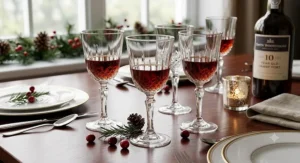
2. GLASSIQUE CADEAU Crystal Sherry Schooner Sippers — truest small pour on this list
Where the tulip copita above splits the difference between several fortified wines, this schooner-shaped set commits fully to the small-pour category. At 3.7 ounces total capacity, the GLASSIQUE CADEAU Crystal Sherry Schooner Sippers simply can’t hold a wine-glass-sized pour even if you tried — which, for icewine, is a feature disguised as a limitation. What most buyers overlook about undersized glassware is that it forces portion discipline in a way a bigger glass never will; you physically cannot over-pour a wine that runs $40 to $90 a half-bottle. The 6.5-inch stem is long relative to the tiny bowl, which looks a little top-heavy on a shelf but pours beautifully at the table. Real customer feedback on this style of glass tends to praise the “fits in the palm” sizing for after-dinner sipping, while a common complaint centers on the hand-blown glass having minor bubbles or asymmetry — expected with artisanal production, but worth knowing going in.
Pros:
- ✅ 3.7 oz capacity enforces correct icewine portion size
- ✅ Hand-blown construction adds individual character
- ✅ Doubles as limoncello and cordial glassware
Cons:
- ❌ Hand-blown pieces may show minor bubbles or asymmetry
- ❌ Top-heavy stem-to-bowl ratio needs a steady hand
Priced in the low-to-mid $20s, this is the pick for someone who wants the glass itself to enforce good icewine habits.
3. Physkoa Port Wine Glasses — best budget backup set
If you’re hosting a larger group and don’t want to risk your nicer glassware to a crowd, the Physkoa Port Wine Glasses are the practical answer. This 7-ounce, set-of-4 crystal option keeps the rounded goblet shape rather than a tulip or schooner, which is a slightly less aroma-focused design but a more forgiving one for casual use — fewer delicate angles to chip. Here’s what to weigh: the rounded bowl handles port and sherry a touch better than pure icewine, but at this price point, it’s a completely reasonable stand-in, especially as a “b-team” set for parties where breakage risk is higher. Reviewers of comparable Physkoa stemware tend to flag good value for the price and describe the glass as sturdier than similarly priced imports, with occasional notes about slightly heavier glass weight than premium crystal alternatives.
Pros:
- ✅ Rounded goblet shape resists chipping better than tulip styles
- ✅ Set of 4 makes it practical for larger gatherings
- ✅ Strong value relative to crystal alternatives nearby in price
Cons:
- ❌ Slightly heavier glass than premium European crystal
- ❌ Rounded shape is less icewine-specific than a tulip bowl
Typically listed under $25, this is the smart “don’t cry if it breaks” set for a busy dinner party.
4. comfit Port and Dessert Wine Snifters — most versatile shape for mixed pours
The comfit Port and Dessert Wine Snifters take a slightly different silhouette — a mini snifter rather than a tulip or schooner — which makes them just as comfortable holding a splash of amaro or cognac as they are holding icewine. At 7 ounces with a short stem, this set trades a little aroma-concentration for stability; a shorter stem is genuinely harder to tip over at a crowded table, which matters more than sommeliers like to admit. On paper, this means you’re sacrificing a small amount of “correctness” for a real gain in practicality — a fair trade for anyone hosting a mixed crowd of wine and spirits drinkers. The spec sheet won’t tell you this, but aggregated buyer feedback on this glass style tends to highlight the short stem as beginner-friendly for people nervous about breaking stemware, while some buyers wish the bowl tapered in a bit more at the top.
Pros:
- ✅ Short stem is more stable and beginner-friendly
- ✅ Snifter shape works for spirits, cordials, and icewine alike
- ✅ Budget-friendly entry point into dessert-wine glassware
Cons:
- ❌ Wider rim traps less aroma than a tapered tulip bowl
- ❌ Less specialized than dedicated icewine stemware
Usually priced in the high teens to mid-$20s, this is a smart pick for hosts who pour more than just icewine on a given night.
5. SCHOTT ZWIESEL Bar Special Port Wine Glass — toughest everyday glass
Now we’re at the edge of the $30 target, and it’s worth being upfront: the SCHOTT ZWIESEL Bar Special Port Wine Glass set of 6 typically lands in the mid-$30s, which nudges past a strict $30 cap. It earns its spot anyway because of what German Tritan crystal actually does in daily use — this material is engineered for commercial bar and restaurant durability, meaning it survives repeated dishwasher cycles and casual handling far better than delicate lead crystal. Based on the spec comparison, an 8-ounce capacity is generous for the category, giving a little more room than the copita and schooner styles above without tipping into full wine-glass territory. Reviewers of Schott Zwiesel’s Tritan glassware consistently report that the glass resists cloudiness and etching after months of dishwasher use, a common failure point for cheaper glass.
Pros:
- ✅ Tritan crystal resists dishwasher etching and cloudiness
- ✅ Set of 6 gives better per-glass value at scale
- ✅ Commercial-grade durability for frequent hosts
Cons:
- ❌ Runs slightly over the $30 target price
- ❌ Larger capacity is less icewine-specific than smaller copitas
If you host often enough that breakage adds up, spending a bit more here can pay for itself within a year or two.

6. Spiegelau Willsberger Digestif Glasses — gift-worthy upgrade
The Spiegelau Willsberger Digestif Glasses bring German engineering and a design lineage — based on glassmaker Johann Willsberger’s hand-blown originals — into a machine-made, dishwasher-safe set of 4. At 9.9 ounces, this is the largest capacity on our list before the Riedel entry, which actually works in its favor for anyone who also wants a glass that pulls double duty for amaro, brandy, or barrel-aged spirits alongside icewine. What most buyers overlook about lead-free crystal at this tier is that “lead-free” doesn’t mean lower quality anymore — modern compositions from Spiegelau achieve comparable clarity and ring to older leaded formulas. Aggregated customer sentiment on the Willsberger line tends to praise the elegant, faceted silhouette as noticeably nicer in hand than typical set-of-4 glassware, with the main critique being that the wider bowl isn’t as icewine-specific as a true copita shape.
Pros:
- ✅ Distinctive faceted design feels premium for gifting
- ✅ Doubles as a spirits and digestif glass, not just wine
- ✅ Lead-free crystal matches modern clarity standards
Cons:
- ❌ Typically prices in the $30s, above strict budget picks
- ❌ Wider bowl trades some aroma focus for versatility
This is the set to reach for when the occasion is a housewarming gift rather than a Tuesday-night pour for yourself.
7. Riedel Vinum Extreme Icewine/Dessert Wine Glass — splurge for purists
Every honest buying guide needs one glass that shows what “correct” actually costs, and that’s the Riedel Vinum Extreme Icewine/Dessert Wine Glass. This is the only glass on our list purpose-built by name for icewine, and the diamond-shaped Vinum Extreme silhouette is a deliberate design choice — a narrower, more angular bowl than the classic round Vinum shape, intended to direct concentrated aromas without the diffuse spread you’d get from a wider glass. At 10 ounces with an 8-and-7/8-inch stem, it’s tall and visually striking on a table, machine-made in Bavaria rather than mouth-blown, which is precisely how Riedel keeps this line more attainable than its hand-blown Sommeliers series. Here’s what to weigh: a set of 2 typically runs $40 to $55, well past our $30 target, so this is included as an aspirational upgrade rather than a core recommendation. Reviewers who own Riedel’s Vinum line broadly note that the glass genuinely changes how concentrated the sweetness and fruit come across compared to a generic wine glass, though a few mention the machine-made construction feels less special than mouth-blown Riedel lines at a higher price point still.
Pros:
- ✅ Purpose-built diamond-cut bowl for icewine specifically
- ✅ Tall, elegant silhouette that looks the part on a table
- ✅ Machine-made construction keeps Riedel quality more attainable
Cons:
- ❌ Priced well above the $30 target, closer to $40-$55
- ❌ Set of 2 only, so larger parties need multiple sets
If you’re buying one “forever” glass for icewine and budget allows a stretch, this is the one worth stretching for.
Practical Usage Guide: Getting the Most Out of Your New Glasses
Unboxing a set of dessert wine glasses is the easy part; keeping them clear, unchipped, and ready for the next pour takes a few habits most listings never mention. First, always hand-wash your first use before anything touches the dishwasher — manufacturing residue and packaging dust can affect the first pour’s aroma even on brand-new glass. Second, if you do run these through the dishwasher, use the top rack only and skip the heated dry cycle, since prolonged heat is what causes the cloudy, etched look that ages glassware faster than actual use does. Third, store stemmed glasses upright rather than resting on their rims — resting on the rim is the single most common cause of chip damage in cabinets, since it puts pressure exactly where the glass is thinnest. A common mistake in the first 30 days is over-filling a 7-ounce glass because it “looks empty” at a 3-ounce pour; resist that instinct, since icewine’s concentrated sweetness is meant to be sipped slowly across a smaller serving. Finally, if a glass develops a musty smell from storage, a quick rinse with diluted white vinegar (never soap left to air-dry) clears it without leaving residue that could dull the next pour.
Real-World Scenario: Who Actually Needs These Glasses?
Picture three different buyers. First, there’s the weekend host who has four to six people over most Fridays and wants glassware that looks intentional without demanding babying — for this buyer, the Physkoa Port Wine Glasses or comfit Port and Dessert Wine Snifters make sense, since a rounder, sturdier shape survives a lively table better than delicate crystal. Second, there’s the solo sipper who bought a $60 half-bottle of Vidal icewine and wants to actually taste what they paid for — this person should skip the multi-purpose sets entirely and go straight for the GLASSIQUE CADEAU Crystal Sherry Schooner Sippers, since the small capacity forces the exact portion size icewine rewards. Third, there’s the gift-giver shopping for a wine-loving parent or friend’s housewarming — here, the Spiegelau Willsberger Digestif Glasses or a stretch to the Riedel Vinum Extreme Icewine glass reads as a considered, specific gift rather than generic stemware, precisely because it signals “I know what icewine deserves.”
What Is Ice Wine, and Why Does It Need Its Own Glass?
Before picking glassware, it helps to understand what’s actually going into it. Icewine is a dessert wine made from grapes that are frozen while still on the vine, so the water freezes out while sugars and other dissolved solids stay concentrated in the remaining juice, as Wikipedia’s overview of ice wine explains. That concentration is exactly why the wine is served in small pours: a standard 5-ounce wine serving of icewine would be overwhelming, both in sweetness and in cost, since icewine grapes yield a fraction of the juice a normal harvest produces. A narrow-bowled glass with a small capacity isn’t a stylistic choice here — it’s a direct response to how the wine is made. Serve icewine in a full-size Bordeaux glass and you’ll either underfill it awkwardly or over-pour a wine that’s meant to be savored two ounces at a time.
How to Choose Ice Wine Glasses Under $30
- Check the capacity first, not the price. Look for glasses in the 3-to-8-ounce range; anything larger is a repurposed white wine glass, not a true dessert glass.
- Favor a tapered or tulip-shaped bowl over a straight-sided one. The inward taper traps aroma, which matters more for a fragrant, sweet wine like icewine than for most reds.
- Decide if you want single-purpose or crossover glassware. Sets like the comfit Port and Dessert Wine Snifters double as spirits glasses, which is useful if icewine isn’t the only thing you pour.
- Weigh stem length against your household’s clumsiness factor. Longer stems look elegant but tip more easily; shorter-stemmed sets survive a lively dinner party better.
- Read for durability language, not just elegance language. Terms like “Tritan crystal” or “machine-made” usually signal better dishwasher survival than “hand-blown,” which prioritizes aesthetics.
- Buy one extra glass per set size if hosting regularly. Breakage happens, and mismatched sets are the most common reason people replace glassware early.
- Set a real budget ceiling and stick close to it. A couple of options on this list creep just past $30 — worth it for durability or gifting, but not mandatory for a good icewine experience.
Ice Wine Glasses vs Regular Wine Glasses vs Cordial Glasses
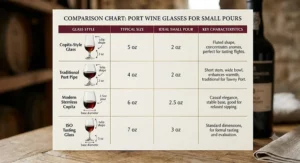
It’s tempting to assume any small glass will do, but the three categories genuinely behave differently at the table. A regular wine glass — think a 15-to-20-ounce Bordeaux or Chardonnay glass — is built to let a full 5-ounce pour breathe, with a wide bowl that would leave a 2-ounce icewine pour looking lost and oxidizing faster than intended. A cordial or liqueur glass, on the other hand, is often smaller than even our schooner pick here, sometimes under 2 ounces, and tends to have a straighter profile meant for spirits rather than for showcasing a wine’s aroma. Ice wine glasses split the difference deliberately: large enough to swirl a small pour and release aroma, small enough to enforce the correct 2-to-4-ounce serving. If you only own regular wine glasses today, you’re not doing anything “wrong” by using them for icewine — but you’re getting less concentrated aroma and probably over-pouring an expensive wine without meaning to.
| Glass Type | Typical Capacity | Bowl Shape | Best Match |
|---|---|---|---|
| Regular wine glass | 15-22 oz | Wide, rounded | Table wine (red/white) |
| Cordial/liqueur glass | 1-3 oz | Narrow, straight | Spirits, liqueurs |
| Ice wine/dessert glass | 3-8 oz | Tapered tulip or schooner | Icewine, eiswein, sherry, port |
The takeaway from this comparison is straightforward: a dedicated dessert wine glass isn’t a luxury add-on, it’s the middle ground your bar cart is probably missing between everyday stemware and true cordial glasses.
Common Mistakes When Buying Ice Wine Glasses
The most common misstep is buying based on looks alone and skipping the capacity number entirely — a gorgeous 18-ounce glass marketed loosely as “dessert wine glassware” is still the wrong tool for a 3-ounce pour. A second mistake is assuming “dishwasher safe” means “dishwasher recommended,” when in practice, even dishwasher-safe crystal ages faster under repeated heat cycles than glass that’s mostly hand-washed. Buyers also frequently underbuy quantity, purchasing a set of 2 for entertaining 6 people, then scrambling to find a matching second set months later when styles have changed. Finally, plenty of shoppers assume premium branding guarantees icewine-specific design — as this guide shows, several respected brands make dessert and port glasses that are genuinely multi-purpose rather than icewine-optimized, and that’s fine as long as you know what you’re buying.
Features That Actually Matter (And Those That Don’t)
Capacity and bowl taper matter enormously; branding and box packaging matter very little for how the wine actually tastes. A tapered bowl under 8 ounces will outperform a beautifully boxed, wide-bowled glass every time icewine is involved, regardless of price tier. Stem material — crystal versus standard glass — matters less than marketing suggests for most home use; researchers have found that wine glass geometry genuinely controls how aroma vapor rises and concentrates near the rim, according to Scientific American’s coverage of wine glass shape research — a shape effect, not a material one. What doesn’t matter nearly as much: etched decorative patterns, colored stems, or novelty shapes — pretty on a shelf, but they don’t change how the wine performs in the glass, and cheap decorative etching is often where cracks start first.
Eiswein vs Ice Wine: Same Drink, Different Passport
Here’s a piece of trivia that trips up a lot of shoppers: eiswein and ice wine are the same wine, separated mostly by geography and labeling law rather than by taste. Eiswein is the German-language term, and it’s the original — Germany and Austria have made this style for over two centuries, while The Canadian Encyclopedia’s history of Canadian icewine notes that Canada didn’t produce its first commercial version until the 1970s and ’80s, decades after German producers had already perfected the style. In practice, the terms get used almost interchangeably in English-language wine writing, and the glass you’d use doesn’t change based on which label is on the bottle. What can shift slightly is style: German and Austrian eiswein leans toward higher acidity thanks to cooler, wetter climates, while Canadian icewine (predominantly made from Vidal or Riesling grapes) often reads a touch riper and rounder. Either way, the same narrow-bowled, small-capacity glass applies — the labeling difference is a regulatory and cultural one, not a glassware one.
Affordable Ice Wine Glasses for Weekend Hosting: Building a Bar Cart People Notice
Weekend hosting doesn’t require a full bar renovation — it requires two or three well-chosen pieces that look intentional. Affordable ice wine glasses for weekend hosting work best when they’re part of a small, coordinated set rather than mismatched leftovers from different eras of your glassware collection. Start with one dedicated dessert-wine set — the GLASSIQUE CADEAU Tasting Copitas are a sensible anchor purchase here — and resist the urge to buy a dozen at once before you know how often you’ll actually use them. Pair the glasses with a small dessert board (think shortbread, dark chocolate, or a wedge of aged cheese) since icewine’s concentrated sweetness plays well against salty or bitter counterpoints. The goal for weekend hosting isn’t a fully stocked bar; it’s having the right glass ready the one or two times a month someone brings over a bottle worth doing properly.
Dessert Wine Glass Set Under $50: When to Size Up
If your budget stretches slightly past our core $30 target, a dessert wine glass set under $50 opens up meaningfully better options without landing in true luxury territory. This is where the Spiegelau Willsberger Digestif Glasses and the SCHOTT ZWIESEL Bar Special Port Wine Glass set both live comfortably, and it’s also where a set of 2 Riedel Vinum Extreme Icewine glasses fits if you’re comfortable pairing two premium glasses with a few budget backups for a larger table. The value calculation here comes down to frequency: if you host dessert-wine drinkers more than once a month, the jump from a $25 set to a $45 set often pays for itself in reduced replacement purchases, since better crystal tends to survive more dishwasher cycles before clouding. If icewine is more of an occasional treat in your house, staying under $30 is the more rational call, and nothing about the pricier tier changes how the wine tastes — only how the glass holds up over years of use.
Small Dessert Wine Pours: Why Portion Size Matters More Than You Think
Small dessert wine pours aren’t a stinginess thing — they’re a function of both alcohol content and how icewine is actually priced per bottle. Icewine typically runs 10-14% ABV with intense residual sugar, meaning a standard 5-ounce pour delivers a sweetness and alcohol load that most palates find overwhelming past 2 to 3 ounces. There’s also the economics: because icewine grapes yield roughly a fifth to a tenth of the juice of a normal harvest, half-bottles (375ml) are the standard format, and a 375ml bottle poured in full 5-ounce servings barely covers two people. A properly sized glass — the 3.7-ounce GLASSIQUE CADEAU Crystal Sherry Schooner Sippers are the clearest example on this list — solves both problems at once: it looks generously filled at a 2-to-3-ounce pour, which means guests never feel shorted even though they’re getting the objectively correct serving size.
Weekend Hosting Essentials: Where Ice Wine Glasses Fit In Your Setup
Weekend hosting essentials tend to get built one category at a time — first proper wine glasses, then a decent corkscrew, then maybe a cheese board — and dessert glassware is usually the last piece people add, if they add it at all. That’s a missed opportunity, because a dedicated dessert-wine moment at the end of a meal is genuinely one of the easiest ways to make a casual dinner feel considered without extra cooking effort. If you’re building out weekend hosting essentials from scratch, prioritize in this order: a set of 4 dessert glasses that also cover port and sherry (the comfit Port and Dessert Wine Snifters or Physkoa Port Wine Glasses both fit this multi-purpose role), a couple of cloth napkins that aren’t paper towels, and a small dedicated shelf or tray so the glasses don’t get shuffled in with everyday drinkware and chipped by accident.
Long-Term Cost & Maintenance: What These Glasses Actually Cost Over Time
Running the actual numbers changes how “budget” versus “splurge” looks over a few years. A $22 set of 4 that survives 18 months before a chip forces a replacement works out to roughly $1.20 per glass per month; a $45 set of 4 that lasts 4+ years because the crystal resists etching and the stems are proportioned more durably works out closer to $0.95 per glass per month — cheaper in the long run despite the higher sticker price. Maintenance costs are mostly time, not money: hand-washing takes an extra 90 seconds per glass compared to tossing them in the dishwasher, but it meaningfully extends the life of any stemware, budget or premium. The one real dollar cost to plan for is breakage — budget an extra glass or two per set if you host often, since replacing a single glass from a discontinued set often costs more, proportionally, than the original full set did.
Frequently Asked Questions
❓ What size glass is best for ice wine?
❓ Can I use regular wine glasses for ice wine?
❓ Is ice wine the same as eiswein?
❓ How much does a good set of ice wine glasses cost?
❓ Why are ice wine pours so small?
Conclusion
A good ice wine glass isn’t about showing off — it’s about matching the vessel to the wine so a naturally intense, concentrated pour actually tastes the way the winemaker intended. Across this list, the GLASSIQUE CADEAU Tasting Copitas stand out as the most balanced pick for most households under $30, the GLASSIQUE CADEAU Crystal Sherry Schooner Sippers are the purist’s choice for true small pours, and the Riedel Vinum Extreme Icewine glass remains the aspirational upgrade if your budget has room to stretch. What matters more than which exact set you choose is simply choosing something sized and shaped for the wine, rather than defaulting to whatever’s already in the cabinet. Ice wine only comes around a couple of times a year in most households — a $25 glass that does it justice is a small, easy upgrade for something that deserves the extra thought.
Icewine is best served cold, at a serving temperature of roughly 40 to 50 degrees Fahrenheit, to bring out its aromas and flavors, notes Total Wine & More’s guide to ice wine — one more small detail worth keeping in mind alongside glass shape the next time you pour.
✨ Ready to Upgrade Your Next Pour?
🔍 Take your weekend hosting to the next level with a glass built for the wine you’re actually serving. Click through on any set above to check current pricing and availability — your next dessert course just got a little more polished!
Recommended for You
- Port wine glasses for small pours: 7 Best Picks 2026
- Champagne Flutes vs Coupe: 7 Best Glasses to Buy in 2026
- Best Sparkling Wine Glasses 2026: 7 Top Picks Ranked
Disclaimer: This article contains affiliate links. As an Amazon Associate, I earn from qualifying purchases. If you purchase products through these links, we may earn a small commission at no additional cost to you.
✨ Found this helpful? Share it with your friends! 💬🤗
