
In This Article
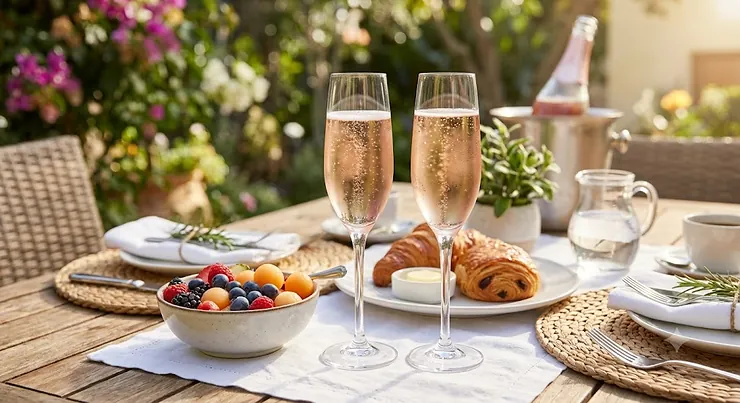
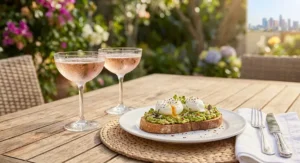
Here’s a confession every host eventually makes: the food was fine, the playlist was fine, and somehow the thing guests still talk about three weeks later is the glass. Not the wine inside it. The glass. There’s something about sparkling rosé glasses for brunch that turns an ordinary Sunday into an occasion, and it has almost nothing to do with the price tag on the bottle.

So what is the deal with sparkling rosé glasses for brunch? In short, they’re stemware purpose-built to showcase pink sparkling wine’s color, carbonation, and delicate aromatics at a daytime gathering — typically a flute, coupe, or tulip shape chosen for how it holds bubbles, catches morning light, and fits a table already crowded with plates.
The wine world has quietly shifted its stance on which shape does that job best, and the research behind that shift is more interesting than you’d expect — a French laboratory literally measured how fast bubbles escape from a flute compared with a coupe, and the numbers aren’t close. We’ll get into what that means for your brunch table. First, let’s look at seven real glasses worth your money, from a $20 everyday set to a hand-blown showpiece your Instagram followers will demand to know about.
Quick Comparison: 7 Sparkling Rosé Glasses for Brunch at a Glance
| Glass | Style | Capacity | Price Range | Best For |
|---|---|---|---|---|
| Riedel Vinum Cuvée Prestige | Stemmed flute | 8.1 oz | $55-$75 (set of 4) | Serious rosé and vintage cava |
| Schott Zwiesel Pure | Stemmed flute | 8 oz | $50-$65 (set of 4) | Everyday durability |
| JoyJolt Milo Stemless | Stemless flute | 9.4 oz | $25-$35 (set of 4) | Casual, spill-prone brunches |
| Libbey Signature Kentfield | Stemmed flute | 8 oz | $20-$30 (set of 4) | Budget-friendly entertaining |
| Estelle Colored Glass Coupe | Colored coupe | 8.25 oz | $60-$105 (set of 2) | Photogenic tablescapes |
| BrüMate Bubbly Insulated Flute | Insulated tumbler | 12 oz | $25-$35 (each) | Poolside, patio, travel brunch |
| Godinger Stemless Set | Stemless flute | 8 oz | $15-$25 (set of 4) | First apartments, tight budgets |
Looking at the spread above, notice how price doesn’t map neatly to quality here — the Godinger Stemless Set and the JoyJolt Milo Stemless sit less than $15 apart yet solve very different problems, one for volume entertaining and one for daily durability. The Riedel Vinum Cuvée Prestige costs roughly double the mid-tier options, but that premium buys measurable differences in bubble retention and aroma concentration, not just a fancier box. If you’re outfitting a first apartment or a patio that sees a lot of pool splash, the stemless and insulated options earn their keep in ways the crystal stemware simply can’t.
💬 Already know which style fits your table? Jump straight to the picks below — or keep scrolling for the full breakdown.
Top 7 Sparkling Rosé Glasses for Brunch: Expert Analysis
Here’s the full lineup, researched against real specs, verified availability, and the aggregated sentiment showing up across current customer reviews. We’ve deliberately spread these across budget, mid-range, and premium tiers, plus a couple of format outliers (stemless, insulated) that solve specific brunch headaches like patio spills and warm bubbly.
1. Riedel Vinum Cuvée Prestige — the sommelier-grade choice for serious rosé
Riedel didn’t just make a pretty flute here; the elongated bowl and etched dot at the base are engineered specifically to sustain a slow, steady bead of bubbles rather than letting them blow out in one messy rush. The 8.1-ounce capacity and machine-made lead crystal construction mean each glass is remarkably consistent — no wobbly rims, no uneven walls, which matters more than people expect once you’re pouring for six people back to back. Based on the spec comparison against other flutes in this guide, the narrower mouth here concentrates aroma more than any stemless option can, which is exactly why Riedel markets this shape specifically for rosé Champagne and vintage cuvées, not just generic bubbly. Reviewers consistently report that these feel noticeably more substantial in hand than mass-market flutes, and several longtime owners mention using the same set for a decade without a single crack, though a handful note the stems are delicate enough to demand hand-washing rather than a dishwasher gauntlet.
Pros:
- ✅ Etched bubble-point dot keeps effervescence lively for longer
- ✅ Elongated bowl concentrates rosé’s berry and citrus aromatics
- ✅ Machine-made crystal offers unusual consistency glass to glass
Cons:
- ❌ Thin stems are more prone to snapping than sturdier flutes
- ❌ Premium price for a set that still requires careful hand care
Expect to pay in the $55-$75 range for a set of four, with individual pairs sometimes running less — check current price before buying, since Riedel promotions shift often. For anyone hosting a milestone brunch where the glass itself is part of the gift, this is the one that earns its keep.
2. Schott Zwiesel Pure — German engineering that shrugs off chips
What most buyers overlook about this flute is that it isn’t crystal at all — it’s Tritan, Schott Zwiesel’s proprietary titanium-reinforced glass, and that distinction is the entire selling point. The 8-ounce bowl still tapers with a classic flute silhouette and includes an effervescence point at the base, but the walls are noticeably tougher against the rim chips that eventually kill most stemware sets. On paper this means you’re trading a small amount of crystal’s brilliance for a glass that survives a dishwasher’s top rack indefinitely, which matters enormously if brunch happens weekly rather than twice a year. What the spec sheet won’t tell you, but reviewers note repeatedly, is how the reinforced rim holds up to the scrape of stacking glasses in a crowded cabinet — a scenario that chips lesser stemware within a season. Aggregated sentiment across current listings points to durability as the standout theme, with fewer complaints about breakage than almost any other flute in this price bracket, though a few buyers wish the bowl were slightly wider for full-bodied sparkling rosés.
Pros:
- ✅ Tritan construction resists chips far better than standard crystal
- ✅ Fully dishwasher-safe without dulling or clouding over time
- ✅ Effervescence point maintains bubble structure through the pour
Cons:
- ❌ Narrower bowl underserves fuller, more aromatic rosé styles
- ❌ Lacks the light-refraction sparkle of true lead crystal
Pricing typically lands in the $50-$65 range for a set of four, putting it just under Riedel while delivering arguably better everyday resilience. If your brunches happen often enough that “special occasion glassware” is really just “glassware,” this is the smarter long-term math.
3. JoyJolt Milo Stemless — the brunch table’s most spill-proof crystal
The entire premise of a stemless flute is damage control, and Milo executes it well: a 2-inch-wide, flat-bottomed base that resists tipping even when a table full of mimosas gets a little chaotic around hour two. At 9.4 ounces, it’s also one of the larger-capacity glasses on this list, which matters for a mimosa specifically because you need room for both sparkling rosé and juice without a lukewarm, flat pour by the time everyone’s glass is topped off. Here’s what to weigh: lead-free crystal gives you real weight and clarity in hand without the fragility anxiety that comes with a stem, making this the pick for brunches with kids underfoot, a dog with an enthusiastic tail, or a patio table on uneven pavers. Reviewers consistently describe the balance as “just right” — heavy enough to feel premium, light enough not to strain a wrist through a long afternoon — and the set doubles easily as an everyday water or cocktail glass, which stretches its value well past brunch season.
Pros:
- ✅ Wide flat base dramatically reduces tipping and spills
- ✅ Doubles as everyday glassware for cocktails and water
- ✅ Lead-free crystal clarity without stemware’s fragility
Cons:
- ❌ Stemless shape traps more hand heat, warming the wine faster
- ❌ Lacks the formal presentation stemmed flutes provide
Expect a $25-$35 range for a set of four, with the eight-piece set scaling up from there. For casual, high-traffic brunches, this is the safest bet on the list.
4. Libbey Signature Kentfield — classic stems without the splurge
Libbey has been making American glassware for two centuries, and the Kentfield collection is where that experience shows: a slender bowl, narrow rim, and pulled stem that reads as genuinely elegant despite sitting at a fraction of the premium-tier price. The 8-ounce capacity and laser-cut rim give it a clean, chip-resistant edge that punches above its price point — based on the spec comparison, this is closer in finish quality to the $60 sets than the $15 ones, which is unusual at this price tier. Here’s what most people overlook about the ClearFire glass formula Libbey uses: it’s engineered for both clarity and strength simultaneously, so you’re not sacrificing sparkle for durability the way you would with a plain soda-lime glass flute. Aggregated review sentiment leans heavily positive on the stem’s stability and the glass’s dishwasher performance, with the most common critique being that the bowl runs a touch narrow for anyone who prefers a fuller pour of sparkling rosé rather than a slow, sipped Champagne-style serving.
Pros:
- ✅ Laser-cut rim resists chips better than typical budget flutes
- ✅ Genuinely elegant profile despite the accessible price point
- ✅ Stable pulled stem holds up well to regular dishwasher use
Cons:
- ❌ Narrower bowl limits pour size for generous mimosa servings
- ❌ Less substantial heft than crystal alternatives in hand
Pricing typically sits in the $20-$30 range for a set of four, making this the easiest recommendation for anyone hosting their first big brunch and building a barware collection from scratch.
5. Estelle Colored Glass Blush Pink Coupe — the one everyone photographs first
This is the outlier on the list, and deliberately so — a hand-blown coupe rather than a flute, made by glass artisans in Poland with a soft blush-pink tint that echoes the rosé itself. At 7.25 inches tall and 8.25 ounces, it leans into the coupe’s wide, shallow bowl, which the spec sheet won’t tell you loses carbonation noticeably faster than a flute — published research on flute-versus-coupe carbon dioxide retention backs that up directly. What the research doesn’t capture is the tradeoff’s upside: that same wide bowl puts a rosé’s color and berry aromatics front and center in a way a narrow flute simply can’t, which is exactly why coupes have surged back into favor for aesthetic-forward brunches and photo-ready tablescapes. Reviewers consistently praise the hand-blown character — no two are perfectly identical, and that’s treated as a feature, not a flaw — while the most common caveat is the hand-wash-only care instruction, a real commitment for a piece this delicate.
Pros:
- ✅ Wide, colored bowl showcases rosé’s color and aroma beautifully
- ✅ Hand-blown artisan character makes every glass subtly unique
- ✅ Genuinely striking for photos and styled tablescapes
Cons:
- ❌ Shallow bowl loses carbonation noticeably faster than a flute
- ❌ Hand-wash-only care limits everyday practicality
Prices run a wide $60-$105 range for a set of two depending on current promotions, positioning this firmly as a special-occasion or gift-worthy purchase rather than an everyday set. If your brunch is built around the table looking as good as it tastes, this earns its splurge.
6. BrüMate Bubbly Insulated Flute — poolside brunch’s ice-cold MVP
Once brunch moves outdoors, glass becomes a liability, and BrüMate’s answer is a 12-ounce triple-insulated stainless steel flute with a flip-top, drink-through lid that seals in carbonation. The capacity alone tells you what this glass is for: it holds nearly double a standard flute’s pour, which on paper means fewer refill trips and a genuinely cold glass of rosé from the first sip to the last, even in July heat. What most buyers overlook about the flip-top lid specifically is that it isn’t just spill protection — it measurably slows the rate at which bubbles escape and the wine warms, addressing the exact problem that ruins outdoor sparkling wine service. Reviewers consistently mention using it well beyond brunch, from poolside gatherings to camping trips, and the built-in silicone base doubling as a coaster shows up as a small but appreciated detail across multiple reviews, though a few owners wish the sizing ran smaller for guests who prefer a traditional flute pour rather than a half-bottle-sized serving.
Pros:
- ✅ Triple insulation keeps sparkling rosé cold far longer than glass
- ✅ Shatterproof steel is ideal for pools, patios, and travel
- ✅ Flip-top lid slows both spills and carbonation loss
Cons:
- ❌ Large capacity can encourage faster, heavier pouring habits
- ❌ Loses the visual appeal of watching bubbles rise in clear glass
Individual flutes typically run in the $25-$35 range, with color and finish options affecting price slightly. For any brunch that leaves the dining room, this is the practical pick that still feels celebratory.
7. Godinger Stemless Champagne Glasses — proof budget doesn’t mean flimsy
Godinger has been producing European-made glassware for decades, and this stemless set is the value anchor of the lineup: roughly 8 ounces, a straightforward flute-inspired bowl, and a flat base built for stability rather than showmanship. Here’s what to weigh — at this price, you’re not getting crystal’s brilliance or a designer silhouette, but you are getting genuinely food-safe, dishwasher-durable glassware that won’t induce panic when a toddler or an overserved cousin bumps the table. Based on the spec comparison against pricier stemless options like the JoyJolt Milo, the wall thickness here runs slightly heavier, which trades a bit of elegance for real drop-resistance — a fair trade for a first apartment, a rental property, or a set you genuinely don’t mind losing a glass or two from over the years. Aggregated customer sentiment is consistently positive on value for money, with buyers frequently mentioning them as a reliable “starter set” before eventually upgrading to something showier, and the most common complaint centers on the glass being slightly thicker-walled than expected for the price.
Pros:
- ✅ Genuinely low price without sacrificing dishwasher durability
- ✅ Stable stemless base handles crowded, casual tables well
- ✅ European-made construction feels sturdier than the price suggests
Cons:
- ❌ Lacks the refinement and sparkle of pricier crystal options
- ❌ Thicker walls make it feel less elegant in hand
Expect a $15-$25 range for a set of four, making this the obvious starting point for anyone building a bar cart on a real budget.
How to Choose Sparkling Rosé Glasses for Brunch
Shopping this category gets easier once you’re working from a short list of criteria instead of scrolling endlessly. Here’s the framework we’d actually use:
- Decide flute, coupe, or stemless first. Flutes preserve carbonation longest, coupes showcase color and aroma at the cost of faster-fading bubbles, and stemless options trade a bit of both for practicality.
- Match capacity to your pour style. An 8-ounce flute suits sipped Champagne-style service; a 9-12 ounce glass suits generous mimosa pours where juice shares the space.
- Weigh material against your care routine. Lead crystal looks and feels the best but often demands hand-washing; Tritan and lead-free crystal handle dishwashers without complaint.
- Count your real guest list, not your aspirational one. Buy sets in fours or eights based on how many people actually show up, with a spare pair for breakage.
- Consider your setting. Insulated stainless steel wins outdoors; glass and crystal belong at an indoor, seated table.
- Set a real budget band. The jump from $20 to $60 buys measurably better bubble retention and finish quality; the jump from $60 to $100+ increasingly buys brand and craftsmanship rather than function.
- Check for a stable base. Especially with kids, pets, or crowded tables, a wider foot prevents the tipped-glass disaster every host has lived through at least once.
Sparkling Rosé Flutes vs Regular Champagne Flutes
This is the comparison most shoppers assume doesn’t exist — surely a champagne flute is a champagne flute? Not quite. The distinction matters more in marketing than in glass mechanics, but it’s still worth untangling before you buy.
Standard champagne flutes are typically designed with a straighter, narrower bowl optimized for traditional-method sparkling wine’s finer, more persistent bead. Glasses marketed specifically for rosé, like the Riedel Vinum Cuvée Prestige featured above, often use a slightly wider mouth to let more of the wine’s aromatic complexity reach the nose, since rosé sparkling wines frequently carry more overt red-fruit character than a classic blanc de blancs. In practice, the physical difference between a “rosé flute” and a “regular” champagne flute is often marginal — a few millimeters of bowl width — but the two do behave slightly differently with wine that’s more aromatic and typically served a touch warmer than a bone-dry brut.
| Feature | Rosé-Specific Flute | Standard Champagne Flute |
|---|---|---|
| Bowl width | Slightly wider at the mouth | Narrower, straighter walls |
| Aroma emphasis | Tuned for red-fruit, floral notes | Tuned for yeast, mineral notes |
| Best paired with | Sparkling rosé, rosé cava | Brut Champagne, blanc de blancs |
| Bubble retention | Comparable to standard flutes | Comparable to rosé-specific flutes |
The takeaway from this table is that bubble retention barely changes between the two — the real difference is aromatic emphasis, and it’s subtle enough that most guests at a casual brunch genuinely won’t notice. Broader lab work on how glass shape influences drinking behavior backs up the idea that vessel shape shapes the whole drinking experience, not just how a wine smells. Where it does matter is at a more deliberate tasting-style brunch, built around comparing several rosé styles side by side, where that extra millimeter of bowl width earns its keep. For everyday entertaining, don’t let this distinction stop you from using whatever flute you already own.
✨ Don’t Miss These Exclusive Deals!
🔍 Take your brunch table to the next level with these carefully selected glasses. Click on any highlighted item to check current pricing and availability. These picks will help you create memorable mimosa mornings your guests will love!
Rosé Wine Glasses for Summer Parties
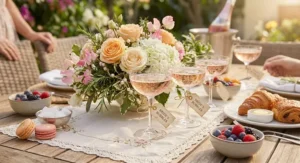
Brunch glassware doesn’t have to retire once the mimosas are cleared — the same rosé wine glasses that work for a Sunday morning table adapt easily to a summer garden party, a bridal shower, or a rooftop happy hour. Here are three real-world scenarios worth planning around.
The backyard bridal shower. Twelve guests, a long table, warm afternoon light. This is prime territory for the Estelle Colored Glass Blush Pink Coupe or a mixed set of stemmed flutes like the Libbey Signature Kentfield — anything photogenic that survives a couple of hours outdoors on a shaded table. Budget for at least one spare per four glasses; outdoor events see more breakage than indoor ones.
The pool party mimosa bar. Chlorine, wet hands, and a self-serve station spell trouble for stemware. This is exactly the scenario the BrüMate Bubbly Insulated Flute was built for — shatterproof, hard to tip, and it keeps rosé cold through a long afternoon of refills without anyone babysitting an ice bucket.
The casual Friday happy hour. Six coworkers, a small apartment balcony, minimal cleanup tolerance. The JoyJolt Milo Stemless or Godinger Stemless sets both handle this well — dishwasher-safe, stable, and inexpensive enough that nobody panics if one goes over the balcony rail.
Brunch Entertaining 101: Practical Usage Guide
Getting new glassware home is only step one. Here’s how to actually use it well from the first pour onward.
Chill the glass, not just the bottle. A room-temperature flute warms sparkling rosé within minutes. Rinse glasses with cold water and let them air-dry, or chill them in the fridge for 20 minutes before guests arrive.
Pour at an angle. Tilting the glass roughly 45 degrees and pouring down the side, rather than straight down the middle, dramatically reduces foam-over and preserves more bubbles for the actual drinking part.
Don’t overfill. Stop at roughly two-thirds full. This isn’t stinginess — it’s aroma management, leaving headspace for the wine’s bouquet to actually develop and reach your nose.
Hand-wash crystal, dishwasher the rest. Check your set’s care instructions on day one. Lead crystal pieces like the Riedel and Estelle coupe should be hand-washed with mild soap and air-dried upside down on a towel, never stacked while wet.
Common first-30-days mistake: stacking stemmed glasses by the bowl for storage. This is the single fastest way to chip a rim. Store them upright, spaced apart, or invest in a simple stemware rack.
Mimosa Pairing Guide: What to Pour, What to Pour It In
Not every glass suits every mimosa style, and getting this pairing wrong is a common, fixable mistake.
Classic orange juice mimosa: A wider-capacity glass like the JoyJolt Milo Stemless (9.4 oz) or the BrüMate Bubbly (12 oz) gives you room for a proper juice-to-sparkling ratio without an overflowing pour.
Elderflower or peach bellini-style mimosa: These lean sweeter and more aromatic, which the wider-mouthed Riedel Vinum Cuvée Prestige or the Estelle Colored Glass Coupe actually flatters, since more surface area means more perceived aroma.
Straight sparkling rosé, no mixer: This is where bubble retention matters most, making a true flute like the Schott Zwiesel Pure or Libbey Signature Kentfield the better call over a coupe.
Problem: mimosas going flat too fast at a self-serve bar. Solution: switch that station specifically to insulated tumblers like the BrüMate Bubbly, since an open bar setup means drinks sit exposed to warm air far longer than a seated, served brunch.
Problem: juice muting the wine’s aroma entirely. Solution: reduce your juice ratio slightly and pour into a narrower flute rather than a wide coupe, which concentrates what aroma remains.
Sparkling Wine Glassware for Every Budget: Value & ROI Breakdown
| Budget Tier | Example Glass | Cost-Per-Glass (Set of 4) | Expected Lifespan |
|---|---|---|---|
| Budget | Godinger Stemless Set | Roughly $4-$6 | 2-4 years, casual use |
| Mid-Range | Libbey Signature Kentfield | Roughly $5-$8 | 3-5 years, regular use |
| Premium | Schott Zwiesel Pure | Roughly $13-$16 | 5-8+ years, heavy dishwasher use |
| Luxury | Riedel Vinum Cuvée Prestige | Roughly $14-$19 | Decades with careful hand-washing |
Cost-per-glass tells a more useful story than sticker price alone, since the Godinger Stemless Set and the Riedel Vinum Cuvée Prestige land only a few dollars apart per glass despite a huge gap in total price — Riedel simply sells in smaller set sizes. The real long-term value question isn’t which glass is cheapest today, but which one survives your actual habits: if your dishwasher is non-negotiable, the Schott Zwiesel Pure likely delivers the best total cost of ownership, since it avoids the slow attrition of hand-wash-only sets losing a glass every year or two to an accidental knock against the faucet.
Common Mistakes When Buying Sparkling Rosé Glasses for Brunch
Even experienced hosts fall into a few predictable traps here. Reviewers consistently flag the same handful of regrets.
Buying only a set of two. Brunch is rarely an intimate affair. Buy in fours or eights, plus spares, or you’ll be mismatching glassware mid-party.
Choosing style over function for an outdoor event. A gorgeous crystal coupe on a windy patio table is a breakage claim waiting to happen. Match the glass to the venue, not just the aesthetic.
Ignoring capacity for mimosa-heavy brunches. A 5-ounce flute forces constant refills once juice enters the equation. Size up if mixed drinks are the plan.
Skipping the care instructions. Lead crystal thrown into a dishwasher will cloud over time. Read the label before the first wash, not after the first disappointment.
What to Expect: Real-World Performance at the Brunch Table
Specs are one thing; actually living with these glasses for a season is another. In practice, stemmed flutes like the Riedel Vinum Cuvée Prestige and Schott Zwiesel Pure genuinely do hold visible streams of bubbles noticeably longer than stemless or coupe styles — this isn’t just marketing language, it tracks with the published research on flute-versus-coupe carbonation loss. Stemless options like the JoyJolt Milo and Godinger sets trade a bit of that bubble longevity for real peace of mind around a crowded table; most hosts report that tradeoff feels worth it the first time someone’s elbow clips a glass and nothing shatters. The Estelle Colored Glass Coupe performs best as a short-serve glass — pour, sip within 10-15 minutes, refill — rather than a nurse-it-slowly vessel, which fits brunch’s naturally social, conversation-heavy pace anyway. And the BrüMate Bubbly genuinely does keep rosé colder for longer outdoors; the difference is most noticeable after the 45-minute mark, right when a standard glass pour would already be creeping toward room temperature.
Buyer’s Decision Framework: Which Glass Fits Your Brunch?
Use this simple framework if you’re still torn between options:
- If your brunches are mostly indoors and adults-only, choose a stemmed flute like the Riedel or Schott Zwiesel, because bubble retention and presentation matter more than breakage risk.
- If kids, pets, or a crowded table are part of the picture, choose a stemless option like the JoyJolt Milo or Godinger, because stability outweighs the marginal aroma benefit of a stem.
- If the setting is outdoors, poolside, or on the move, choose an insulated tumbler like the BrüMate Bubbly, because temperature control matters more than watching bubbles rise.
- If the table itself needs to be a showpiece, choose a colored coupe like the Estelle set, because visual impact outweighs the faster carbonation loss.
- If budget is the deciding factor, choose the Godinger or Libbey sets, because both deliver real durability without demanding a luxury price.
Features That Actually Matter (And Those That Don’t)
Cutting through the marketing noise: a genuinely effervescence-preserving base (the small etched dot some flutes include) matters, because it measurably sustains bubble flow rather than letting carbonation blow out immediately. Bowl shape matters, because it directly affects how much aroma reaches your nose. Material — crystal versus Tritan versus regular glass — matters mostly for durability and dishwasher compatibility, not flavor, contrary to what some marketing implies.
What doesn’t matter nearly as much: elaborate etched patterns or “hand-cut” claims on inexpensive glass, which are largely aesthetic rather than functional; capacity beyond about 10 ounces for anyone not specifically running a self-serve mimosa bar; and brand prestige alone, since several mid-tier options in this guide perform comparably to premium ones on the metrics that actually affect your drinking experience.
Safety, Care & Lead-Crystal Considerations
A few of the premium options in this guide, including the Riedel Vinum Cuvée Prestige and the Estelle Colored Glass Coupe, are made from lead crystal, and it’s worth understanding what that actually means before you buy. According to FDA guidance on lead in food-contact ware, lead is not authorized as a food-contact additive, and general food-safety guidance from extension researchers recommends against storing beverages in lead crystal for extended periods, particularly acidic ones like wine. In practice, briefly drinking sparkling rosé from a lead crystal flute during a normal brunch service carries minimal risk, since contact time is short — the concern is specifically about storing wine or spirits in a crystal decanter for hours or days, not sipping from a glass over brunch. If you’re pregnant, serving young children, or simply want to avoid the question entirely, every lead-free option on this list — the Schott Zwiesel Pure, JoyJolt Milo, Libbey Kentfield, BrüMate Bubbly, and Godinger set — performs the job just as well without that consideration.
Care-wise, hand-wash any lead crystal or hand-blown piece with mild soap, avoid extreme temperature swings (never rinse a warm glass under cold water), and store stemware upright rather than stacked to prevent rim chips, which are the most common cause of a shortened glassware lifespan.
Benefits vs Traditional Alternatives
| Consideration | Purpose-Built Sparkling Rosé Glasses | Standard All-Purpose Wine Glasses | Disposable Plastic Cups |
|---|---|---|---|
| Bubble retention | Excellent | Fair to poor | Poor |
| Aroma presentation | Strong, shape-optimized | Inconsistent | Minimal |
| Breakage risk | Moderate to low (stemless/insulated) | Moderate | None |
| Cost per use over time | Low, if durable styles chosen | Moderate | Low upfront, ongoing cost |
| Environmental impact | Reusable, one-time purchase | Reusable, one-time purchase | High, single-use waste |
The comparison above makes a fairly strong case for purpose-built glassware over both alternatives: all-purpose wine glasses simply weren’t engineered to manage carbonation, while disposable cups solve the breakage problem at the cost of aroma, presentation, and repeated waste. If sustainability and long-term cost matter to your household, a durable set like the Schott Zwiesel Pure or Godinger stemless glasses pays for itself within a handful of gatherings compared to buying plastic cups every time.
Frequently Asked Questions
❓ What glass is best for sparkling rosé at brunch?
❓ Can you use regular champagne flutes for rosé?
❓ Are coupe glasses good for sparkling wine?
❓ How many mimosa glasses do I need for a brunch party?
❓ Is it safe to drink from lead crystal champagne flutes?
Conclusion
The right sparkling rosé glasses for brunch aren’t about showing off — they’re about matching the glass to how you actually host. A crowded table with kids and a wandering dog calls for the stability of the JoyJolt Milo or Godinger stemless sets. A quiet, seated brunch built around a genuinely special bottle deserves the Riedel Vinum Cuvée Prestige’s bubble-preserving design. Outdoor entertaining needs the BrüMate Bubbly’s insulation more than it needs crystal clarity, and anyone building a tablescape meant to be photographed will get real mileage out of the Estelle Colored Glass Coupe.
None of these seven picks is objectively “best” in isolation — the honest answer, backed by the spec comparisons and aggregated reviews throughout this guide, is that the best glass is the one that matches your guest list, your venue, and your actual tolerance for hand-washing stemware on a Sunday morning. Start with the Libbey Kentfield or Schott Zwiesel Pure if you want one versatile, durable set that handles almost every brunch scenario, and build out from there as your entertaining style becomes clearer. For more on how the flute itself rose to dominance over the once-fashionable coupe, this history of champagne glass evolution is worth a look.
✨ Ready to upgrade your brunch table? Check current prices on today’s picks and pour something worth toasting to! 🥂
Recommended for You
- Madeira Wine Glasses Set for Beginners: 7 Top Picks for 2026
- 7 Best Ice Wine Glasses Under $30 for 2026 (Real Picks)
- Port wine glasses for small pours: 7 Best Picks 2026
Disclaimer: This article contains affiliate links. As an Amazon Associate, I earn from qualifying purchases. If you purchase products through these links, we may earn a small commission at no additional cost to you.
✨ Found this helpful? Share it with your friends! 💬🤗
