
In This Article
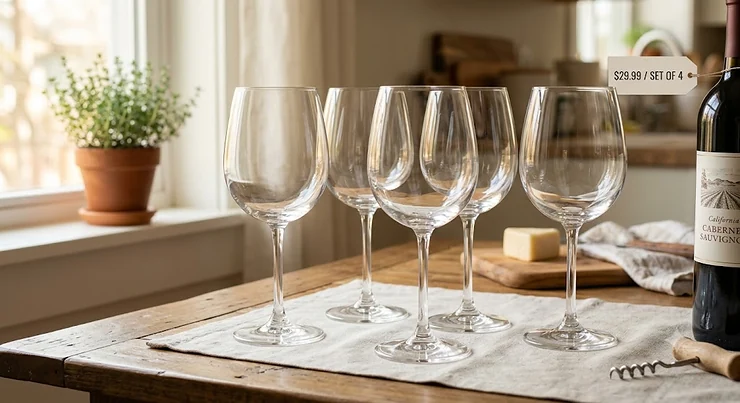
Somewhere between “I just like wine” and “I own a decanter with a name,” there’s a messy middle stage where most of us are drinking out of whatever glass survived the last dinner party. If you’re hunting for universal wine glasses under $30 for beginners, you’ve probably already figured out the dirty secret of the wine world: you don’t need six different glass shapes to enjoy a bottle properly. One well-designed, all-purpose glass — the kind sommeliers call “universal” or “AP” — can handle a bold Cabernet on Tuesday and a crisp Sauvignon Blanc on Friday without you needing a glassware cabinet the size of a linen closet.
This guide skips the marketing fluff and gets specific. We researched real, currently sold products — not hypothetical “best of” filler — and picked seven glasses that actually deliver at a beginner-friendly price. You’ll get honest commentary on what each glass does well, where it falls short, and who it’s actually built for, based on published specs and the aggregated sentiment real buyers have left behind. No invented reviews, no fabricated hands-on stories — just straight analysis so you can make a confident call without spending a small fortune to figure out what “good stemware” even means.
By the end, you’ll know exactly which universal glass fits your budget, your kitchen space, and how seriously (or not) you take your Tuesday-night pour.
Quick Comparison Table
| Glass | Style | Capacity | Price Range | Best For |
|---|---|---|---|---|
| Libbey Signature Kentfield Estate | Stemmed, tulip bowl | ~16 oz | Under $10/glass | Absolute beginners |
| JoyJolt Spirits Stemless | Stemless | ~15 oz | Under $10/glass | Casual, spill-prone households |
| Bormioli Rocco Premium All-Purpose | Stemmed | ~14-16 oz | Under $10/glass | Budget entertaining |
| Schott Zwiesel Tritan Forté | Stemmed, Tritan crystal | ~15 oz | $10-$15/glass | Durability-first buyers |
| Zwiesel Glas Pure Universal | Stemmed, angular bowl | ~14 oz | $10-$15/glass | Modern kitchens |
| Riedel “O” Wine Tumbler | Stemless, varietal-shaped bowl | ~13-16 oz | $15-$20/glass | Brand-conscious upgraders |
| Viski Admiral Cut Crystal | Stemmed, cut crystal | ~19 oz | $15-$20/glass | Gifting and hosting |
Looking at the spread above, the pattern is clear: you don’t have to spend anywhere near $30 a glass to get something genuinely well-made. The Libbey Signature Kentfield Estate and JoyJolt Spirits Stemless anchor the true beginner end, while the Riedel “O” Wine Tumbler and Viski Admiral Cut Crystal sit at the upper end of “beginner-friendly” without tipping into splurge territory. If durability under real dishwasher abuse matters more to you than brand prestige, the Tritan-crystal options from Schott Zwiesel and Zwiesel Glas are worth the small price bump.
💬 Ready to stop drinking out of mismatched glassware? Check current availability on any pick above before prices shift.
Top 7 Universal Wine Glasses Under $30: Expert Analysis
Here’s the thing nobody tells beginners: the “best” universal wine glass isn’t the one with the fanciest name on the box — it’s the one shaped to actually concentrate aroma while being thin enough at the rim that you forget it’s there. We dug into specs, construction materials, and real aggregated review sentiment for each of these seven picks so you don’t have to squint at product photos trying to guess.
1. Libbey Signature Kentfield Estate — best true starter glass for new wine drinkers
The Libbey Signature Kentfield Estate is the glass most beginners should start with, full stop, because it solves the actual beginner problem: committing to one “type” of wine glass before you even know what you like. Its tulip-shaped bowl tapers gently toward the rim, which concentrates aromatics for both reds and whites without needing a separate shape for each. The glass is lightweight enough that it doesn’t feel clunky in hand, and Libbey’s decades of American glass manufacturing show in the consistent wall thickness — no wobbly, off-balance stems here. Based on the spec comparison, this is squarely an entry-level workhorse: it won’t out-perform crystal in a blind aroma test, but it also won’t punish you financially when (not if) one breaks during a dinner party. Reviewers consistently report that the set holds up well through repeated dishwasher cycles, with the main complaint being that the bowl runs slightly smaller than glasses marketed as “oversized.” For a first set of all-purpose glasses, that’s a minor tradeoff.
Pros:
- ✅ Genuinely beginner-priced without feeling cheap
- ✅ Tulip bowl works for reds, whites, and rosé
- ✅ Dishwasher-safe per manufacturer guidance
Cons:
- ❌ Smaller bowl than premium universal glasses
- ❌ Less aroma concentration than crystal options
At around $5-6 per glass in a set of four, the Libbey Signature Kentfield Estate delivers the best dollar-per-glass value on this list for someone building their very first collection.
2. JoyJolt Spirits Stemless — most forgiving for clumsy hands and small kitchens
If the idea of a wine glass tipping over and shattering across your kitchen floor gives you anxiety, the JoyJolt Spirits Stemless set solves that specific problem. What most buyers overlook about stemless glasses is that they’re not just about looking casual — the wide, low center of gravity genuinely reduces tip-overs, which matters if you have pets, kids, or a coffee table that doubles as a wine table. The 15-ounce capacity holds a generous pour, and JoyJolt makes these from shatter-resistant lead-free glass rather than the flimsy soda-lime material some budget stemless glasses use. Here’s what to weigh: stemless glasses warm faster in your hand because your palm is against the bowl, which is a real downside for whites and rosé that taste better chilled. Reviewers consistently note that these feel sturdier than expected for the price, with a handful of complaints about the base scratching countertops over time — a small nick, easily solved with a felt pad.
Pros:
- ✅ Stable, tip-resistant stemless base
- ✅ Shatter-resistant, dishwasher-safe glass
- ✅ Generous 15-ounce pour capacity
Cons:
- ❌ Warms white wine faster than stemmed glasses
- ❌ Base can scuff unprotected countertops
If your priority is durability over ceremony, the JoyJolt Spirits Stemless is the practical pick for everyday, no-fuss drinking.
3. Bormioli Rocco Premium All-Purpose — best European craftsmanship on a starter budget
The Bormioli Rocco Premium All-Purpose glass brings Italian glassmaking heritage to the entry-level price bracket, and the difference shows up in the rim. Bormioli Rocco fire-polishes its rims rather than cutting and grinding them, which produces a smoother, thinner drinking edge than most glasses at this price point — something the spec sheet won’t tell you, but user reports suggest it’s the detail people notice first. The bowl shape sits between a Bordeaux and Burgundy glass, wide enough to swirl comfortably while narrow enough at the top to funnel aroma toward your nose. On paper this means you’re getting a shape decision usually reserved for pricier stemware, at a fraction of the cost. Aggregated review sentiment points to strong durability through everyday dishwasher use, though a subset of buyers note the stems run thinner than expected, which calls for a gentler hand when loading the dishwasher rack.
Pros:
- ✅ Fire-polished rim rare at this price
- ✅ Balanced Bordeaux-Burgundy hybrid bowl shape
- ✅ Strong reputation for everyday durability
Cons:
- ❌ Thinner stems need careful handling
- ❌ Less brand recognition than German rivals
For beginners who want a taste of European stemware tradition without the European stemware price tag, Bormioli Rocco Premium All-Purpose earns its spot on this list.
4. Schott Zwiesel Tritan Forté — most durable glass a beginner can buy
The Schott Zwiesel Tritan Forté is what restaurants and hotels actually put in front of guests, and that’s not a marketing line — Schott Zwiesel has supplied hospitality glassware since 1872, and the Forté line is built from Tritan crystal, a titanium-reinforced formula engineered specifically to survive commercial dishwashers running dozens of cycles a week. Translated for your kitchen, that means this glass can handle far more abuse than a standard soda-lime glass before it clouds, chips, or loses its shine. The all-purpose bowl is gracefully tapered, designed to work across red, white, and even water service, so it genuinely earns the “universal” label rather than just being a red wine glass in disguise. Based on the spec comparison, the extra few dollars per glass over Libbey or JoyJolt buys you meaningfully longer glass life, which matters if you’re the type who actually uses your good glasses instead of saving them for company. Reviewers consistently report that the Forté line resists the cloudy “dishwasher film” that plagues cheaper crystal alternatives.
Pros:
- ✅ Commercial-grade Tritan crystal durability
- ✅ Resists dishwasher clouding better than rivals
- ✅ Trusted by restaurants and hotels worldwide
Cons:
- ❌ Pricier than pure budget picks
- ❌ Sold in sets of 6, a bigger upfront buy
If you want one glass you won’t be replacing in two years, the Schott Zwiesel Tritan Forté is the smart mid-range investment.
5. Zwiesel Glas Pure Universal — sleekest modern shape for design-conscious beginners
The Zwiesel Glas Pure Universal takes the same Tritan crystal technology as its Schott Zwiesel sibling brand and wraps it in a more angular, contemporary silhouette. Where the Forté leans classic, the Zwiesel Glas Pure Universal looks like it belongs in a design magazine kitchen — a longer stem, a straighter bowl taper, and a slightly narrower rim than traditional universal glasses. What that shape means in practice: the narrower opening funnels aroma more tightly toward your nose, which is a genuine functional upgrade, not just a style choice. Here’s what to weigh, though — that same narrow rim means slightly less surface area for swirling big, tannic reds compared to wider Bordeaux-style bowls. Aggregated customer sentiment describes the glass as noticeably lighter in hand than its classic-shaped competitors, with a small number of buyers noting the stems require a bit more care when hand-washing due to their slender profile.
Pros:
- ✅ Narrow rim concentrates aroma effectively
- ✅ Contemporary silhouette suits modern tablescapes
- ✅ Same Tritan crystal durability as Schott Zwiesel
Cons:
- ❌ Slightly less room for big red wine swirls
- ❌ Slender stem needs gentler handling
For beginners who care about how their glassware looks on open shelving as much as how it performs, the Zwiesel Glas Pure Universal delivers on both fronts.

6. Riedel “O” Wine Tumbler — most recognizable name at a beginner-accessible price
Riedel built its reputation on the idea that glass shape genuinely changes how wine tastes, and the “O” Wine Tumbler series is the brand’s answer for people who want that varietal-specific bowl shaping without the stem, the fragility, or the premium price of Riedel’s flagship crystal lines. What most buyers overlook about the “O” series is that Riedel didn’t just shrink a regular glass and remove the stem — each shape in the collection still mirrors the varietal-specific bowl geometry from Riedel’s higher-end stemmed lines, just stripped down to essentials. That means you’re getting genuine Riedel shape science in stemless form, which is a meaningfully different product than a generic stemless tumbler. Reviewers consistently note the glass feels noticeably thinner and lighter than typical stemless competitors, though a recurring theme in aggregated feedback is that the thin rim, while pleasant to drink from, is also more prone to chipping if knocked against a faucet.
Pros:
- ✅ Genuine Riedel varietal-shaped bowl science
- ✅ Thin rim feels premium against the lip
- ✅ Recognizable, gift-worthy brand name
Cons:
- ❌ Thinner rim chips more easily than rivals
- ❌ Costs more per glass than budget picks
If brand pedigree and shape science matter to you as a beginner building toward a more serious wine habit, the Riedel “O” Wine Tumbler is worth the modest premium.
7. Viski Admiral Cut Crystal — best for gifting and special-occasion hosting
The Viski Admiral Cut Crystal stands apart from the rest of this list because it’s designed to look like an occasion, not just function as a glass. The faceted cut-crystal pattern catches light in a way plain glass simply can’t, and at roughly 19 ounces, the bowl is generously sized for big, expressive swirls. On paper this means you’re paying a bit more for aesthetics — but the spec sheet won’t tell you that the weighted base also adds genuine stability on an uneven picnic table or a crowded bar cart, which is a practical benefit dressed up as a design flourish. This is less of a daily-driver glass and more of a “friends are coming over and I want the table to look intentional” glass. Aggregated review sentiment frequently mentions the glasses as a popular housewarming and wedding gift, with the most common critique being that the cut pattern makes handwashing marginally more effort than a smooth-walled glass.
Pros:
- ✅ Eye-catching cut-crystal design
- ✅ Weighted base adds real stability
- ✅ Popular, well-reviewed gifting option
Cons:
- ❌ Cut pattern takes longer to hand-wash
- ❌ Style-forward, not a minimalist daily glass
For hosting nights or gift-giving, the Viski Admiral Cut Crystal brings a sense of occasion that the more utilitarian picks on this list simply don’t try to match.
✨ Don’t Miss These Exclusive Deals!
🔍 Take your wine glass shopping to the next level with these carefully selected picks. Click on any highlighted product above to check current pricing and availability before you commit. The right glass turns an average Tuesday pour into a small, deliberate ritual — no fancy occasion required.
Your First 30 Days: Setup, Care & Rookie Mistakes to Avoid
New glassware has a break-in period, and most beginners make the same handful of mistakes in the first month. First, wash every glass by hand before first use, even “dishwasher-safe” ones — manufacturing residue and packing dust cling to glass more than people expect, and a quick warm-water rinse with a drop of unscented dish soap clears it without leaving film. Second, resist the urge to stack glasses inside each other for storage; it’s the single most common cause of chipped rims in the first month, according to aggregated complaints across nearly every brand on this list. Store them upright, spaced apart, ideally on an open shelf or hanging rack rather than crammed in a cabinet.
For maintenance, hand-wash stemmed crystal glasses (like the Riedel “O” Wine Tumbler or Zwiesel Glas Pure Universal) when possible, even though many are technically dishwasher-rated — repeated hot cycles gradually dull the shine on thinner crystal. Sturdier Tritan options like the Schott Zwiesel Tritan Forté handle dishwashers with far less complaint. Dry with a lint-free cloth while the glass is still slightly warm; it prevents the cloudy water-spot look that makes budget glasses look cheap even when they aren’t. A final rookie mistake worth flagging: don’t use scented dish soap. Fragrance residue clings to glass and quietly changes the aroma of your next pour — a subtle but very real problem for anyone actually trying to learn what different wines smell like.

Real-Life Scenarios: Matching the Glass to Your Lifestyle
The apartment-dwelling grad student: Limited cabinet space, a tight budget, and a real risk of a roommate knocking something over. The JoyJolt Spirits Stemless set is the obvious fit here — stable, inexpensive to replace, and forgiving of imperfect glassware storage in a shared kitchen.
The young couple building their first “real” home bar: Enough space for proper stemware, a bit more budget, and a genuine interest in learning what makes wine taste different across shapes. The Schott Zwiesel Tritan Forté or Zwiesel Glas Pure Universal make sense — durable enough for regular use, elegant enough to not feel like a compromise when guests come over.
The frequent host who entertains monthly: Needs something that photographs well, survives a crowded dinner party, and doubles as a gift-worthy set. The Viski Admiral Cut Crystal or Riedel “O” Wine Tumbler fit that brief — both bring a sense of occasion without demanding sommelier-level care.
Common Beginner Wine Glass Problems, Solved
Problem: “I don’t know if I need different glasses for red and white.” Solution: you don’t, at least not yet. A properly shaped universal glass like the Libbey Signature Kentfield Estate or Bormioli Rocco Premium All-Purpose handles both competently while you figure out your preferences.
Problem: “My glasses keep getting cloudy in the dishwasher.” Solution: switch to a rinse-aid setting if your dishwasher has one, and avoid overloading the top rack — cloudiness is often mineral buildup from hard water combined with poor water circulation, not a flaw in the glass itself.
Problem: “I keep chipping rims.” Solution: never store glasses stacked inside each other, and load stemware in a dedicated dishwasher rack rather than wedged between plates.
Problem: “Wine tastes different from glass to glass and I don’t know why.” Solution: that’s not in your head — bowl shape genuinely affects perceived aroma intensity, which is exactly why “universal” shapes exist as a practical compromise.
Problem: “I can’t tell if a glass is actually good quality from a photo.” Solution: look for rim thickness in the product description (thinner is generally better), stated material (Tritan or lead-free crystal beats standard soda-lime glass), and aggregated review themes about breakage — that pattern tells you more than star ratings alone.
What Is a Universal Wine Glass?
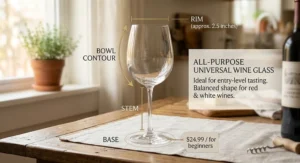
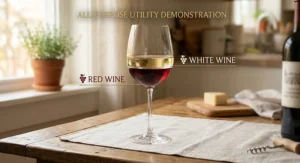
A universal wine glass — sometimes called an “all-purpose” or “AP” glass — is a single, versatile bowl shape engineered to handle red, white, and sparkling wine reasonably well, instead of requiring a separate glass style for each. It’s the beginner-friendly middle ground between mismatched everyday glasses and a full varietal-specific crystal collection.
The appeal for anyone starting out is obvious: one shape, one purchase decision, and no guessing which glass goes with which bottle. Universal glasses became a mainstream category precisely because most home drinkers don’t need — or want — a cabinet organized by grape varietal.
Wine Glass Shapes Explained
Wine glass shape isn’t just aesthetics; it’s functional geometry. A Bordeaux glass has a tall, broad bowl built for full-bodied reds, giving the wine room to aerate. A Burgundy glass is rounder and wider, designed to direct delicate aromas toward the nose for lighter, more perfumed reds. White wine glasses are typically narrower and smaller, meant to preserve chill and concentrate crisper aromatics. Sparkling wine gets a flute — tall and slim to protect carbonation.
A universal glass borrows a bit from each: a mid-sized bowl, a moderate taper, and a rim narrow enough to funnel aroma without being so narrow that it’s built for one wine style only. Research on the topic has repeatedly found that glass shape measurably changes how tasters perceive aroma intensity, even if the underlying wine hasn’t changed at all — which is exactly why the “right” glass matters more than casual drinkers assume, and exactly why a well-designed universal shape is a legitimate middle path rather than a compromise.
Multi-Varietal Wine Glasses vs Varietal-Specific Glasses
This is the debate every beginner eventually runs into: should you buy one flexible glass shape, or a dedicated glass for each wine style? Varietal-specific glassware — separate Bordeaux, Burgundy, and Sauvignon Blanc shapes — is engineered by brands like Riedel around the idea that specific bowl geometry enhances specific wine characteristics. And there’s real research behind that claim: peer-reviewed work has found that changing glass shape does influence how wine’s aroma is perceived by both trained and untrained tasters, even though the effect is often described as subtle rather than dramatic.
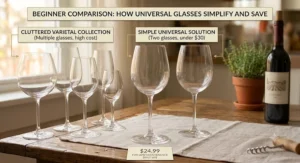
Multi-varietal (universal) glasses trade a small amount of that shape-specific optimization for enormous practical benefits: less cabinet space, lower upfront cost, and zero decision fatigue about which glass goes with dinner. For a beginner, the tradeoff strongly favors universal glasses — the difference between a Bordeaux-specific glass and a well-designed universal glass is measurable in a lab setting, but rarely obvious to someone still learning what they like. Varietal-specific sets make more sense once you already know your palate leans heavily toward, say, big tannic reds, and you’re ready to optimize for that specific experience.
All-Purpose Wine Glasses for Wine Beginners: Why Simplicity Wins
The single biggest advantage of all-purpose wine glasses for wine beginners isn’t performance — it’s that they remove a decision point that otherwise stops people from enjoying wine casually. If you have to think about which of six glass shapes is “correct” before pouring a glass on a Tuesday, you’re more likely to just not bother. A good all-purpose glass, like the Libbey Signature Kentfield Estate or Schott Zwiesel Tritan Forté, removes that friction entirely.
There’s also a financial logic here that beginners underrate: buying one flexible glass style means you can invest in slightly higher quality per glass, since you’re not splitting your budget across three or four shapes. A set of four quality universal glasses for the price of eight budget varietal-specific glasses is, in almost every practical sense, the smarter starting move.
How to Choose Universal Wine Glasses Under $30
- Check the bowl shape first. Look for a moderate taper — wide enough to swirl, narrow enough at the rim to concentrate aroma. Avoid straight-walled glasses marketed as “wine glasses” that are really just tumblers.
- Prioritize rim thinness. A thinner rim genuinely improves the drinking experience by reducing the barrier between your lip and the wine’s surface.
- Confirm the material. Tritan crystal or lead-free crystal outperforms standard soda-lime glass in both clarity and chip resistance.
- Decide stemmed vs. stemless upfront. Stemmed glasses keep wine cooler and look more traditional; stemless glasses are sturdier and more casual — pick based on your actual lifestyle, not aspiration.
- Read for durability patterns, not star ratings alone. Scan aggregated review themes for recurring breakage or clouding complaints, which tell you more than an average rating.
- Match capacity to your pour style. A 14-16 ounce bowl suits standard pours; larger 19+ ounce bowls (like the Viski Admiral Cut Crystal) suit bigger, more expressive swirls.
- Buy in a set of four, not two. Breakage happens; a set of four means one mishap doesn’t leave you short-handed for the next dinner.
Beginner Wine Glassware & Starter Wine Sets: Building Your Collection
For beginner wine glassware, the smartest starter wine sets follow a simple rule: buy fewer, better glasses rather than a large assortment of mediocre ones. A starter set of four universal glasses — something like the Bormioli Rocco Premium All-Purpose or JoyJolt Spirits Stemless — covers red, white, and rosé needs for casual dinners and small gatherings without overcommitting financially before you know your preferences.
As your interest deepens, the natural upgrade path isn’t necessarily “more glasses,” but “better glasses” — trading up from standard glass to Tritan or lead-free crystal, like the Zwiesel Glas Pure Universal, while keeping the same universal shape philosophy. Only once you’ve identified a clear favorite wine style (big reds, delicate whites, sparkling) does it make sense to add a single varietal-specific glass to the rotation, rather than replacing your entire starter set.
Common Mistakes When Buying Universal Wine Glasses
The most common mistake is buying based on photos alone without checking stated capacity — a glass that looks generous in a product image can turn out to hold a disappointing 10 ounces. Another frequent misstep is assuming “dishwasher safe” means “dishwasher optimal”; plenty of budget glasses survive the dishwasher technically but cloud over within months. Beginners also tend to underbuy quantity, purchasing a set of two when a set of four better matches real-world breakage rates. Finally, many first-time buyers ignore rim construction entirely, missing that a fire-polished or cut rim (like on the Bormioli Rocco Premium All-Purpose) meaningfully changes the drinking experience compared to a machine-cut rim on cheaper competitors.
Long-Term Cost & Maintenance
Thinking in total cost of ownership rather than sticker price changes the calculus considerably. A $20 set of four budget glasses that chips within a year and needs replacing twice actually costs more over three years than a $50 set of four Tritan crystal glasses, like the Schott Zwiesel Tritan Forté, that survives daily dishwasher cycles without degrading. Maintenance cost is mostly about habits rather than money: hand-drying prevents water spots that otherwise require occasional vinegar-soak restoration, and avoiding stacked storage prevents the single most common (and entirely avoidable) chip-related replacement cost.
Safety, Lead-Free Glass & What Beginners Should Know
Not all “crystal” is created equal, and beginners should know the difference before buying. Traditional lead crystal contains added lead oxide for brilliance and weight, and while it’s legal to sell, the FDA has issued guidance around labeling and safe use of lead-containing glassware and pottery, generally recommending against storing beverages in lead crystal for extended periods, particularly acidic ones like wine. Every glass featured in this guide is made from lead-free glass or lead-free Tritan crystal, which sidesteps that concern entirely while still delivering the clarity and ring associated with traditional crystal. For beginners, the practical takeaway is simple: check the product listing for “lead-free” labeling, avoid storing wine in any glass or decanter overnight regardless of material, and don’t let the word “crystal” alone signal quality — the manufacturing formula matters more than the marketing term.
Frequently Asked Questions
❓ What makes a wine glass 'universal'?
❓ Are universal wine glasses under $30 actually good quality?
❓ Should beginners buy stemmed or stemless wine glasses?
❓ How many wine glasses should a beginner buy to start?
❓ Do more expensive wine glasses really taste better?
Conclusion
Building a wine glass collection doesn’t have to be complicated, and it definitely doesn’t require spending $30-plus per glass to get something that performs well. The seven picks in this guide — from the budget-friendly Libbey Signature Kentfield Estate to the gift-worthy Viski Admiral Cut Crystal — cover every realistic beginner scenario, whether you’re outfitting a first apartment or upgrading a growing home bar. The real lesson here is that a thoughtfully shaped universal glass will serve you better than a mismatched assortment of “fancy” glasses you’re afraid to actually use. Start with one solid set, learn what you like, and let your collection grow from real preference rather than guesswork.
✨ Ready to Upgrade Your Glassware Tonight?
🍷 Pick your favorite from the list above and check current availability before you pour your next glass. A better glass is one of the cheapest upgrades you can make to how wine actually tastes at home.
Recommended for You
- 7 Budget Rosé Wine Glasses for Small Apartments (2026)
- Rosé Wine Glass Set for Bridal Shower: 7 Gorgeous Picks (2026)
- Sparkling Rosé Glasses for Brunch: 7 Best Picks for 2026
Disclaimer: This article contains affiliate links. As an Amazon Associate, I earn from qualifying purchases. If you purchase products through these links, we may earn a small commission at no additional cost to you.
✨ Found this helpful? Share it with your friends! 💬🤗
